
3 Days in Florence
By Gillian Boyd Published 25 June 2026
Boasting Dante, Leonardo di Vinci and Michelangelo, Florence is not just about history and art, there is also some great food and wine! Read how we spent 3 days in Florence. Here is our itinerary.
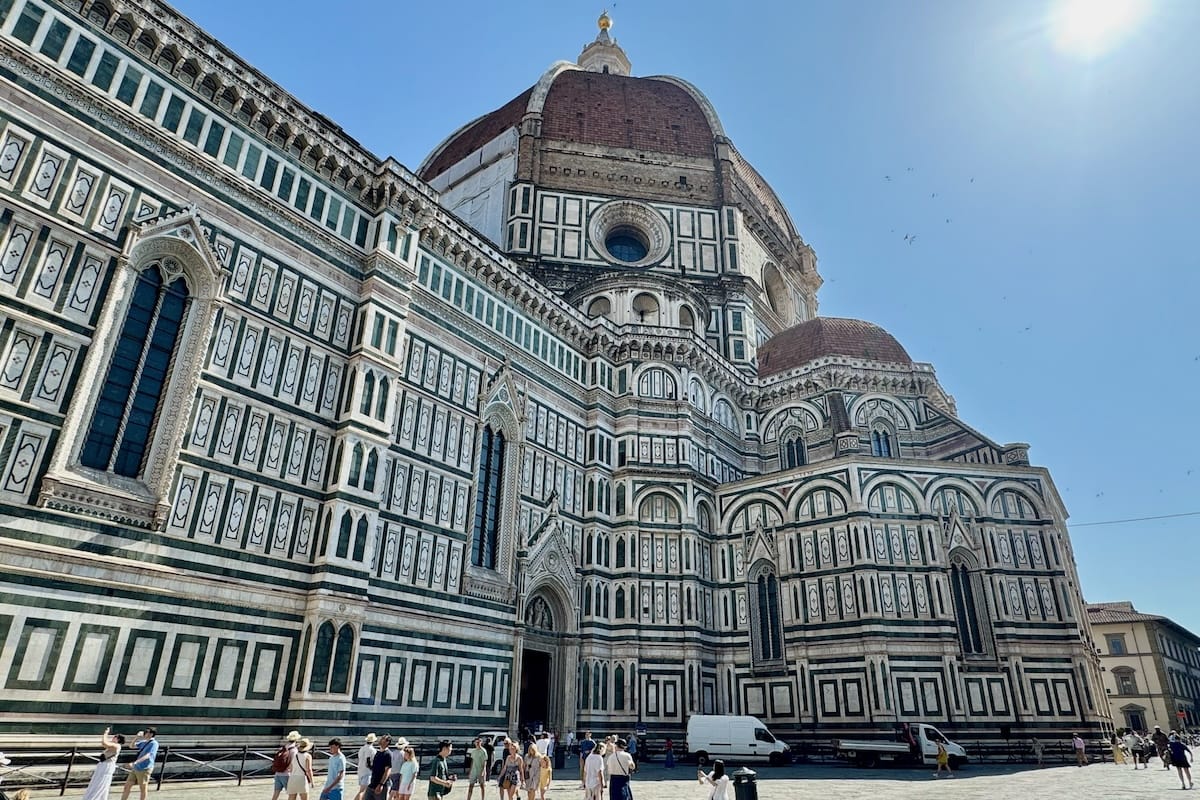
The Duomo in Florence
Day 1:
Duomo and Cupola del Brunellschi
The Italian word for cathedral is Duomo, so the Duomo is usually the grandest, most ornate building in any city. The Duomo in Florence sought to outdo all others and is the most iconic building in Florence.
It was built in 1296 in the Gothic style to a design by Arnolfo di Cambio and completed by 1436 with a dome engineered by Filippo Brunelleschi. The dome is a clever feat of engineering and is still the largest masonry vault in the world.
As a symbol of Florence and Renaissance culture, the Duomo showcases the wealth and power of the city, through its art and highly decorative elaborate exterior of pink, green and white marble. It screams ‘don’t mess with me, I’m extremely wealthy.’
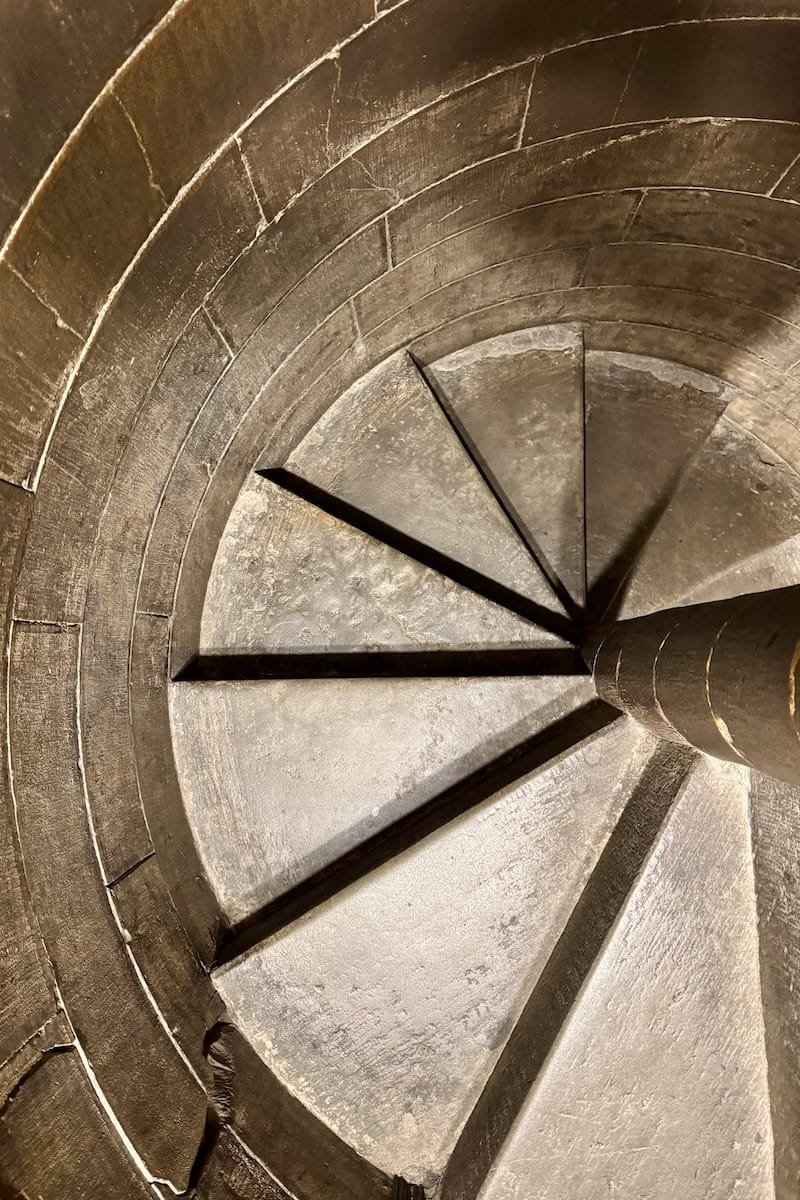
Circular steps to dome in Florence, Italy
For your ticket to the Dome, you get
- Timed entrance
- Be impressed by the innovative engineering and walk through the inside walls of the dome. Graham was like an excited child at Christmas, over this alone.
- See the Last Judgement, the largest mural in the world, painted on the ceiling of the dome by Girogio Varasi and Frederico Zuccari. It took 7 years starting in 1572 and certainly impressed me.
- A free work out by climbing the 463 steps to the top!
Pro Tip – This can sell out, so buy the ticket online well in advance. It is valid for 3 days, and includes the timed entrance for climbing the dome.
Climb the Dome
Entry to climb the 463 steps to the dome is by a timed ticket as only 125 people are permitted at a time for safety reasons. Deposit your bag at the free lockers nearby included with your ticket. We had a timed ticket for 10:30am.
The steps start narrow and open up a little when you reach the beautiful herringbone patterned red bricks, as they curve between the inner and outer domes.
Even if you are not an engineer, it’s interesting. It was hard work climbing the steps in the heat and many people looked like they were struggling.
Pro Tip – Climbing the dome is not recommended for people with heart conditions.
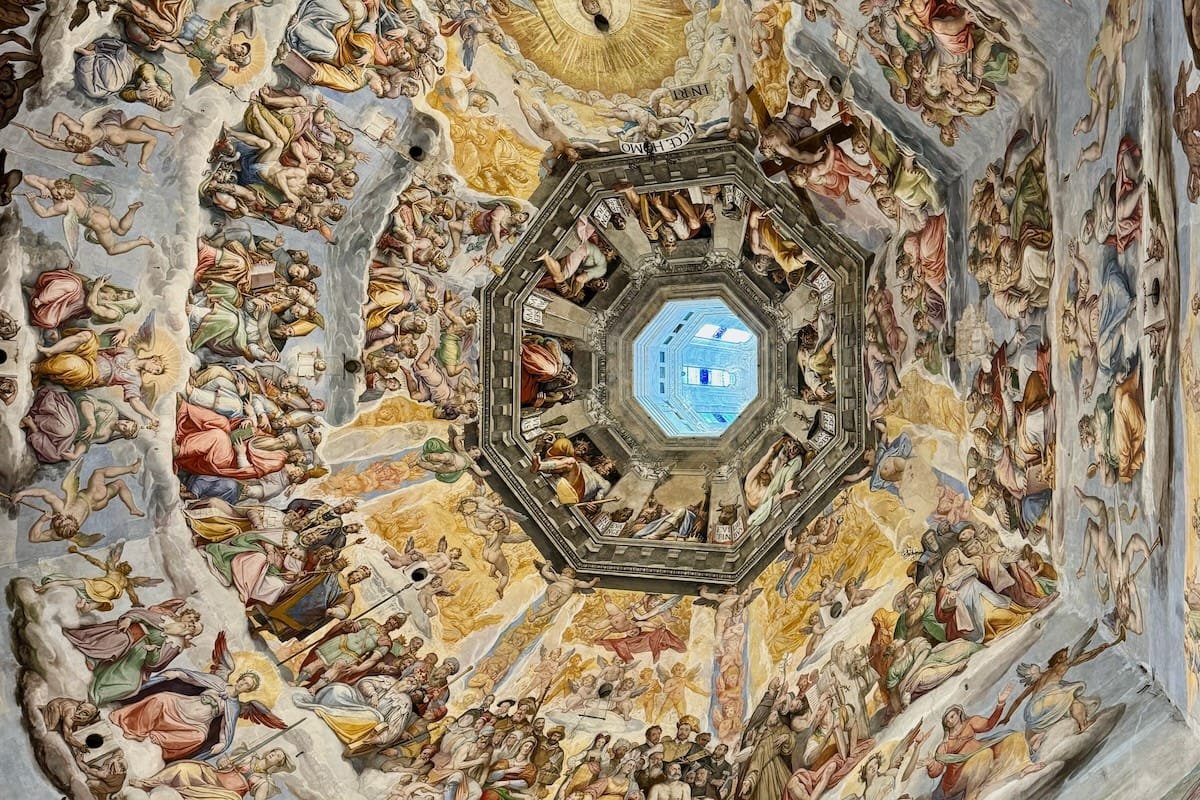
The Last Judgement mural on dome of Duomo in Florence
The Last Judgement
Walking around the inner dome reminded me of St Paul’s Cathedral in London. We only had brief views of the painting of Dante’s Inferno on the ceiling of the interior dome, as the guards kept shouting at us and blowing a whistle to keep moving.
No stopping was allowed, even to snap a photo, which seemed unfair to me as there was no one in sight behind me. It is very detailed with many figures so I wanted to spend more time studying it.
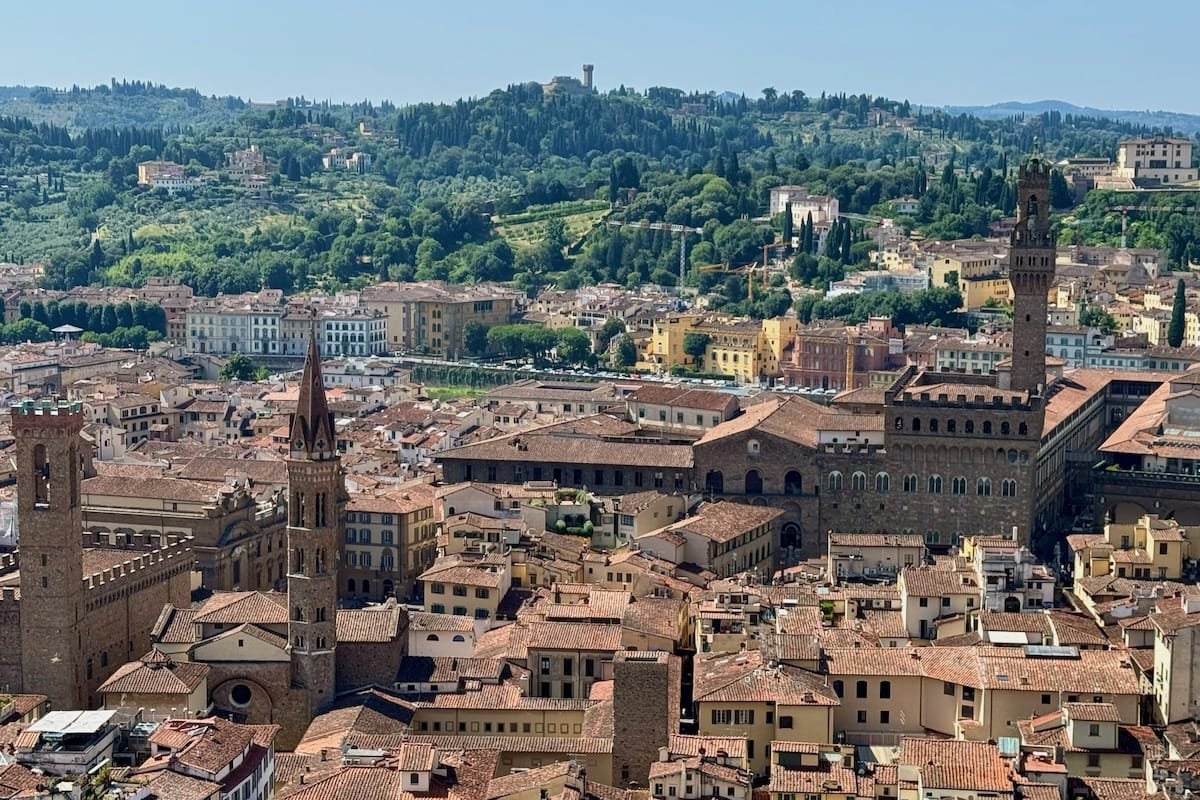
View of Florence from the top of the Dome
Views Over Florence
The views over the city of Florence from the top of the Dome were impressive with tightly packed terracotta tiled roofs and the gentle breeze was welcome. In the distance, we could see the verdant hill and Italian cypress trees of the Piazza Michelangelo.
Pro Tip – Duomo is so big it is hard to photograph from the ground but you can get good shots from high up in Giotto’s Bell Tower looking across to the Duomo.
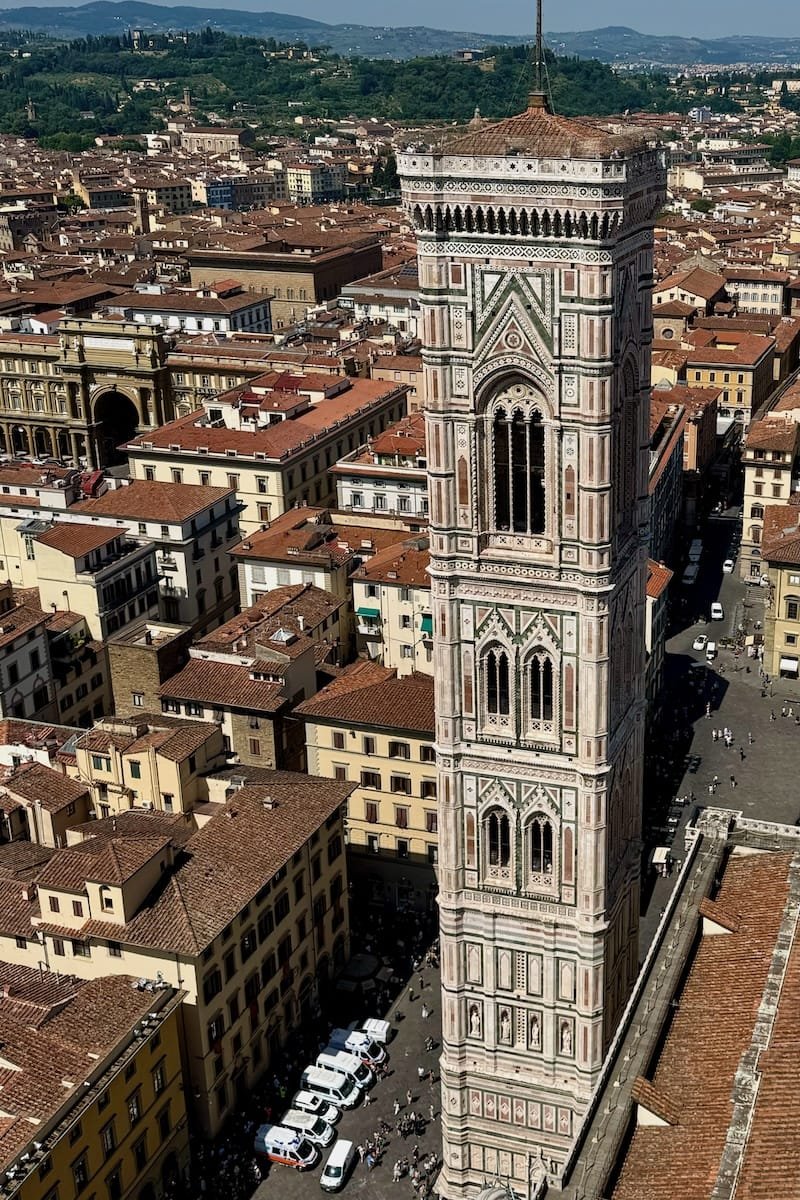
Giotto’s Bell Tower in Florence Italy
Giotto’s Bell Tower
Climbing the 414 steps of the Giotto’s Bell Tower is easier than climbing the steps to the dome as the stair case is wider, there is no time pressure so you can pause when you want, and there is cooler fresh air circulating at the different levels.
Giotto’s Bell Tower is just 10m shorter than the Duomo and next door, so the views over Florence are very similar except that you can see the top of the Duomo. The bell is loud and rings at set times. We heard it at 11.30am.
Pro Tip – If you are claustrophobic then climbing Giotto’s Bell Tower would be a better option than climbing the Dome.
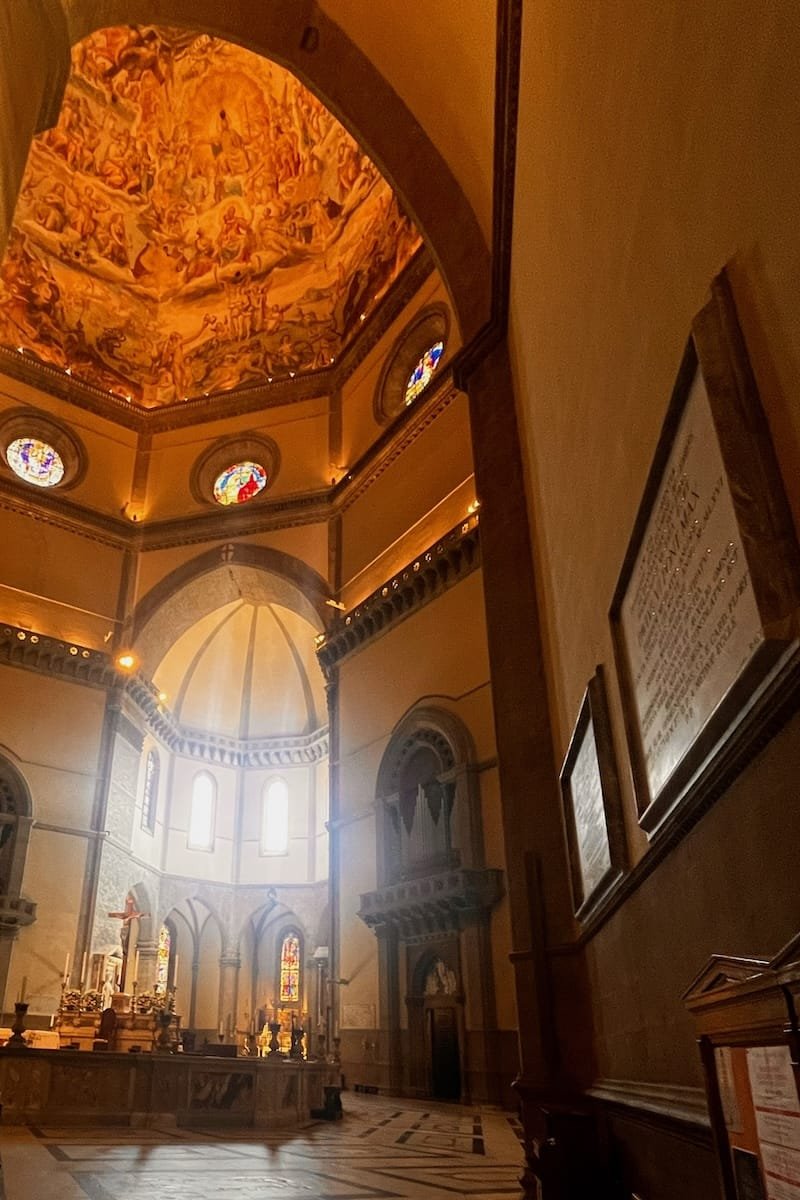
Dome ceiling and interior from the Cathedral
Cathedral
In the Cathedral, we saw much of what we had already seen from our climb to the dome, so if you are really short on time, you could skip this.
Even though we had more time to admire the painting on the ceiling of the Last Judgement, it was far away as the ceiling was so high.
The inside of the Cathedral was much plainer than I had expected. The Florentines lavished the exterior as they wanted to be sure everyone knew how wealthy and powerful they were.
Pro Tip – to enter the Cathedral, Crypt or Baptistery your knees and shoulders must be covered. In the queue to enter, vendors will happily sell you a large scarf, should you need one.
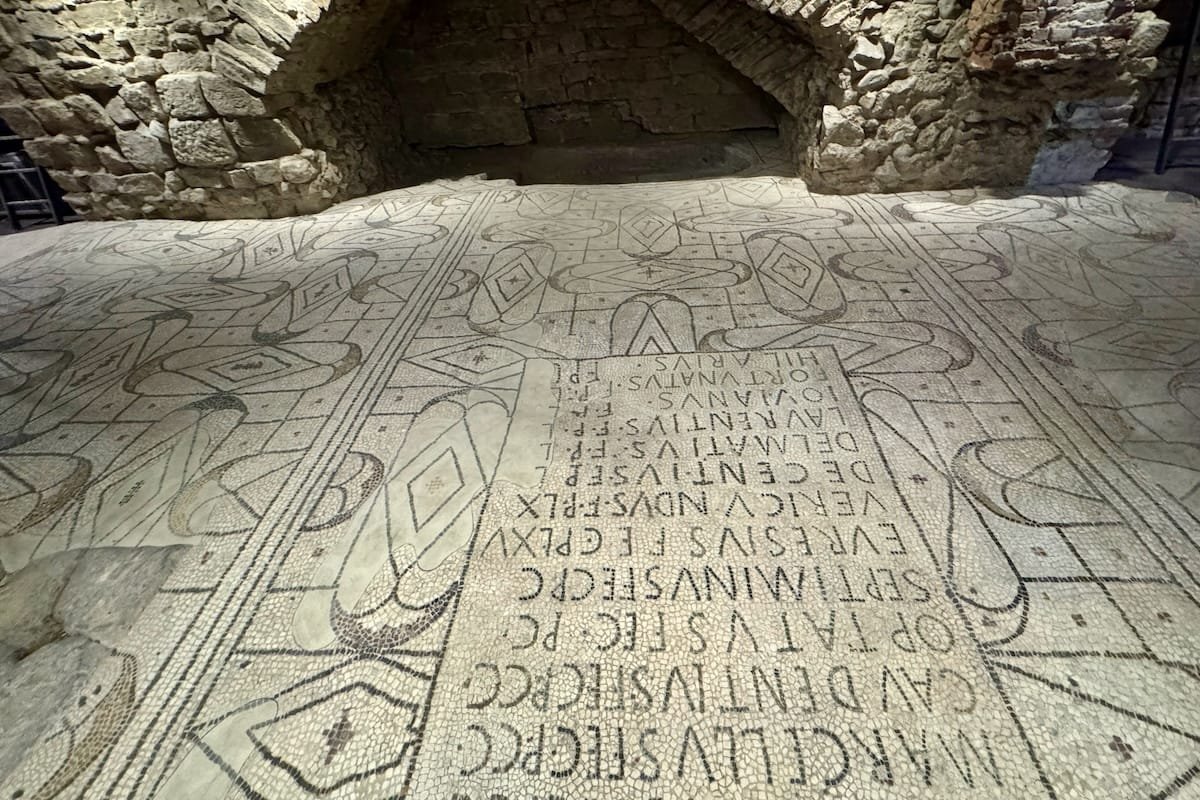
Mosaic in Santa Reparta
Santa Reparta
In the basement of the Cathedral is the Santa Reparta which is a highly contrasting room. With its low ceilings and lack of windows, the Santa Reparta is where some of the original Roman foundations are exposed and lit beautifully. The atmosphere was more calm too.
It is common worldwide for important buildings and places of worship to be rebuilt on the same site time over time. Several large well-preserved mosaics were also visible.
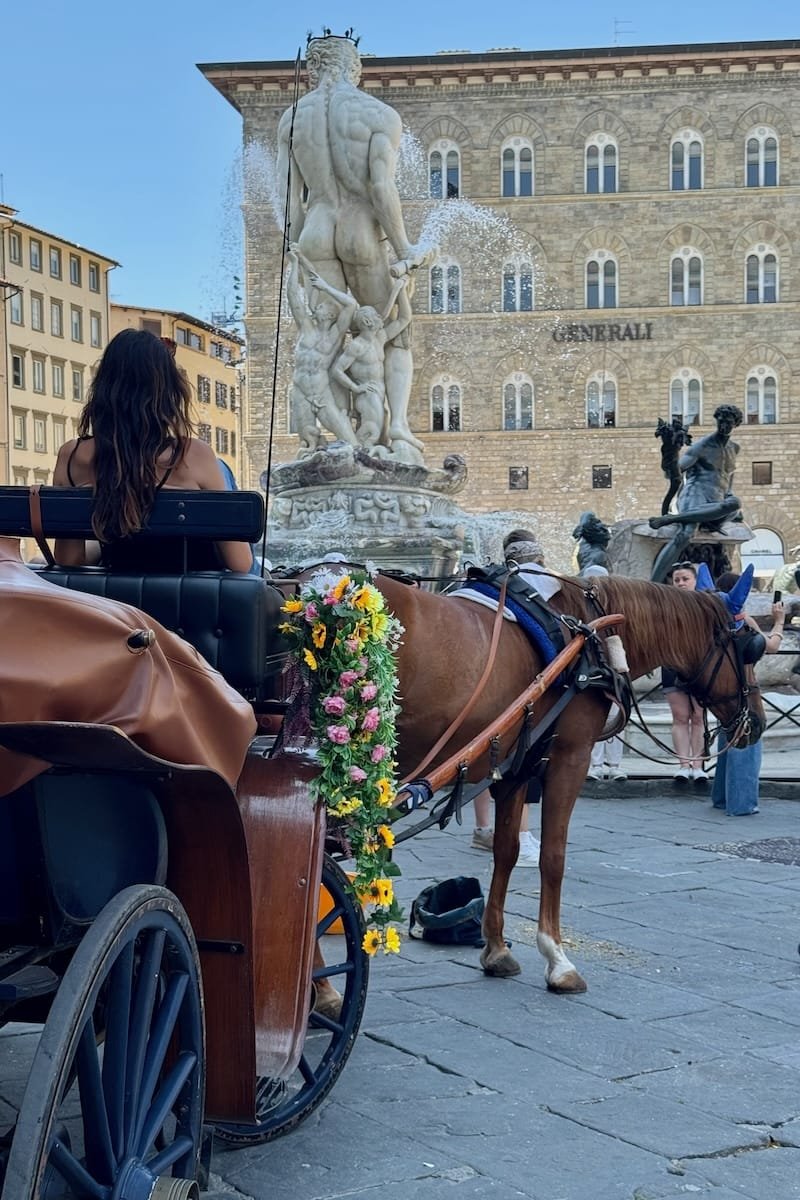
Fountain of Neptune and carriage in Florence
Piazza della Signoria and Fountains of Neptune
From the Duomo, we walked for about 5 minutes to the huge square of the Piazza della Signoria, past the crowds and horse carriages to admire the statue of the Cosimo de’ Medici on horseback and the fountains of Neptune.
Self Promotion
Look closely and you will see more than a passing resemblance between the 2 statues. Cosimo de’ Medici commissioned the Neptune statue in his own likeness. I suppose that’s how branding and public relations worked in Renaissance times. Before you ask, yes, he was part of that famous Medici dynasty.
Next to Each Other
I was surprised how close all these attractions were. The Piazza, Palazzo Vecchio, replica statue of David, Fountains of Neptune, Loggia del Lanzi and the Uffizi Galleries are all within 1 or 2 minutes walk of each other.
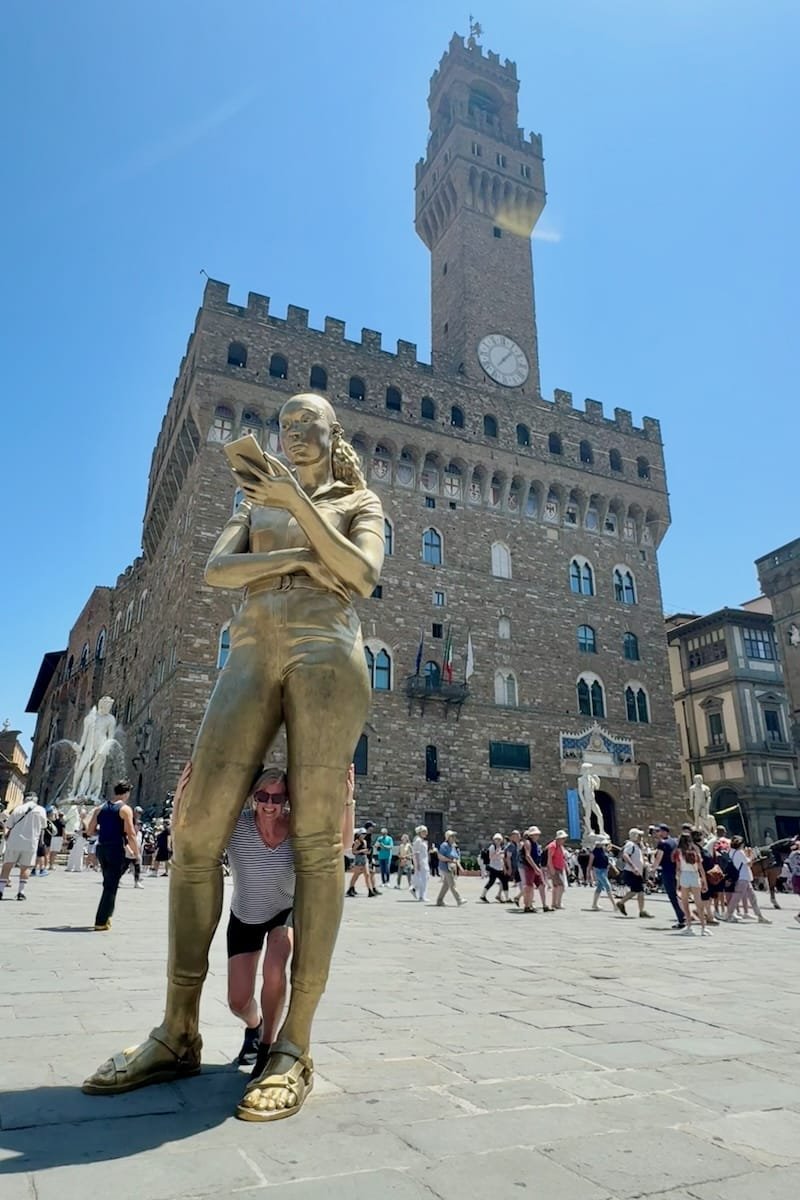
Piazza Signoria with Palazzo Vecchio, David and Fountains of Neptune in the background
Palazzo Vecchio
The fountains of Neptune are in front of the Palazzo Vecchio, the fortified 13th century palace and seat of government in Florence.
At the entrance are 2 statues, including the replica of Michaelangelo’s David. The original David sculpture is larger and housed in the purpose-built Galleria dell’ Accademia. You need to buy a timed ticket to see the original David.
We looked inside the courtyard of the Palazzo Vecchio for free (inside closes 2pm on Thursdays and 7pm on other days) and skipped the Museum.
Loggia dei Lanzi
Just to the right of the Palazzo Vecchio, is an arched veranda and gallery of marble sculptures of ancient Greek myths, including Perseus with the Head of Medusa (Cellini, 1554) and The Rape of the Sabine Women (Giambologna, 1583).
Open 24/7
It is open to the public 24 hours a day, so you can see it anytime for free.
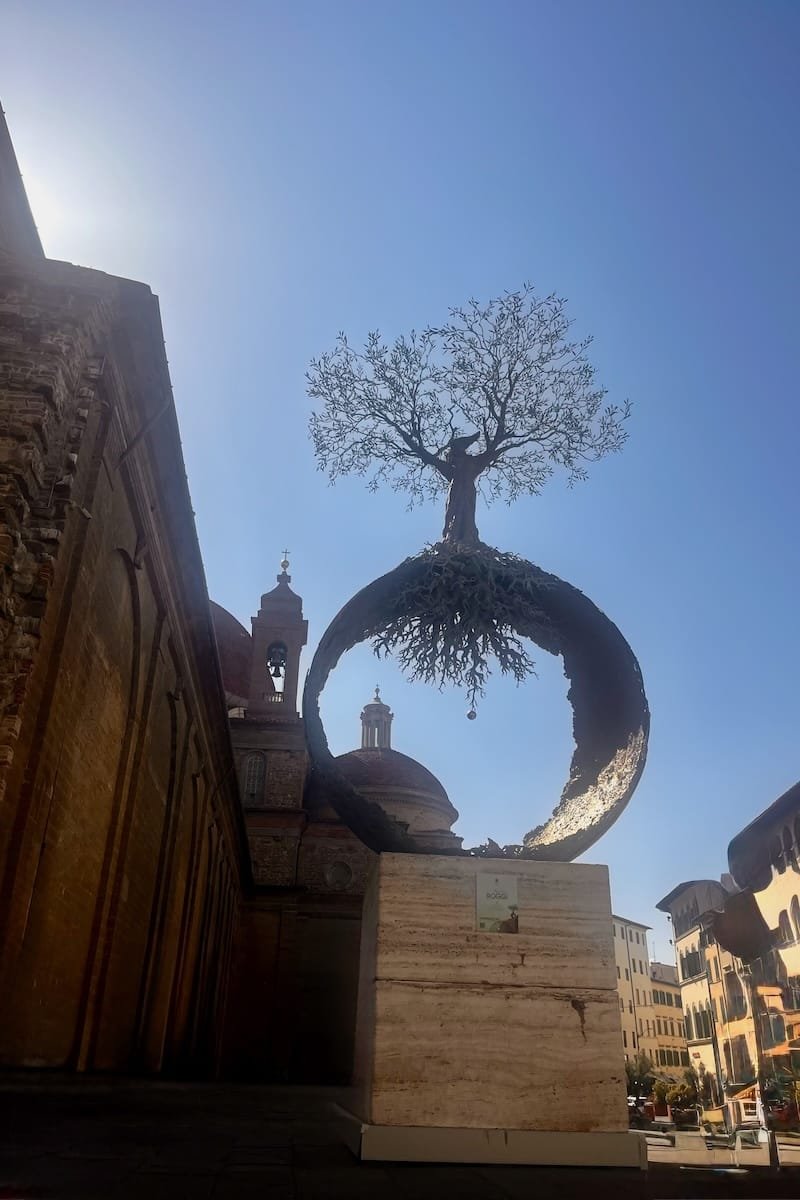
Sculpture in front of San Lorenzo Church
Free Walking Tour
After lunch, we had a free walking tour at 4:30pm which we had booked online. We met in front of the rather plain looking San Lorenzo Church. Just in front was the Tree of Life, sculpture by Andrea Roggi; something modern for a change.
We are fans of a free walking tour as it is an excellent way to get some historical background and learn about the city quickly in just 2 hours.
Guides are usually local and a great source of information on restaurants, travel and nightlife. In fact, you could ask them pretty much anything.
Tip the Guide
The free walking tour guides operate on a tip basis and so are invested in being good storytellers as well as informative.
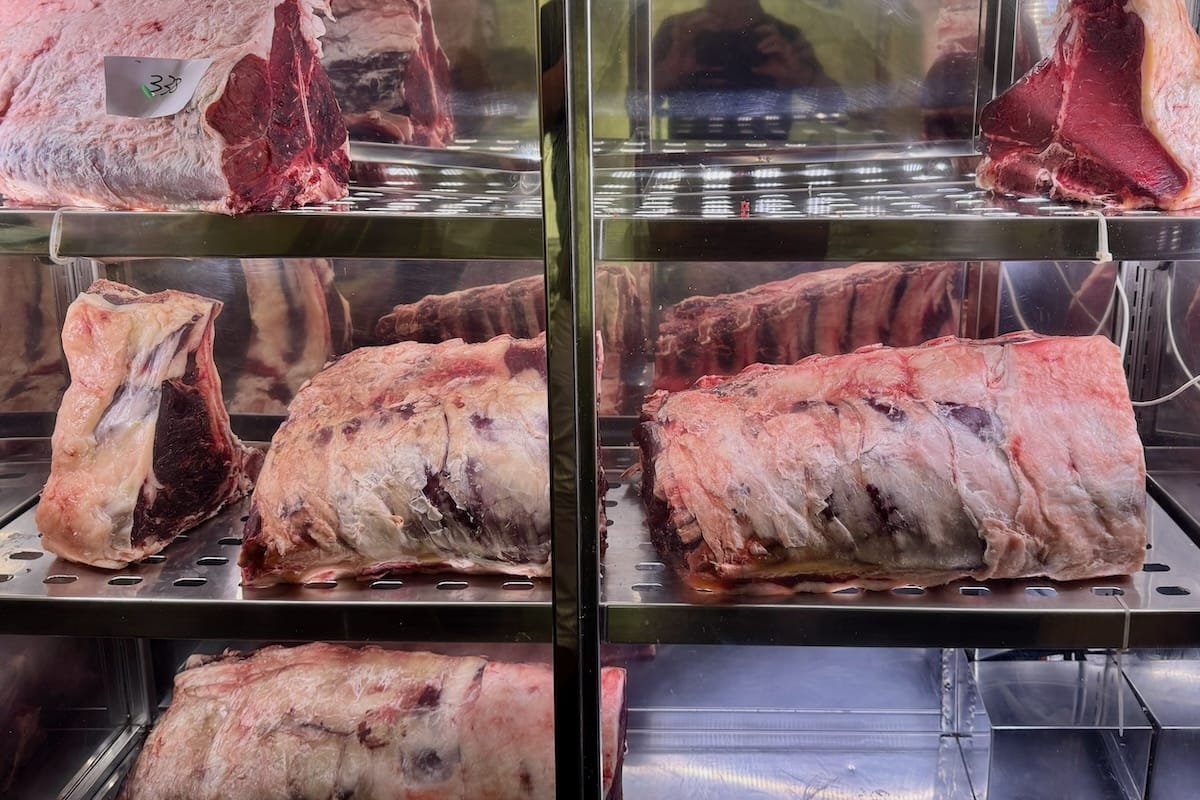
Meat on display in restaurant fridge in Florence
Eat a Steak
Florence (Firenze in Italian) is famous for its steaks, primarily from the local white Chianna cattle.
Bistecca alla Fiorentina has a ‘T’ shaped bone with the fillet on one side and the sirloin on the other. It is a huge piece of meat at around 1.5 – 2kg.
The Florentine restaurants are proud of their meat and many display the meat in a glass fronted fridges for customers to see. We ate in and would recommend Manzo, which allows you to choose your exact cut, but the Bistecca alla Fiorentina was too big for us, so we enjoyed some fillet instead.
Fun Fact – Chianna is the same oxen that pull the cart carrying the Drapponelle, the prize for the Palio di Siena horse race.
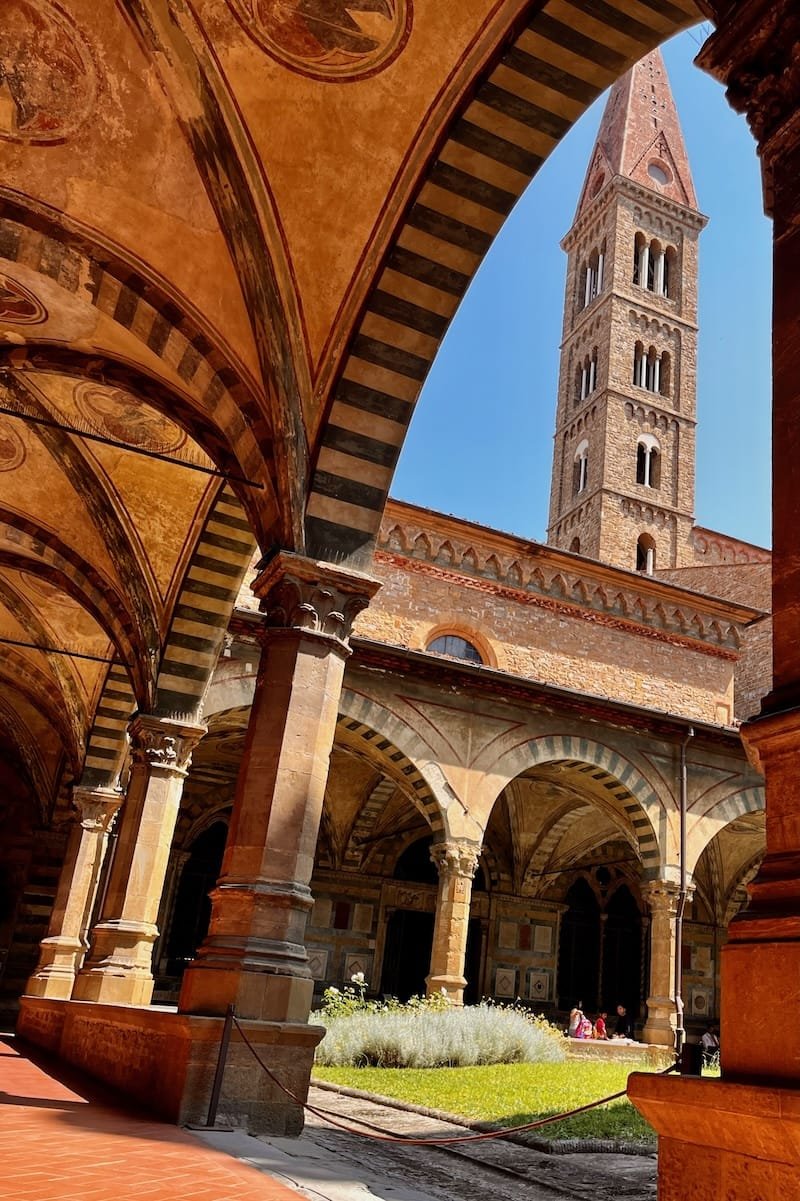
Santa Novella Cloisters
Day 2:
Basilica of Santa Maria Novella
The Basilica of Santa Maria Novella is one of the most important churches in Florence and is the city’s principal Dominican church. It is opposite the main train station of the city which is named after it.
Called ‘New’ – But Actually Old
The Basilica is called ‘novella’ (new) because it is built on the site of a former oratory. As the cornerstone was blessed in 1279 it is older than the Duomo, but is much less visited today. The façade is made of beautiful pale marble and just as ornate as the Duomo. Inside is also highly decorated.
After admiring the Gothic arches and the paintings inside we saw the most ornate gift shop ever! I suppose it was once a cloister or private chapel.
Calm Space
The church felt more spiritual than the Duomo we vistited yesterday, because it was smaller and quieter. We lingered around the Cloisters and gardens for some time, as we like to find some green space and quiet places in cities. It was very serene and we were reluctant to leave. I would have liked to sit and read or eat a picnic lunch there.
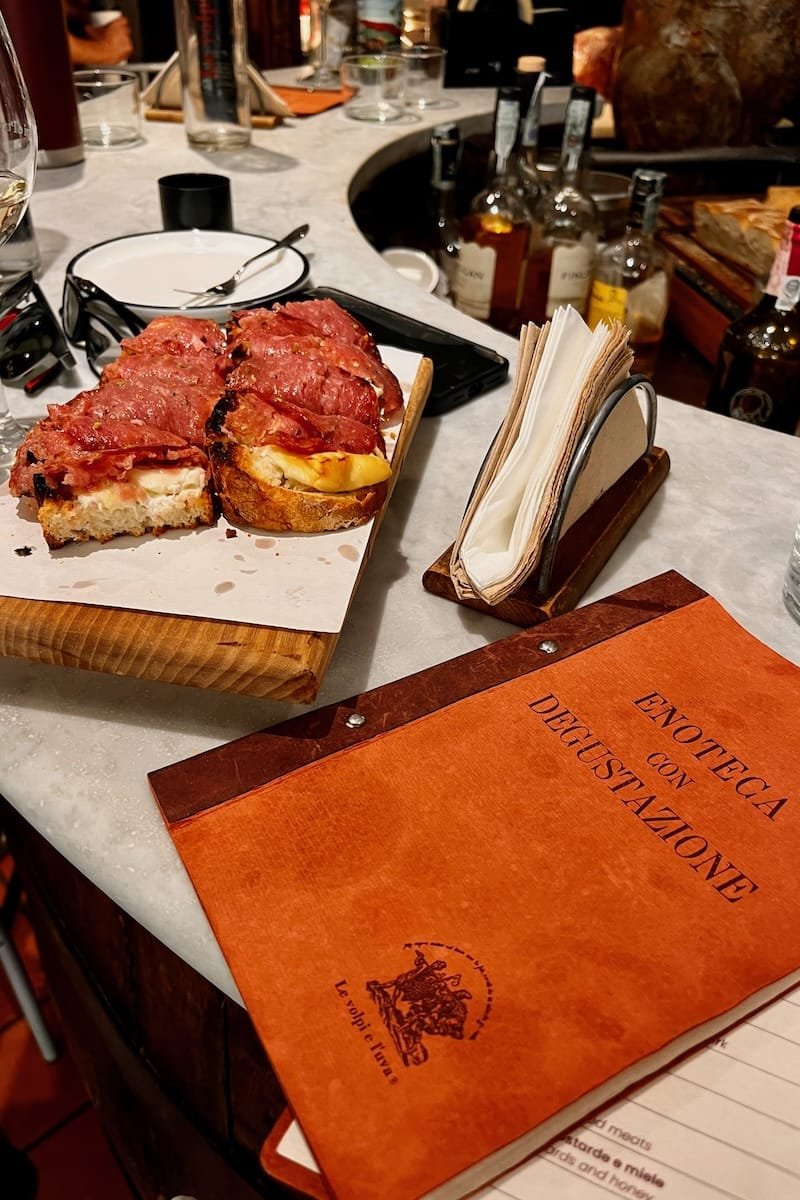
Cured meats from Tuscany and local wine in Florence
Have Tuscan Food and Wine
We found a small air conditioned wine bar Le volpi e l’uva near Ponte Vecchio and guided by the owners, we ordered some small plates to accompany the selection of wines. Tuscany specialises in cured meats, cheeses and wine. What a wonderful trio!
We met an interesting family here and so the quick lunch became a long one. But that is the joy of permitting some flexibility and spontaneity into your planning, if you can afford the time.
Palazzo Pitti
We walked past the large Palace full of museums and galleries on our way to the Ponte Vecchio. It’s impossible to see and appreciate everything so you have to make choices.
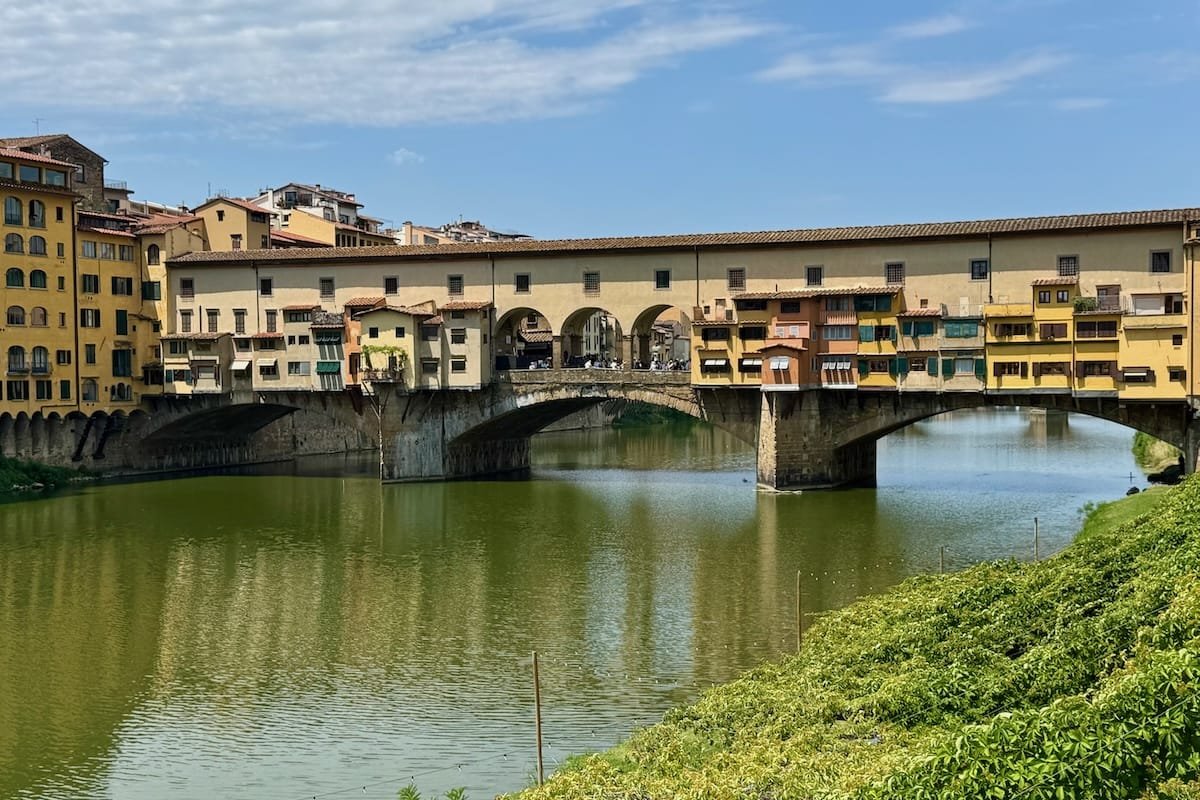
Ponte Vecchio in Florence, Italy
Ponte Vecchio
This famous medieval stone bridge over the River Arno was once the route of the wealthy Medici family between the Palazzo Vecchio and Palazzo Patti, along the enclosed Vasari Corridor.
Grand Duke Ferdinando took offence at the foul odours from the butchers shops on the bridge and decreed in 1565 that only goldsmiths and jewellers could trade there. Today this is still the case with the shop windows displaying lavish pieces, though it is also very crowded with many tourists.
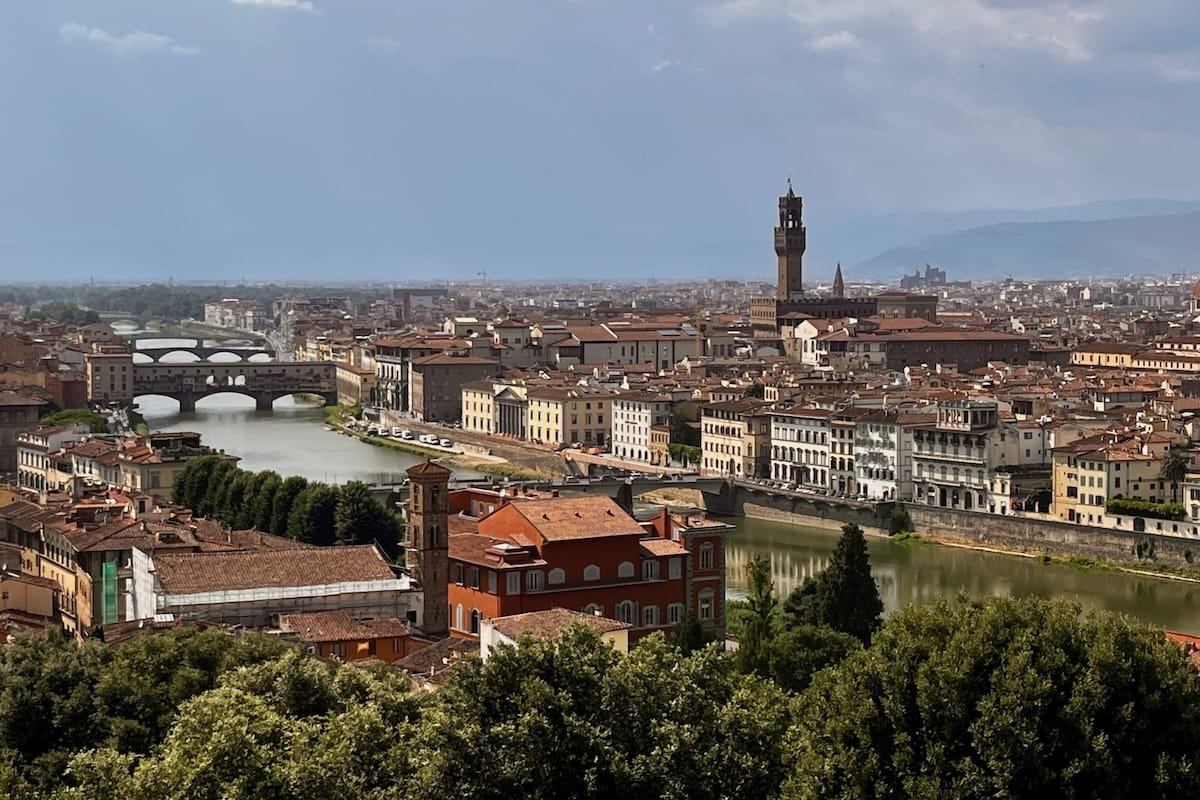
Views over Florence and River Arno from Piazza Michelangelo
Piazza Michelangelo
After about a 20-minute walk, crossing the River Arno, we arrived at the Piazza Michelangelo that we had spotted earlier from the top of the Dome. We walked up steps and past fountains, for hillside views over Florence. There was a welcome breeze in the afternoon and we stopped at the café on the terrace for a drink. This would be a good place to see the sunset, but we left early.
Giardino della Rose
As we are always keen to see new things, we took a different route back. Just below the Piazza Michaelangelo is the Giardino della Rose, which previously was only open in May. Now it is open all year, for free. We wandered down through the modest gardens, past a few people enjoying a book or a rest in the shade. At the end of June, there were few roses left in bloom.

Boys preparing for calico storico game
Watch a Game of Calcio Storico
In June, the traditional game of Calcio Storico is played every weekend. The Piazza Santa Croce is covered in sand and grandstands erected to watch this brutal game which is a mixture of rugby, football and wrestling.
Only a boy born and raised in Florence can play in one of the four teams, each with 27 members.
We saw the boys warming up but unfortunately, we were unable to stay for the game.
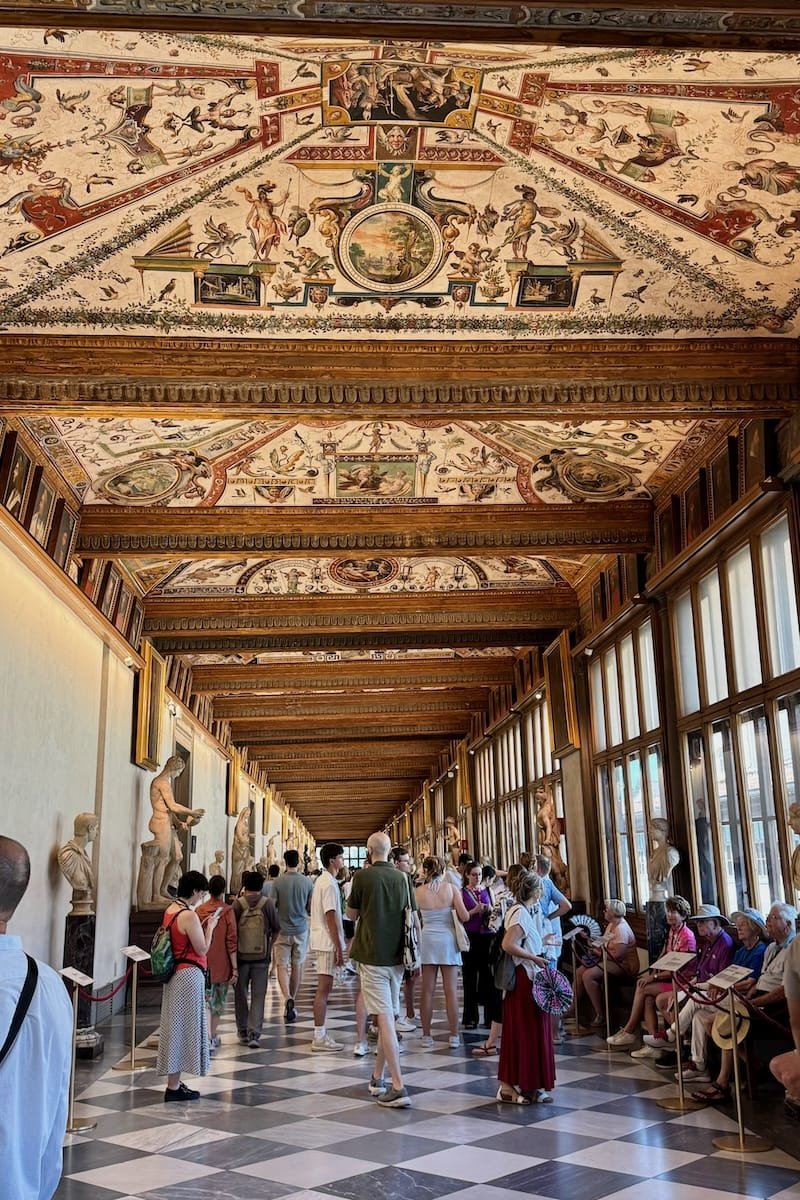
Uffizi Gallery in Florence
Day 3:
Visit the Uffizi Galleries
We had pre-booked timed entrance to the Uffizi Galleries, although you can just turn up and queue. We were a little bit late but as is the Italian way, they let us in. Uffizi means office in Italian so the galleries used to be the governmental offices in the past.
Today the Uffizzi Galleries houses the best and beautifully restored Renaissance art and sculpture.
QR Map
On the second floor there was a QR code to download a map that recommended a route to see the most famous pieces.
This was very useful and we spent about 2 hours at the galleries enjoying them more than expected.
Even the corridors were masterpieces with painted ceilings, tiled floors and natural light from the enormous windows. Can you imagine if this was your office?
Aged Only 15
The biggest surprise for me was that Gian Lorenzo Bernini was only 15, when he created the white marble sculpture of The Martyrdom of St Lawrence! At 15 I was struggling to pass my science exams and couldn’t wait to drop them.
Pro Tip – The corridor is a good spot to view the Ponte Vecchio and Arno River. Near the café, on the outside terrace, you can get some great photos of the Palazzo Vecchio as well.
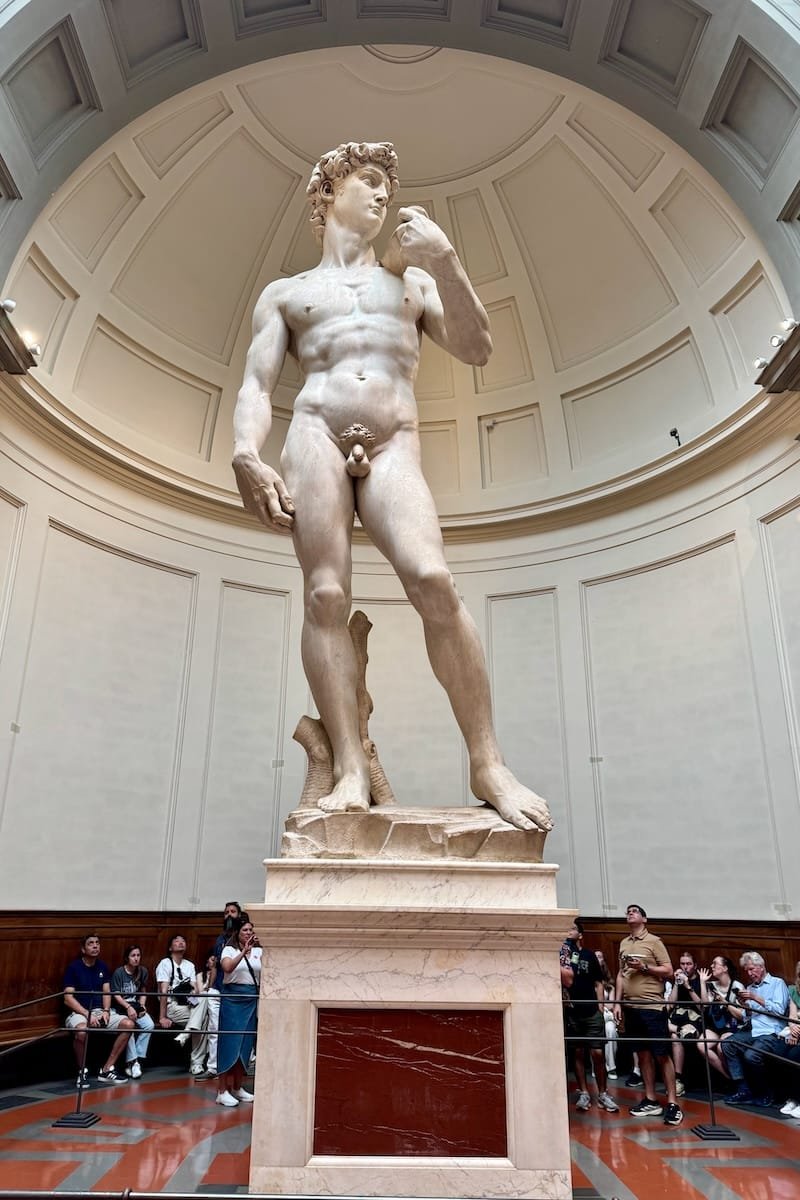
Statue of David by Michelangelo in Florence, Italy
Galleria di Academia
We had an afternoon flight home from Florence so pre-booked online a 9:15 am timed entrance to see and The Rape of the Sabine Women statue and the original statue of David by Michaelangelo in the Galleria Di Academia. Both were larger and more impressive in person than I had expected. The biggest surprise… his hands seemed huge… error or artistic licence?
The gallery leading up to the statue of David held Michelangelo’s 4 unfinished statues of slaves showcasing his techniques of chiselling marble. Even in their unfinished states you can see the energy life and dynamism in what is essentially a lump of cold hard rock.
The Galleria di Academia was designed specifically to house the statue of David and he was shown off beautifully with double height ceiling and a large circular window above, bathing him in natural light.
You are able to walk around the statue and appreciate him from all sides.
Plaster Gallery
The Galleria di Academia also houses famous Renaissance art, though we were more impressed by the Plaster Gallery where you learnt the process of how large statues are created.
We admired the beauty of the Musical Instruments on display though it was frustrating as I yearned to pluck them and hear their sound.
We saw everything we wanted in less than an hour.
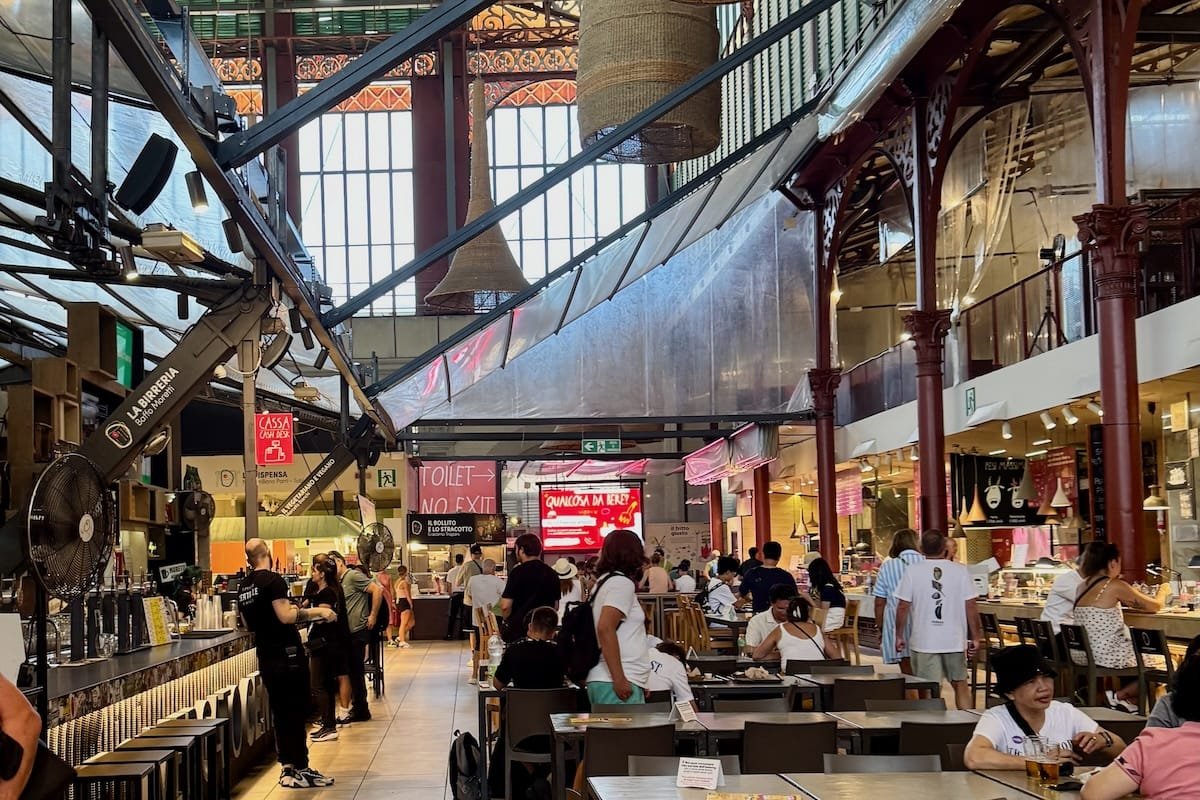
Mercado Centrale Firenze
Have a Meal at the Mercado Centrale Firenze
Having walked past all the clothes and leather stalls outside, we popped into the covered Central Market of Florence.
Open every day from 9am – 11pm including Christmas Day, you can find a wide variety of food and drink. The ground floor sells food including cheese, meat and wine, while upstairs has many restaurant options including vegetarian food and has a bar too.
Some were giving away free samples. It looked a cool place and I wished we had found it earlier
Take a Cooking Class
One of the best ways to learn about a culture is to learn to cook their food. We booked a 3 in 1 experience of a visit to an organic farm, a pasta cooking class and a wine tasting.
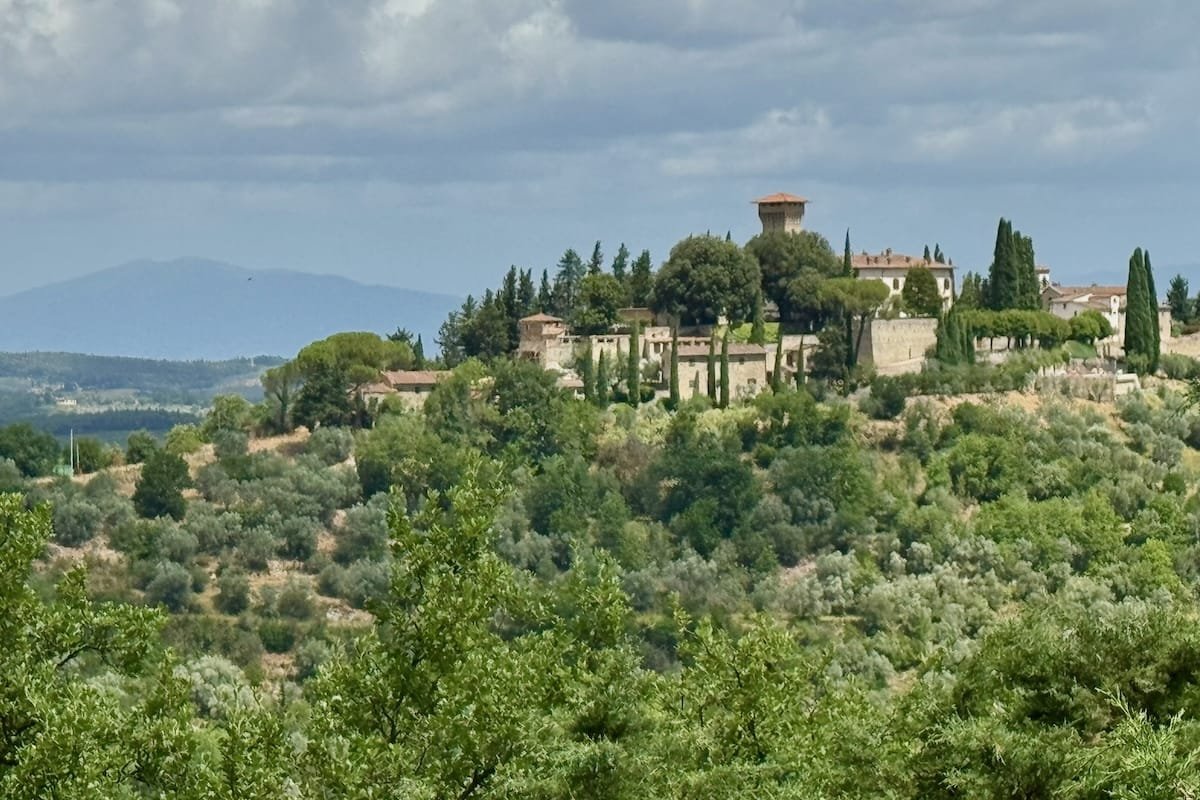
Castello di Verrazzano in Florence, Italy
Take a Wine Tour and Lunch at Castello di Verrazzano
As an alternative (or on another day) have a Wine and Food Experience at the historic Castello di Verazzano only 45 mins drive outside Florence and close to Greve in Chianti.
We booked the 12-3pm slot online a few months ahead and Graham was nominated as the designated driver – more fun for me.
Garden Tour
The tour started in the gardens of the estate of Giovanni Verazzano, a navigator born in 1527 who found New York Bay. We learnt of the history of the farm from the 1100’s and the family.
Learn How to Produce Wine
Explanations were given of the methods of production as we proceeded from the drying rooms to the cellars, passing the vault where they preserve bottles for posterity.
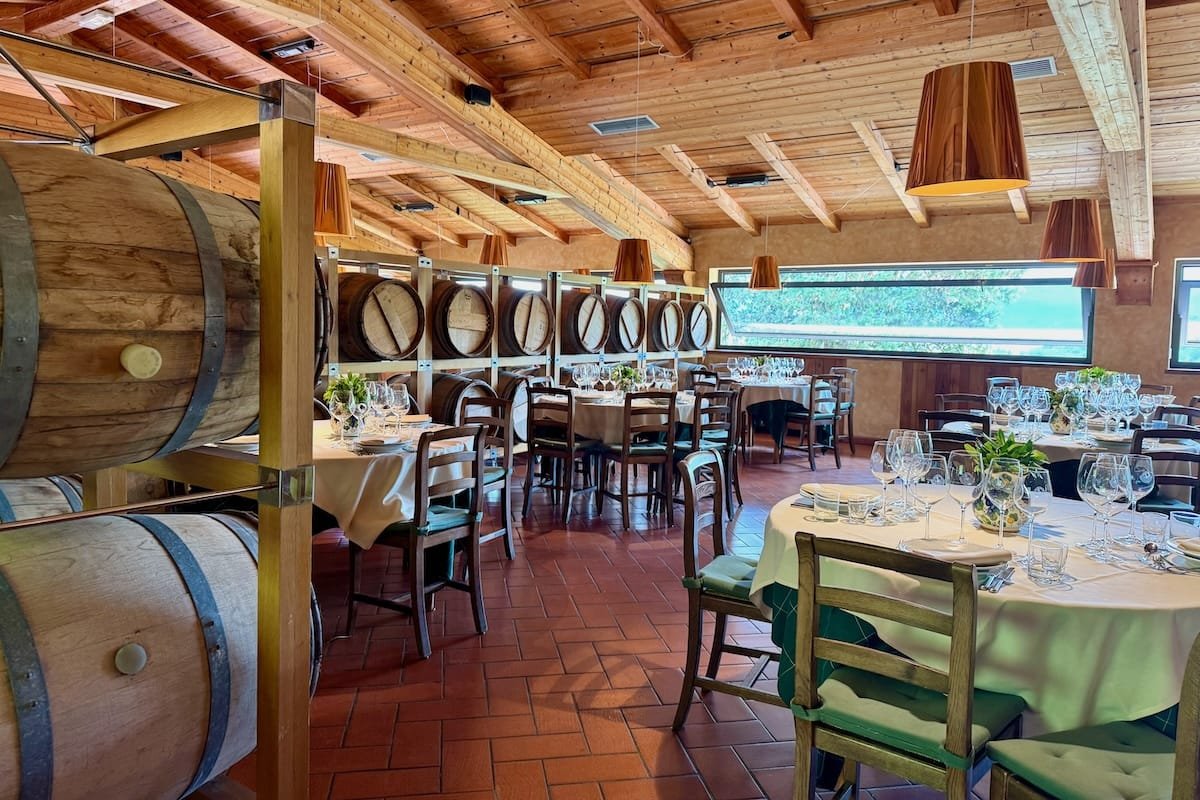
Wine barrels and tables at Castello di Verrazzano in Florence, Italy
Cellar Tours
The final cellar had the smallest barrels as they were for balsamic vinegar which was aged 10 years and made from the same sweet white grapes as Santo sweet wine. 90% evaporates over the 10 years. Having tasted various wines over the years that tasted like vinegar, I finally understood the connection!
Lunch and Wine Pairing
The tour was followed by a generous and delicious 5 course lunch of Tuscan food with pairings from the estate.
Pro Tip: If a bottle has Castello in the name, it means the grapes are from that vineyard and if the Black Rooster logo is on the bottle, then drink with food.
Pro Tip: There are so many vineyards offering tours and tastings in Tuscany that it is tempting to try many. However, we recommend being selective and only doing one or two wine tastings (unlike the many we did).
Wine from Chianti region in Italy must have at least 80% Sangiovese grapes to be called a Chianti. As a consequence, only the remaining 20% is available for the winemaker to be creative in developing a different flavour.
In other wine regions the winemaker has more scope and so there is greater variety in the wine tastings.
Final Thoughts
Florence, the capital of Tuscany, is a magnificent city full of art, history and delicious food, yet small enough to be fully walkable in just a few days.
It is extremely popular, as many large cruise ships dock here too, so you need to book ahead for entry into the main attractions but even without entry, there is still so much to see for free.
It can be used as stopping point in a tour of Italy with Pisa, Rome and Cinque Terre all within easy distance. It’s a must do stop on any tour of Italy.
Try and find time it for the centuries old horserace round the centre of Siena, the Palio di Siena.