
Ultimate 4 Day Itinerary in Mexico City
By Gillian Boyd Published 6 April 2026
Explore the highlights of Mexico City (CDMX) and Teotihuacan Pyramids with our 4-day itinerary. It covers the historic centre, Roma and Condesa neighbourhoods, Chapultepec Castle Park, National Anthropology Museum and of course the Frida Kahlo Museum, La Casa Azul.
Getting To Mexico City
We flew from London Heathrow direct to Mexico City Juarez International airport on the overnight flight with Aeromexico. It took about 12 hours and with the time difference we landed in the wee small hours of the morning feeling tired even though we had slept. It may be cheaper to fly to Cancun and take a domestic flight to Mexico City.
SIM Card
At the airport we bought a Telcel SIM card on the second floor which can be recharged at Oxxo stores (convenience store) widely available all over Mexico.
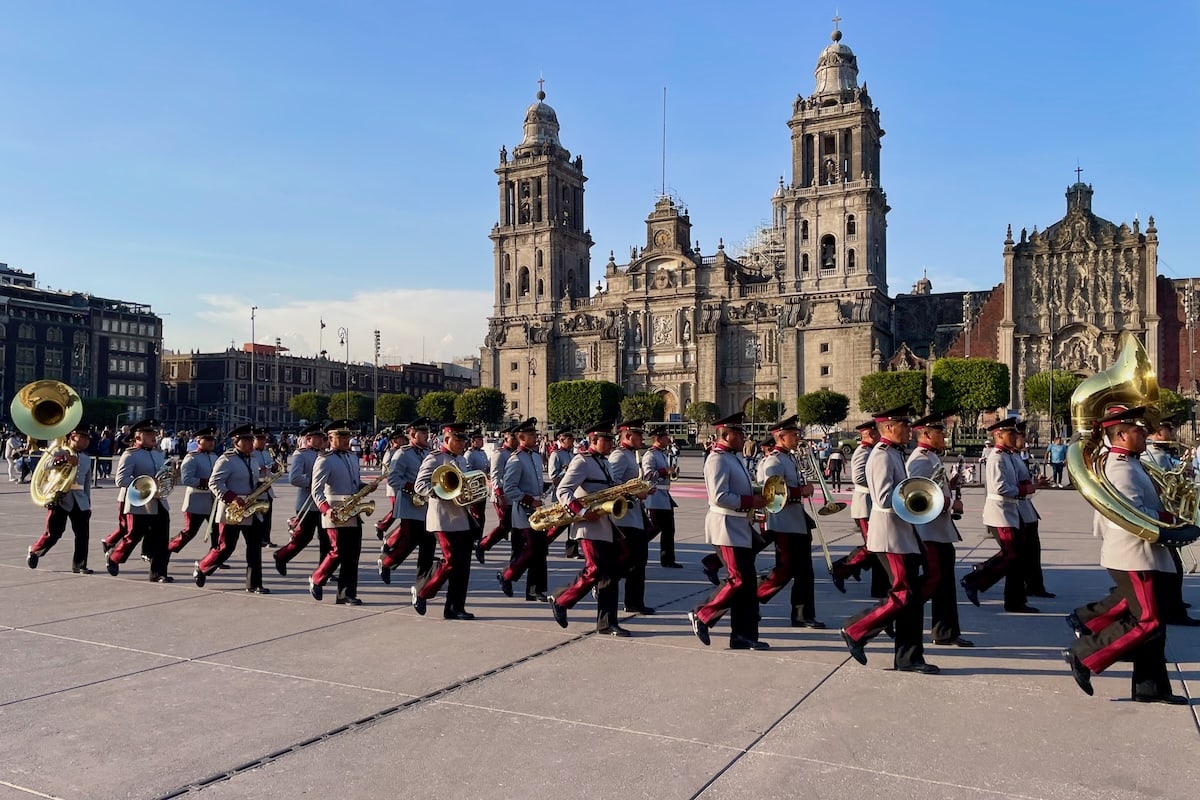
Brass band marching in the Zócalo in front of the Metropolitan Cathedral
Transport
Depending upon the distances involved we either walked, got the metro or took an Uber in Mexico City.
Metro
The metro system in Mexico City is fast, clean and easy to use. It was also very cheap at only 5 peso (20 pence) for nine stops while the equivalent journey in London is 14 times more. As a keen reader, I was delighted to discover that from Pino Metro Station to the next stop, Suarez, the entire 1km corridor was full of bookshops.
Uber
From the airport we shared an Uber with another couple who seemed to be following us (no they weren’t stalkers) to get to our hostel. We found Uber to be a safe and convenient way to travel in Mexico City and because you type in the location, it avoids any mispronunciation and pay by card, so cash is not necessary. We had preloaded our Revolut card onto the Uber app before leaving the UK.
Bus
We used ADO Platino overnight bus from Mexico City to Oaxaca when we left for our next destination. The journey took 6 hours 40 mins on twisty mountain roads. Maybe take a motion sickness pill if you are bothered.
ADO Platino is the luxury bus in the ADO range and we picked it as it departed around midnight. The fact that it was more luxurious than the other ADO buses was coincidental as we got it for the price of a standard bus. It had 3 seats across instead of 4, was curtained and it felt like sleeping on an aeroplane.
We used ADO buses a lot throughout Mexico but the on-line booking system only allowed us to book one ticket each at a time. Hopefully it’s working better by the time you get there. The buses were clean, reliable and had a toilet on board.
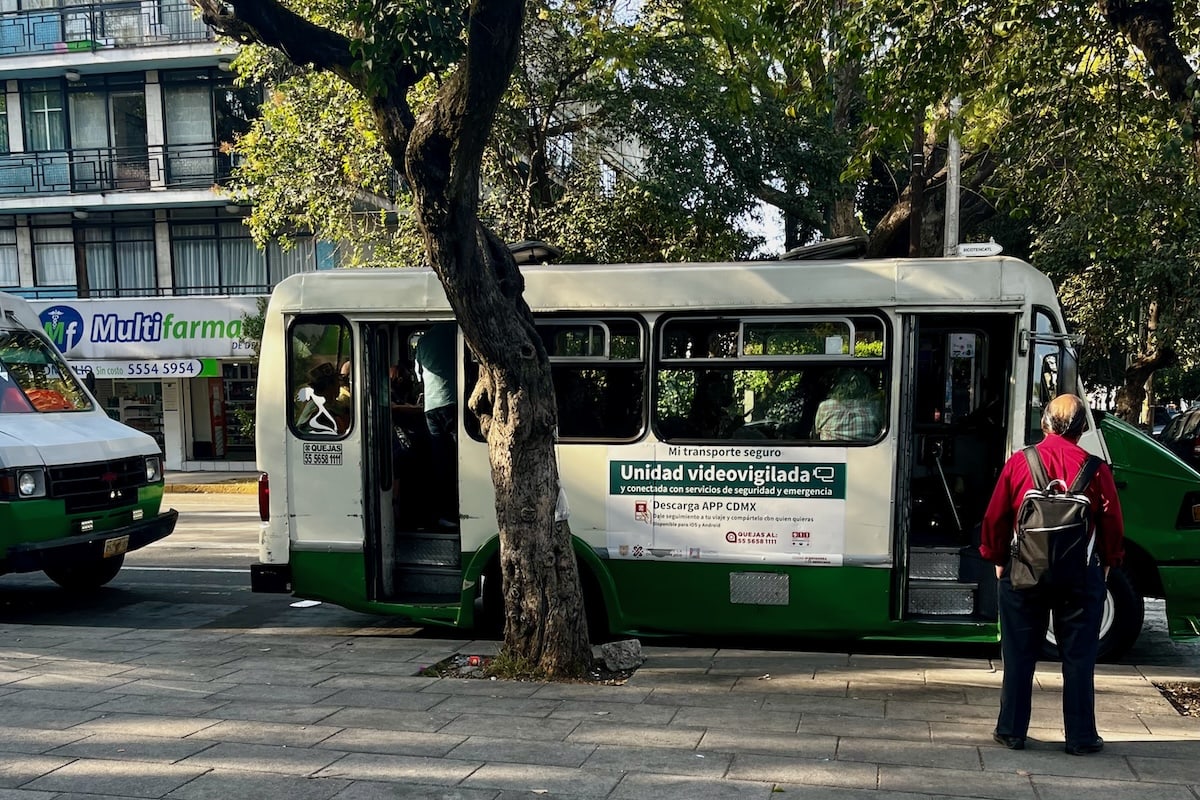
Colectivo waiting in Mexico City
Colectivos
Colectivos are one of the main forms of transport in Mexico. We mainly used them outside Mexico City. They are shared mini buses on a set route with a fixed fare (dependant on distance) and have seats for about 12 passengers although sometimes more are squeezed in.
Ask the hostel or locals for the bus stop location. They are often near markets.
Leave When Full
They do not run to a set timetable but leave when they are full or when the driver decides. International tourists pay the same rate as locals. Pay in cash. They do not have toilets on board. You ask the driver to stop somewhere and they always did.
Pro Tip – Save your 5 and 10 pesos coins as you may to need to pay for the toilet, especially outside Mexico City.
Friendly Mexicans and Speaking Spanish
Like most travellers our view of Mexico was informed by our home grown media. Consequently, we had some trepidation, but soon realised that our home fed news painted a scarier picture of Mexico than it felt when we visited. We travelled on many colectivos for 3 or more hours and while I had downloaded my favourite podcasts to listen to, I didn’t get the opportunity as the locals were very curious and friendly and chatted to us. So that is why I now speak Spanish with a Mexican accent.
What Questions They Asked
The locals wanted to know why we were there, how old we were, about our family, where we were going and what we thought of Mexico. We absolutely loved Mexico so we were honest and enthusiastic and were greeted with big smiles.
Learn Some Basic Spanish
Basic Spanish, with a focus on directions, numbers and practical phrases are worth learning before you go, especially for the more remote regions. To learn Spanish, we used Language Transfer app and relied heavily on ‘Es posible…?’ and adding any noun. We spoke in present tense and added ‘manana’ for tomorrow/future, ‘ayer’ for yesterday/past, ‘passado, pasado’ for a long time in the past. It wouldn’t pass an exam but the Mexicans were very forgiving and we were understood. Otherwise you speak via Language translation apps.
In parts of Central Mexico such as Chiapas, even Spanish is not widely spoken as many locals are indigenous and speak one of the 68 different indigenous languages and 364 distinct linguistic variants.
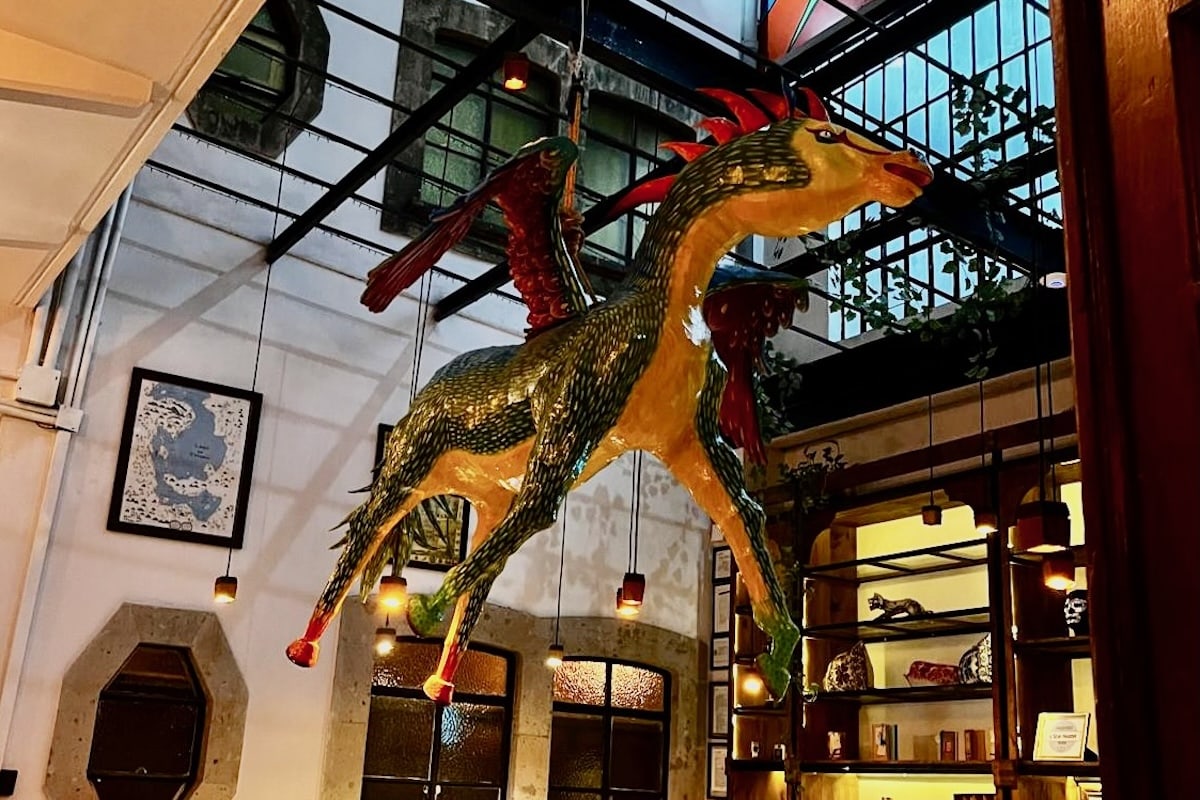
Flying horse sculpture at Casa Pepe Hostel Mexico City
Where to Stay
We stayed at the Casa Pepe Hostel in Centro Histórico area. We were hostel virgins (yes, this was our first backpacking trip) and it was a good choice for easing us into hostel life as it looked more like a boutique hotel, with its flying horse sculpture suspended from the ceiling.
The location was good, only minutes away from the colonial historic centre of Mexico City and the main square, the Zócalo with it’s metro station. Breakfast served on the roof top, was excellent and with regular entertainment in the evenings, we were lulled into thinking we were staying in a hotel. It was the lack of minor details like a towel rail that revealed we were actually in a hostel.
Mexico City (CDMX) is a huge city with around 10 million living in the city and 25 million in the greater metropolitan area.
Good Neighbourhoods
We found the Centro Histórico to be very convenient for our sightseeing. Other good neighbourhoods to stay in are Roma and Condesa with bohemian, Art Deco architecture and many restaurants. Or Coyocán which is quieter with its pretty cobblestone streets and museums. It’s where Frida Kahlo grew up. Polanco is the upmarket area with high end retail and luxury dining though we found the food to be so tasty everywhere in Mexico.
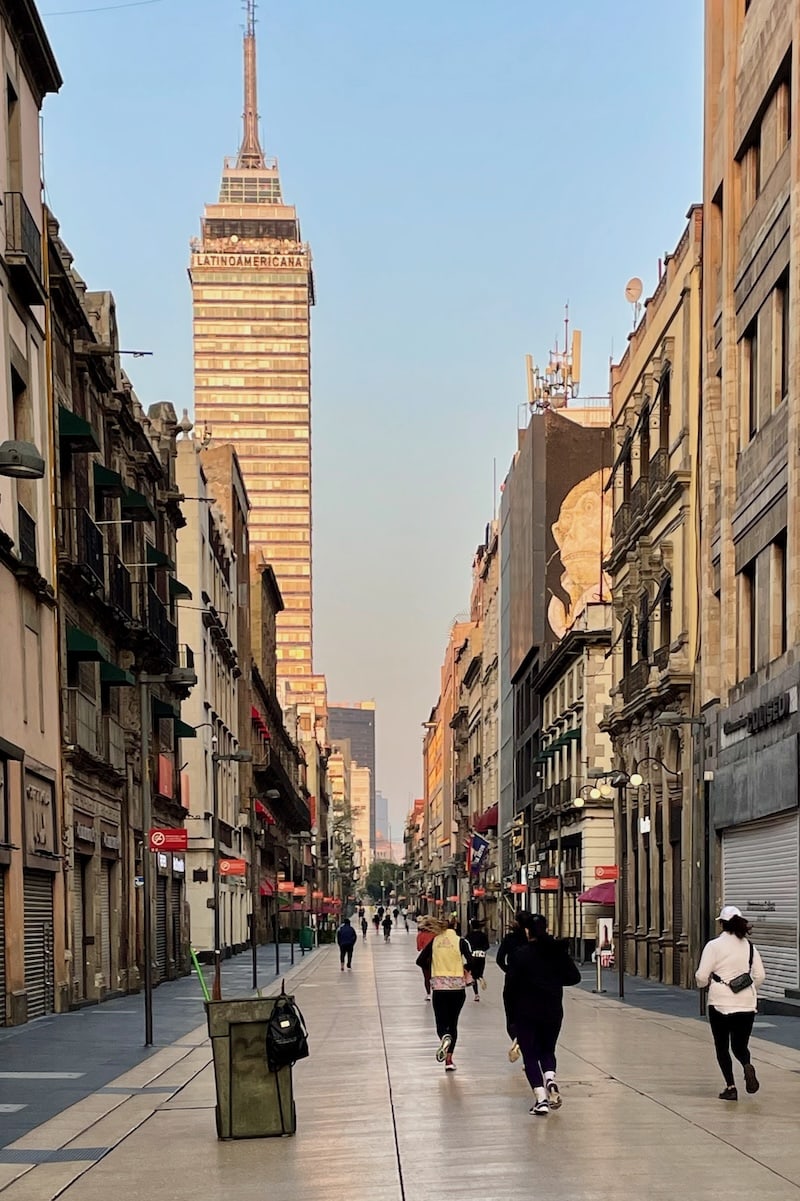
Joggers running in Moderna, Mexico City
Day 1 – Explore the Historic Centre
Eat Street Food at Moderna
Watch the early morning joggers do laps on the pedestrian only street of Moderna.
Get some breakfast at the stands which open around 6am. After watching for a while, we picked the taco stand that had a queue and five policemen eating there. It proved to be one of the best tacos we ate in Mexico closely followed by Taquería Tacome in Oaxaca and Mr Taco in Bacalar.
Free Walking Tour
Taking a walking tour is a good way to get your bearings quickly in a new place and gain a potted history of the main attractions. You rarely go inside the buildings (even when they are free) but it helps you decide if you want to come back later and explore in more detail.
Get Questions Answered
The tour guides can answer your questions and give recommendations on restaurants, bars, live music, tours, where to get the colectivos etc. We had pre-booked online with GuruWalk.com.
Metropolitan Cathedral is a popular meeting place for walking tours. Walks typically take around 2 – 2.5 hours and finish at a different place. Check out the route online.
Give a Tip
They call it a free walking tour, but that’s a misnomer, as you are expected to tip. It is just that you choose how much you want to give. US$10 per person was suggested. The amount we gave varied depending on how many people were on it and the quality of the tour. Read more about the historic free walking tour and major historic buildings.
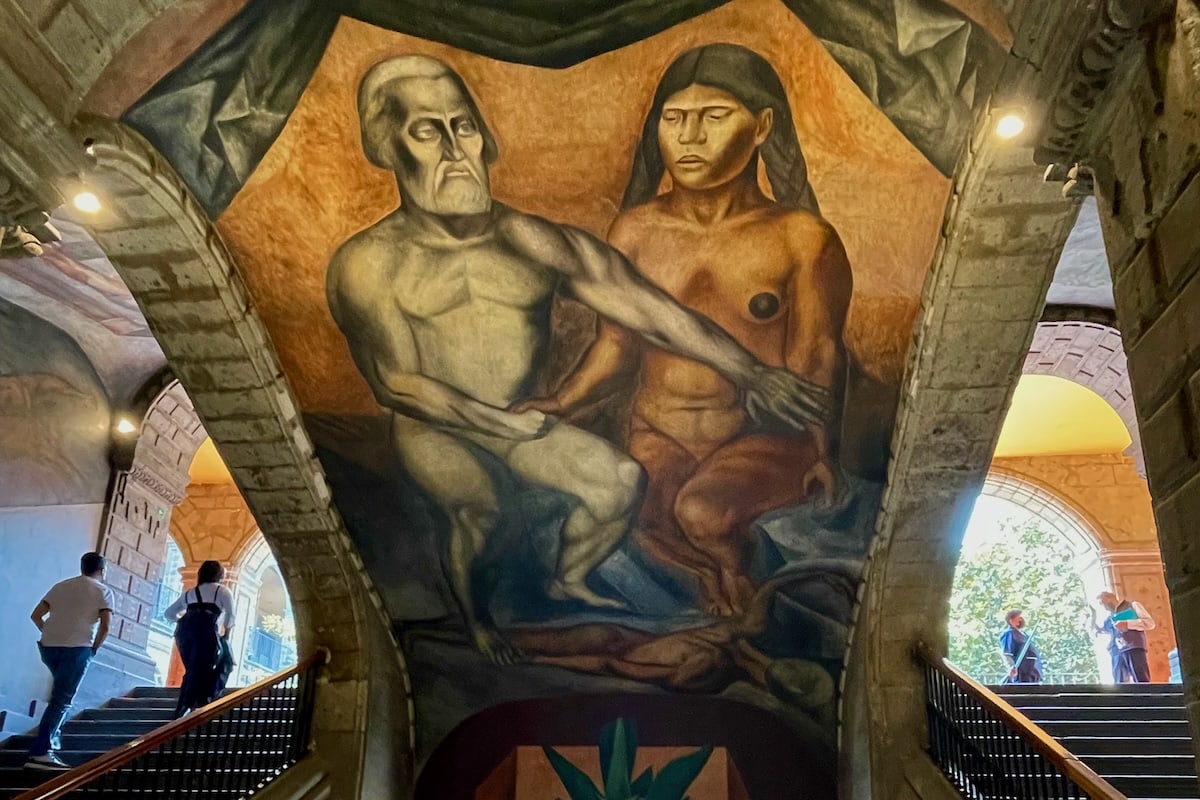
Mural in Stairwell of Colegio de San Ildelfonso, Mexico City
Former Colegio de San Ildefonso
See the birthplace of Mexican muralism at the Colegio de San Ildefonso, previously both a former Jesuit college and Escuela Nacional Preparatoria (National Preparatory School). It’s just around the corner from the Temple Mayor.
Why?
In the 1920’s, the government sponsored mural paintings focusing on Mexico’s history and the politics of the post-Revolution era. The murals give a powerful, visual history of Mexico. They were painted by Orozco, Rivera (husband of Frida Khalo), Siqueiros and others.
Beautiful and Powerful
These huge murals adorn the walls, stairwells and the inner courtyard of the college with its graceful arches and verandas. The architecture alone was worth the visit. The huge murals are masterpieces and the style is so different from the political murals of Northern Ireland, where we grew up.
Despite the turbulent content of some of the murals, we left feeling quite calm and serene as it was a quiet, beautiful place. Closed on Mondays, open 11:00 to 17:30.
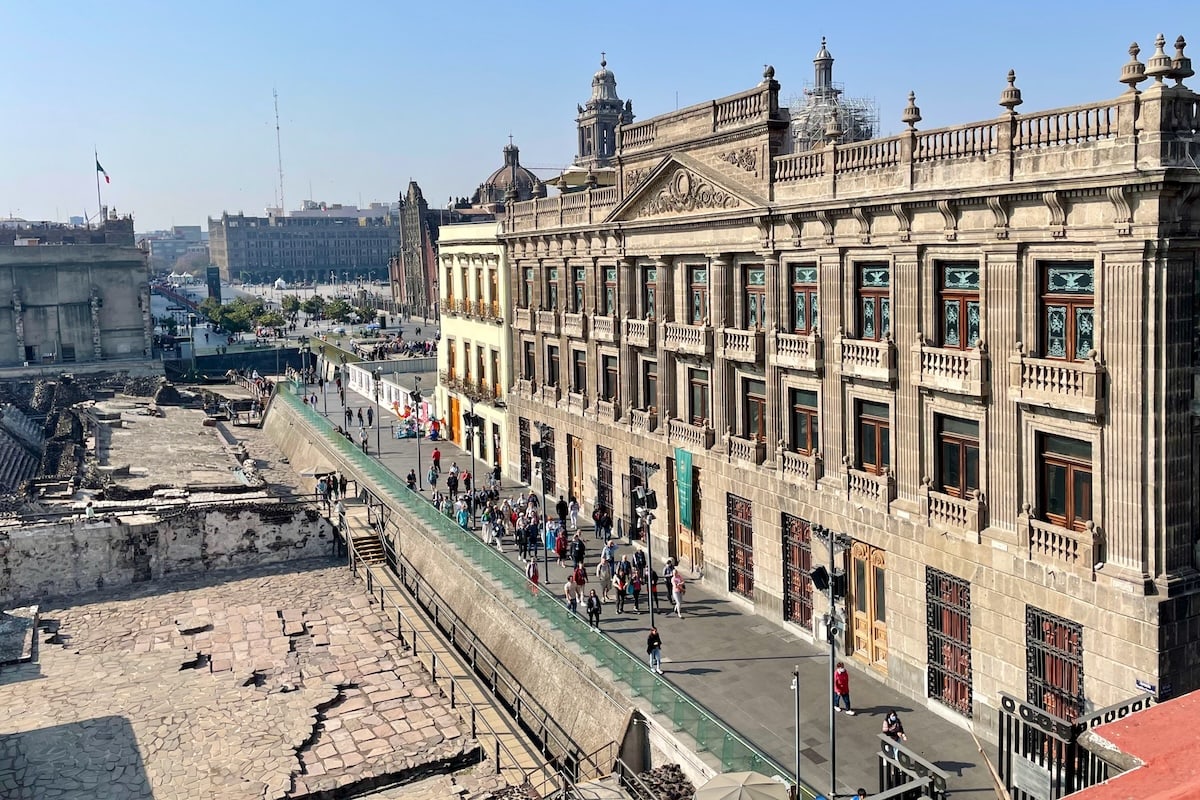
View of Temple Mayor and Metropolitan Cathedral from Terraza Catedral rooftop bar
Rooftop Bar
Sip a drink at the Terraza Catedral, a rooftop bar with views of the Catedral Metropolitana de la Ciudad de México and watch the sun set.
It’s only a 5 min walk from the Former Colegio de San Ildefonso. Drinks are a little more expensive, but when didn’t a rooftop bar cost a bit more?
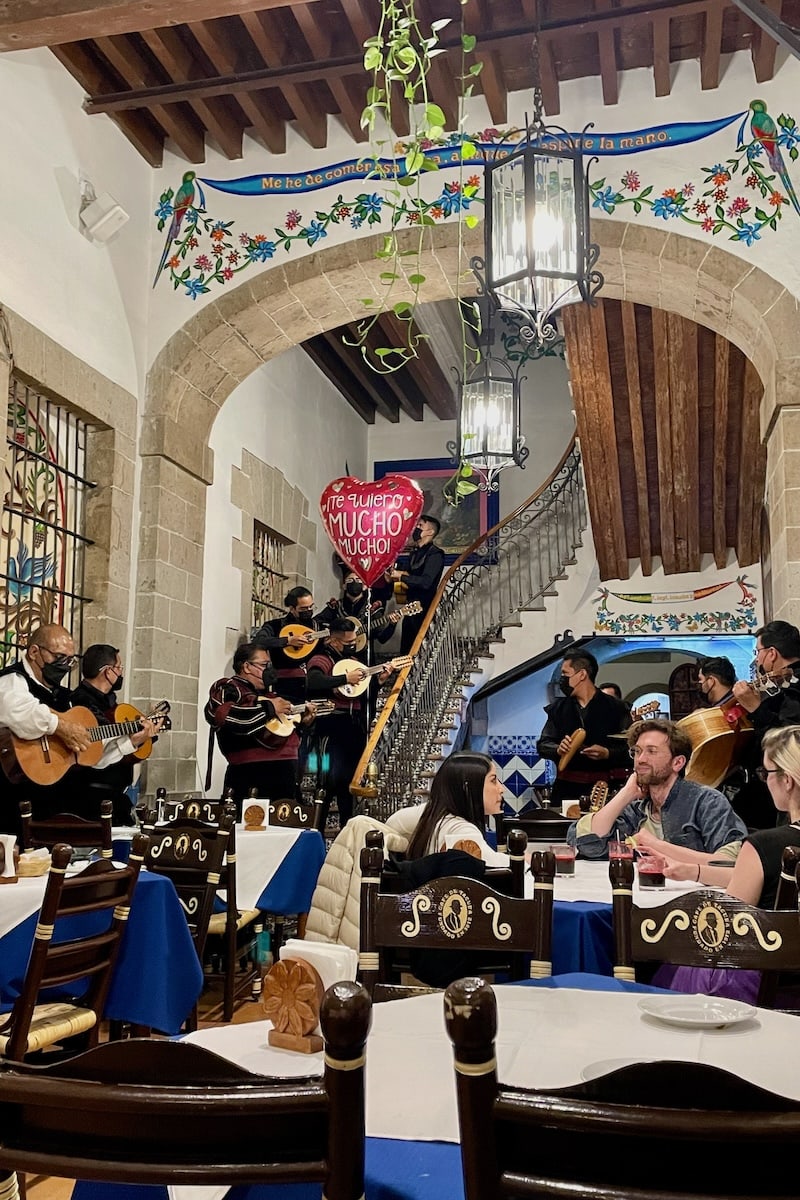
Mariachi band at the Cafe de Taguba, Mexico City
Eat Traditional Mexican Food
Eat traditional delicious Mexican cuisine at The Café de Tacuba, within walking distance of the hostel. Founded in 1912 and consisting of two adjoining rooms, the walls have been decorated with ornate hand painted friezes.
Mariachi Band
On the night we dined, we were serenaded by a twelve-piece mariachi band in matching costumes and guitars ranging from a small ukulele to a giant guitarron and everything in between. While they harmonised, some customers danced between the tables.
Pro Tip: Save your coins or small notes for giving tips to the street musicians. The hat gets passed around at most restaurants and bars. In many towns, the musicians play only three or four tunes and then move onto another venue. Tips are their only income.
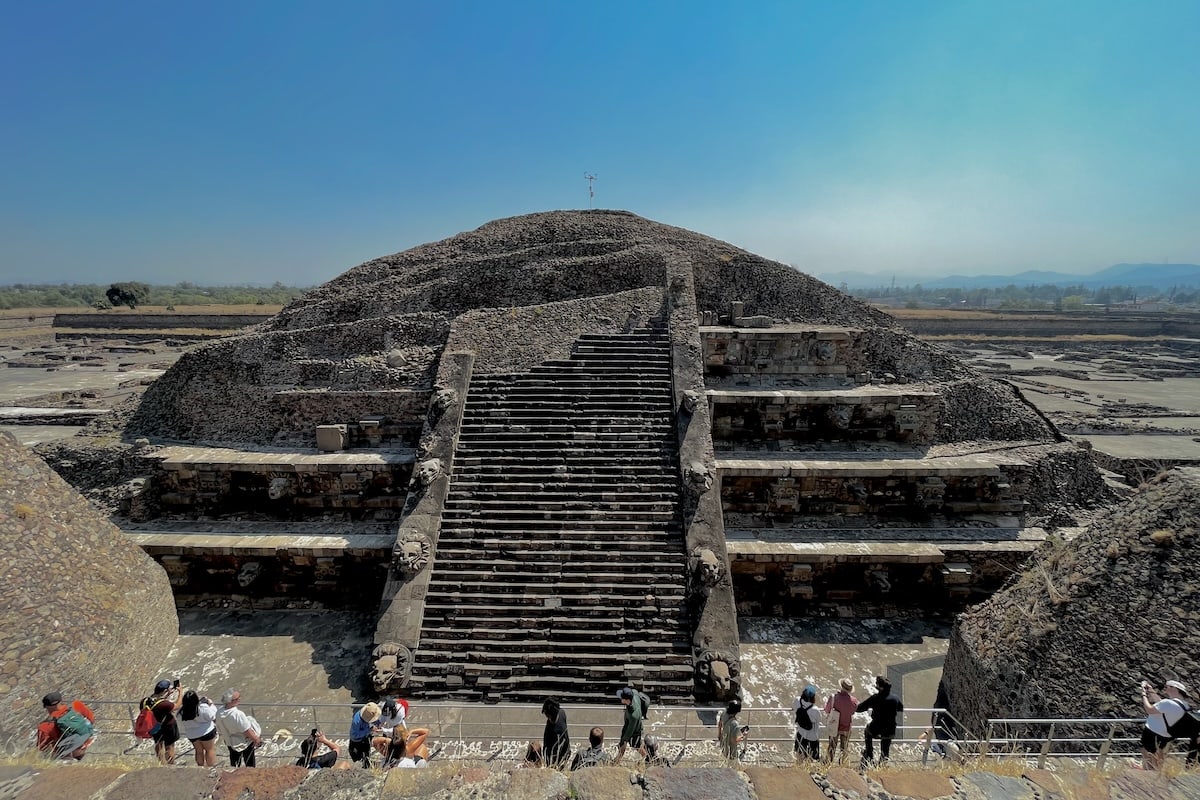
Teotihuacan Archeological Ruins near Mexico City
Day 2 – Experiencing the Underworld Pryamids on a Teotihuacán Tour
Although it is possible to book a hot air balloon ride over Teotihuacán, but we didn’t do that. We had pre-booked online a full day tour of the pre-Hispanic archaeological ruins in Teotihuacán City, on Airbnb.co.uk experiences.
Only an Hour from Mexico City
The ruins are only about one hour north east outside of Mexico City on a mini-bus. We were picked up and returned to a central location in Mexico City.
Pryamids
The site is UNESCO listed and famous for its Pyramids of the Sun and the Moon and the Avenue of the Dead. This was a fascinating and enjoyable tour that you can read more about here.
Pro tip – It’s huge and hot as there is no shade, so come prepared. Bring water, suncream and a hat (even if you are not a redhead).
If you are too pressed for time to do this day trip, you can still see replicas of the carvings at the Museo Nacional de Antropolgía in Mexico City where we went on Day 3.
Learn to Dance Salsa
What could be more Mexican than learning to dance salsa in Mexico City?
The hostel put on a free lesson and we signed up in a heartbeat, confident in our ability even though we had never danced it before. At home, we went to a ballroom class but we soon learned that salsa is very different. In salsa, the upper body never stops moving while at the same time there is hip movement and body rotation.
Competition
After the lesson teaching us six basic steps, there was a dance-off competition. Despite our ballroom experience we didn’t win, but when we were eliminated half way through, we were asked to assist the judge.
The winning couple were not as technical as the runners up, but they had an instinctive freedom to their movements which is the essence of salsa.
Pro Tip: Dance salsa like it’s just you and your partner, with no one watching, have fun and exaggerate everything. The freedom will make you a joy to watch and you will have a blast doing it. Salsa is loved by Mexicans of all ages and even though you get up with your partner don’t be surprised if a local guy or girl asks you to dance. Probably means you are doing the moves pretty well!
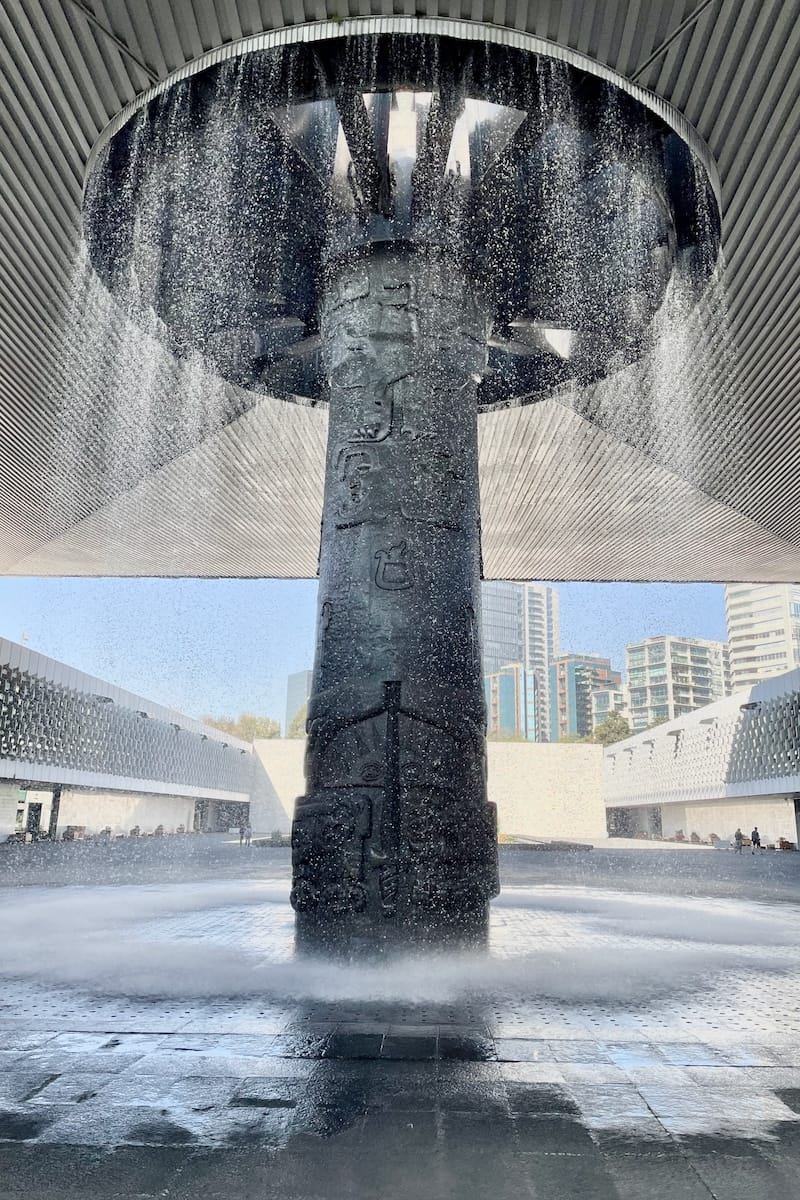
National Anthropology Museum Umbrella in Mexico City
Day 3 – Museum, Park and Condesa
Museo Nacional de Antropolgía
See the striking architecture of the modern building and feel the spray from the umbrella of Museo Nacional de Antropolgía (National Anthropology Museum) designed by Pedro Ramíez Vázquez in 1964.
Largest Collection in World
Prepare yourself for some sensory overload as the museum houses the world’s largest collection of ancient Mexican art, Mayan and Aztec culture and is Mexico’s most visited museum.
Indigenous
There are also ethnographic exhibits about Mexico’s present-day indigenous groups. It also has replicas of the Teotihuacan City (that we had visited the day before) that you can see up close and photograph in air-conditioned comfort. Although you do miss out on the grand scale of the city.
Highlights
You could easily spend all day here in this wonderful treasure trove but we limited it to a morning. The highlight for me was seeing the Sun Stone which depicts the Aztec Calendar, but for Graham the it was seeing the mammoth bones and tusks, something that as a child, he had believed was a myth.
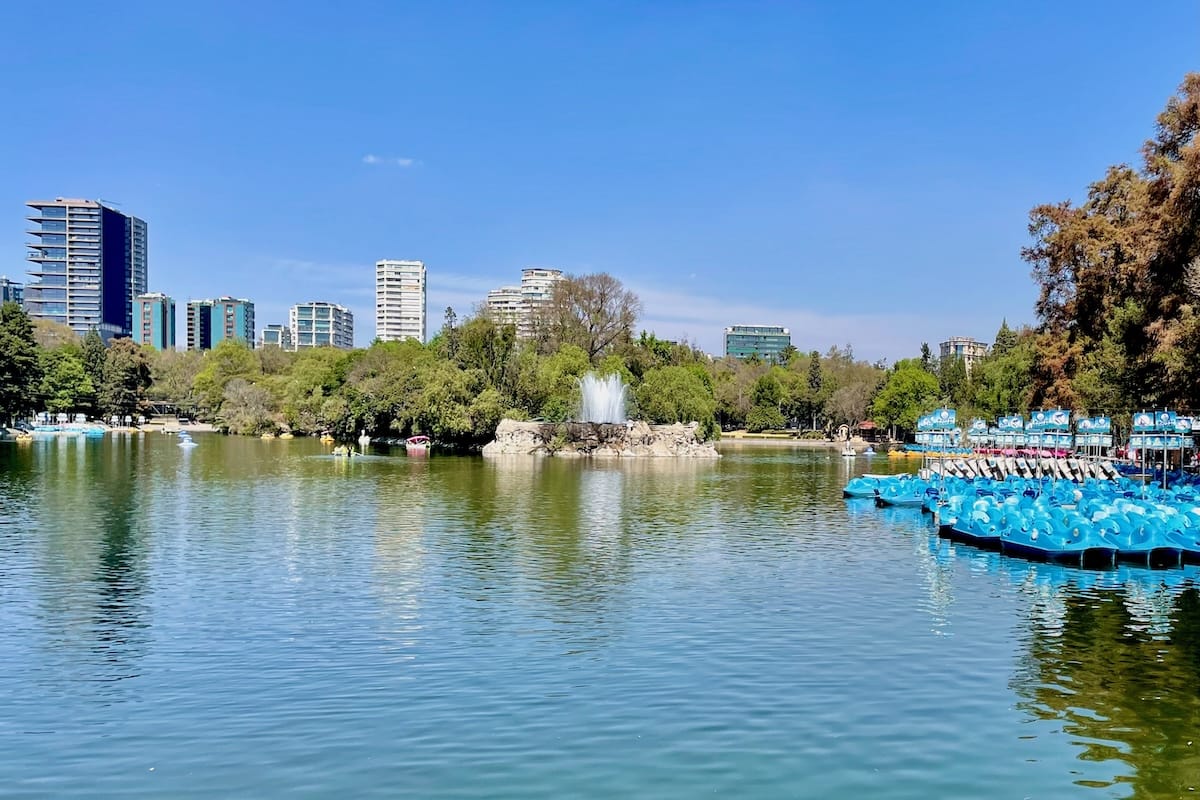
Lake in Chapultepec Park, Mexico City
Bosque de Chapultepec Forest Park
Next to the Museo Nacional de Antropolgía is the one of Mexico City’s largest parks, the Bosque de Chapultepec Forest Park, considered to be the ‘lungs’ of Mexico City, so it’s an ideal opportunity to explore and be outdoors after a morning inside.
The name Chapultepec means ‘at the grasshopper hill’ in Nahuatl and refers to a large rock formation in the park.
Pro Tip – Sunday is the busiest day, as all nine museums within the park, including the Museum of Anthropology, are free and locals also spend the day in the park picnicking.
Acrobats
As we wandered through the park, we saw four acrobats spinning from a giant pole which was quite surprising. I don’t know if they are always there.
Boating Lake
Nearby there are CDMX letters to pose with and boating lakes with rows of bright blue pedalos available for hire. Also visit the Monument of the Ninos Heroes or take in the Chapultepec Zoo (though we didn’t). The park is vast and there is lots to do.
Audiorama
My favourite, though was the Audiorama, a Japanese inspired garden created to reduce stress. The planting shielded the area from the rest of the park creating a green leafy room with no roof. Quiet gentle music played through pipes – changing daily from classical to traditional Mexican and contemporary. We rested a while on the red benches. It was a perfect place to read a book, if only I had more time.
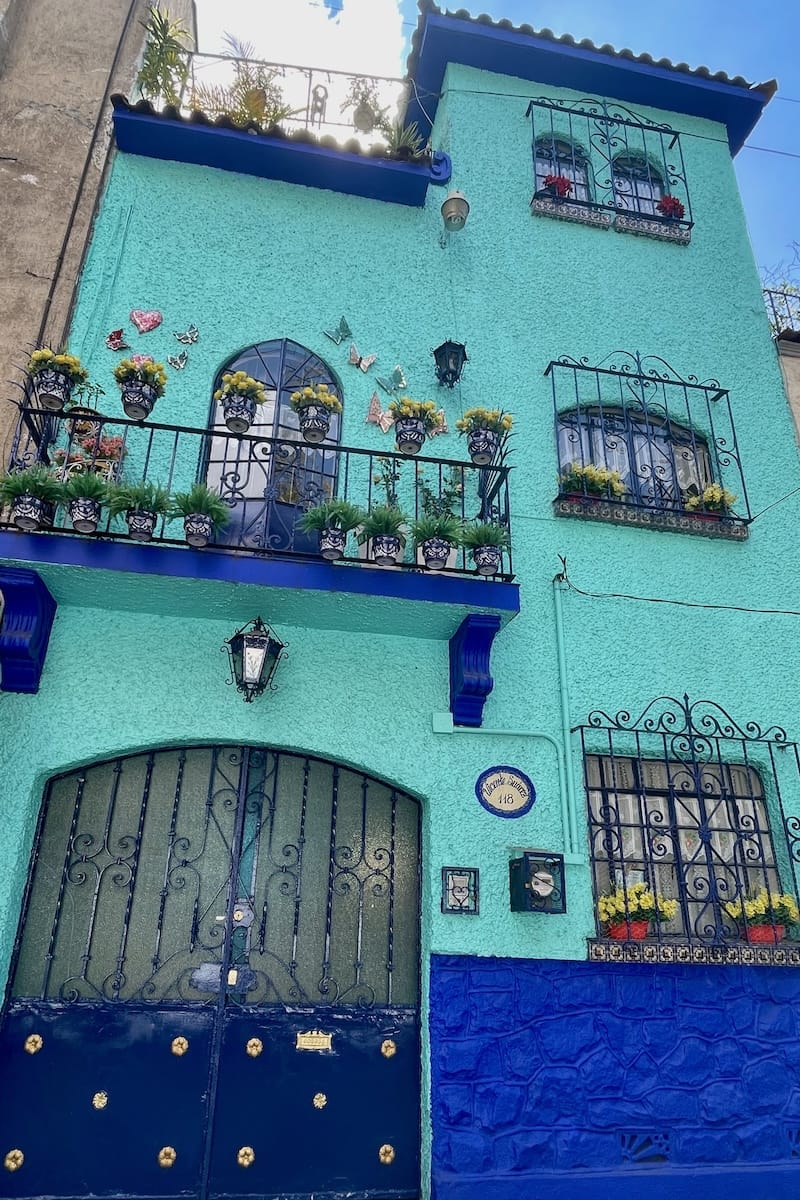
Colourful house in Condesa, Mexico City
Condesa
We exited the Bosque de Chatultepec Forest Park onto the trendy Condesa neighbourhood of Mexico City.
Gently Wander
Wander the streets of Condesa and admire the Art Deco architecture, feel the shade of the tree lined streets and soak up the atmosphere. Sit at any one of the numerous cafés and people watch. There will be dog walkers, joggers and people going about their business especially around Parque España and Parque México.
In the evening, we returned to Condesa for dinner in La Nonna restaurant with superb traditional Italian food. We hadn’t booked. We forgot it was Valentine’s Day but they fed us canapés while we waited for a table. Deliziosa!
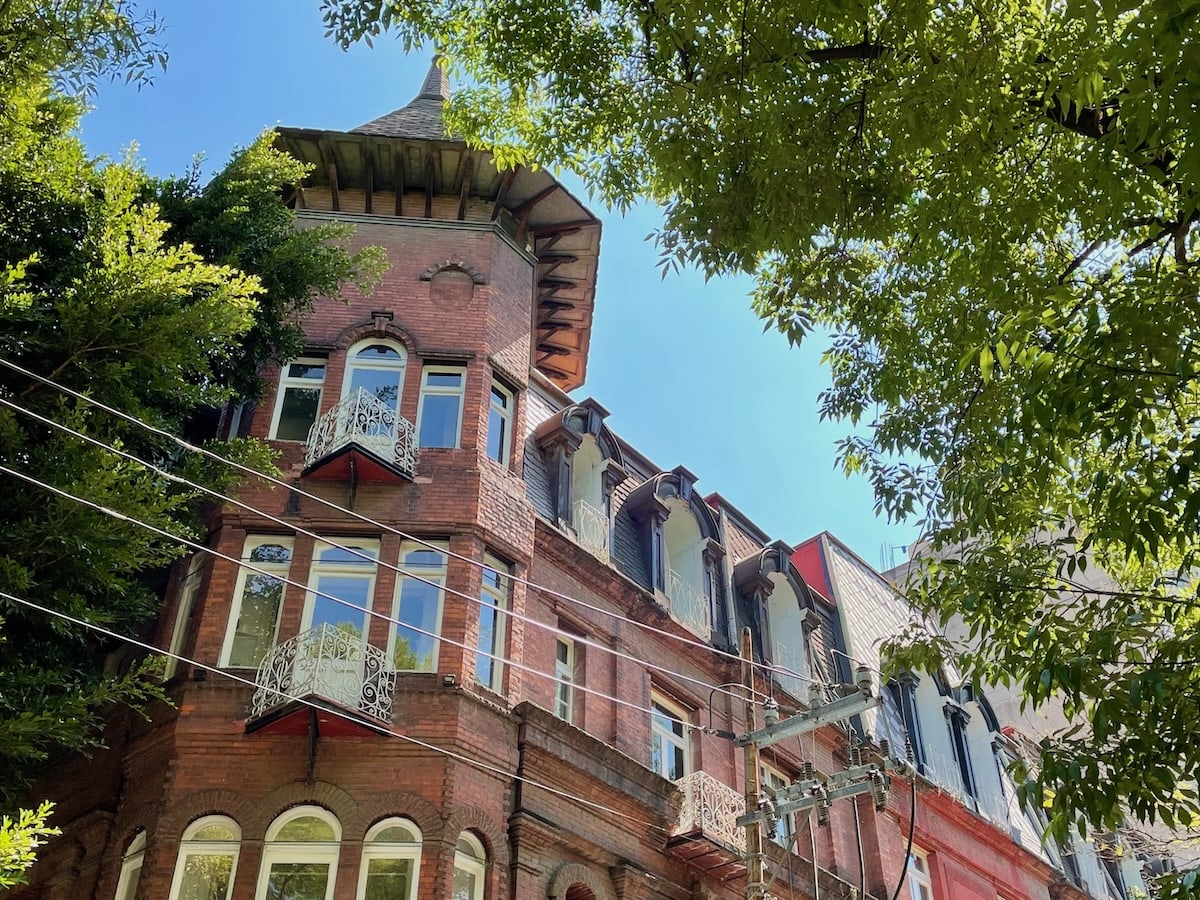
The Witch’s Hat House in Roma, Mexico City
Day 4 – Explore Roma, Frida Kahlo Museum and Coyoacán
Explore Roma Neighbourhood
Spend a morning exploring the neighbourhood of Roma Norte, usually shortened to Roma, with its leafy tree lined avenues, tiny bakeries wafting delicious smells, trendy independent cafes, Neo-classical and Art Nouveau buildings, street sculpture and fountains.
Cafe Culture
We stopped at Café Toscana for scrumptious croissants and coffee and people watched next to the Plaza Rio de Janiero. With its cooling fountains and European style, we could have been in Rome. Dogs rested under the shady trees waiting their turn to play with the professional dog walkers.
The Witch’s Hat House
We saw La Casa de las Brujas (The Witch’s Hat House), an Art Nouveau building where the gabled roof looks like a witch’s hat, the balcony a nose and the windows give the illusion of eyes.
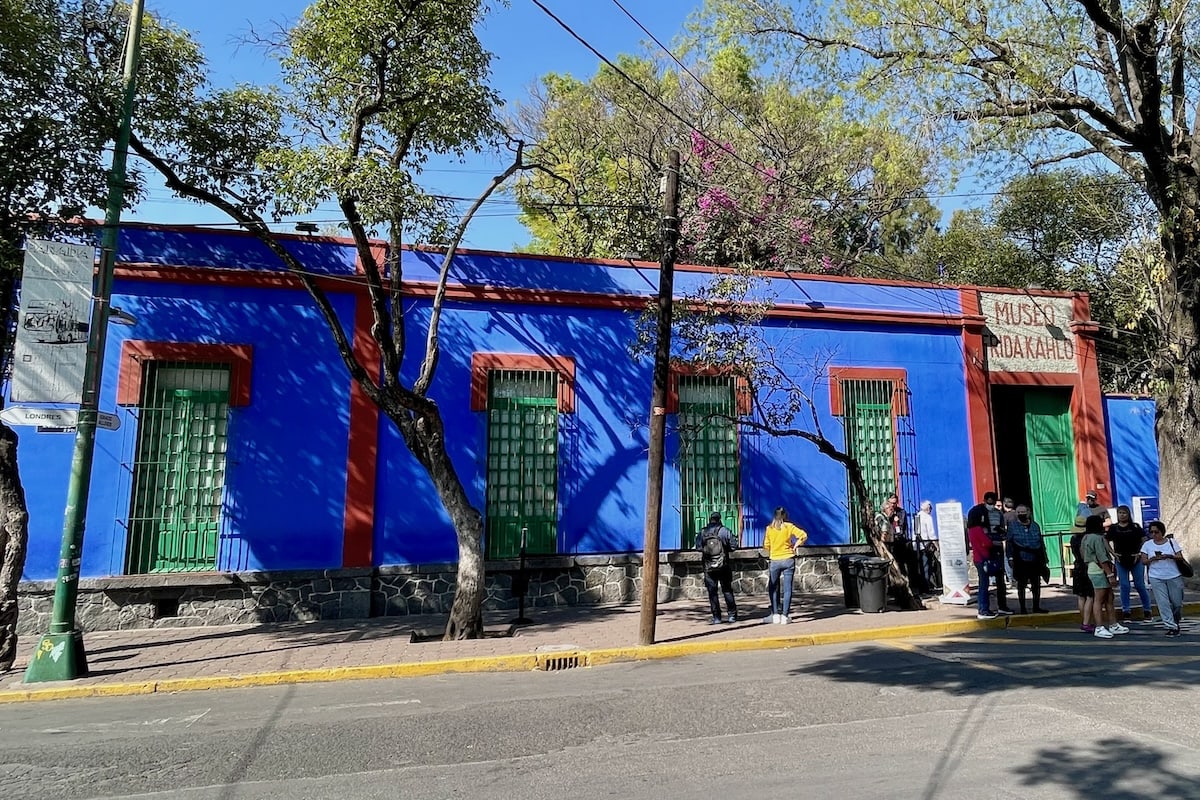
Frida Kahlo Museum, the Blue House, Mexico City
Frida Kahlo Museum
Visit La Casa Azul, the Blue House that was the home of Mexico’s most famous artist and modern icon, Frida Kahlo, and is now a museum to her work. It is a home, so it’s small for a museum but you see the intimate details of her life.
Influences
From the signs in English, you can learn about the significant influences in her life including her photographer father, her husband the muralist Diego Rivera and of course the accident that changed her life.
See how she developed and expressed her politics in her pre-Hispanic traditional Mexican clothes while challenging male and female beauty, when she lived in Mexico and in Europe.
Highlights
The highlights for me were seeing the bed and her clothes collection. For Graham it was the soothing calmness of the garden with cobalt blue walls which reminded us of the Jardin Majorelle-Yves Saint Laurent garden in Marrakesh, Morocco.
And the biggest surprise…Leon Trotsky lived at the Casa Azul too.
Pro Tip – Book online at least one week in advance for timed entry.
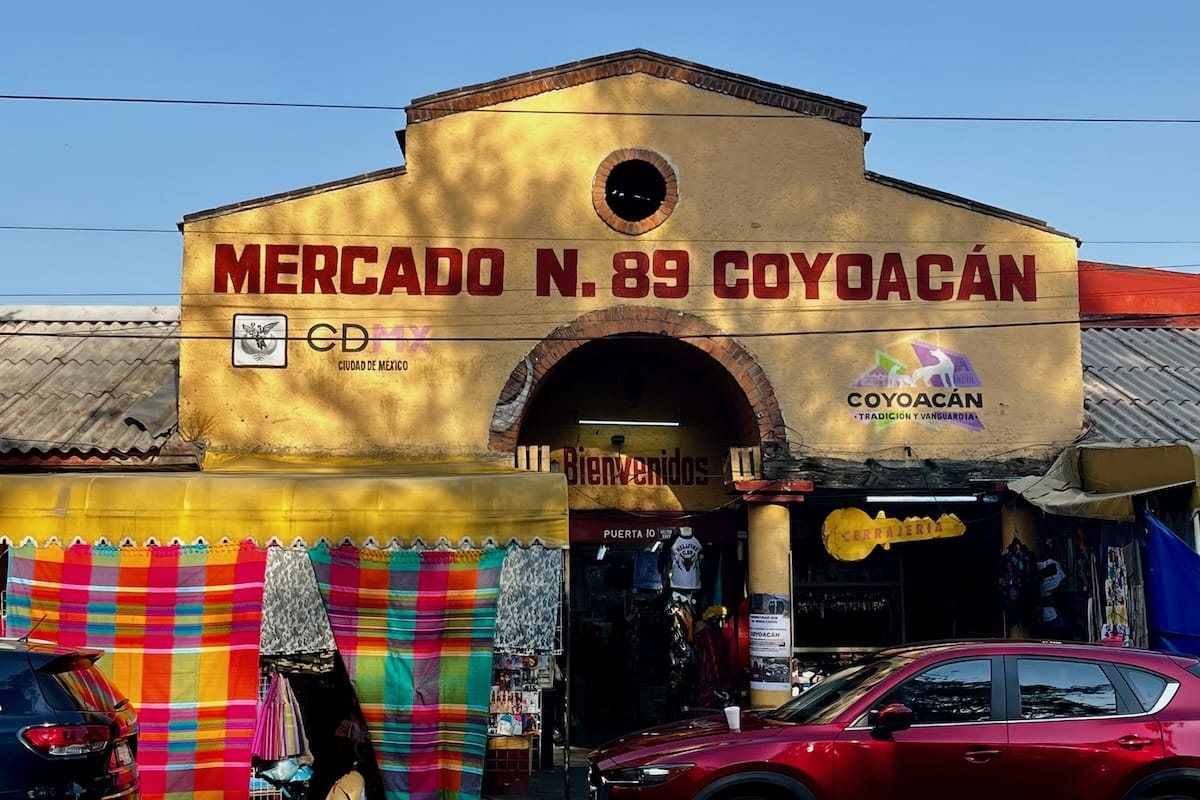
What would you like to buy in Mercado de Coyocán?
Explore Coyoacán Neighbourhood
The Coyoacán neighbourhood around The Frida Kahlo Museum had wider streets, with colonial architecture and bigger walled properties adorned with trailing flowers, than the more urban neighbourhoods of Roma Norte and Condesa.
Mercado de Coyoacán
Visit one of Mexico City’s most iconic markets, the Mercado de Coyoacán, a massive two-story complex with a maze of stalls selling everything from arts and crafts, to textiles and food. It was literally a riot of colour, noise and smells.
Jardín Centenario, Coyoacán
By contrast, the main square in Coyoacán, the Jardín Centenario was delightful. The gardens were well tended, the fountains flowing and there were many entertaining musicians and street performers. A lovely place for an ice-cream in the late afternoon.
The top of the buildings surrounding the square reminded me of films about the Wild West. In my mind I could hear the whistling tune of the Ennio Morricone sound track to ‘A Fistful of Dollars’. Did I mention that my primary source of information on Mexico was film and TV?
Lucha Libre
Mexico City has two large arenas that host Luche Libre, masked Mexican wrestling. We chose not to attend while in Mexico City, preferring instead to watch at the smaller more intimate arena in Oaxaca. Read about our experience of Luche Libra in Oaxaca. The showmanship meant that it was one of the highlights of our entire trip to Mexico.
Final Thoughts
Mexico City is a huge vibrant city rich in culture, food and bright colour that it is sure to have something to please everyone. It has such varied architecture and history that the ancient and modern sit side by side, comfortably. Even with a population of around 10m, the city still feels open due its wide avenues, plazas, parks and many tree lined streets.
You could easily spend much more time and in retrospect we would have preferred at least 1 extra day, so we could see it at a slower pace – jet lag and the 2,240m altitude takes it out of you. Best of all is the Mexican people, who are warm and welcoming with a wonderful sense of humour and joie de vive.
Never miss an Adventure!