
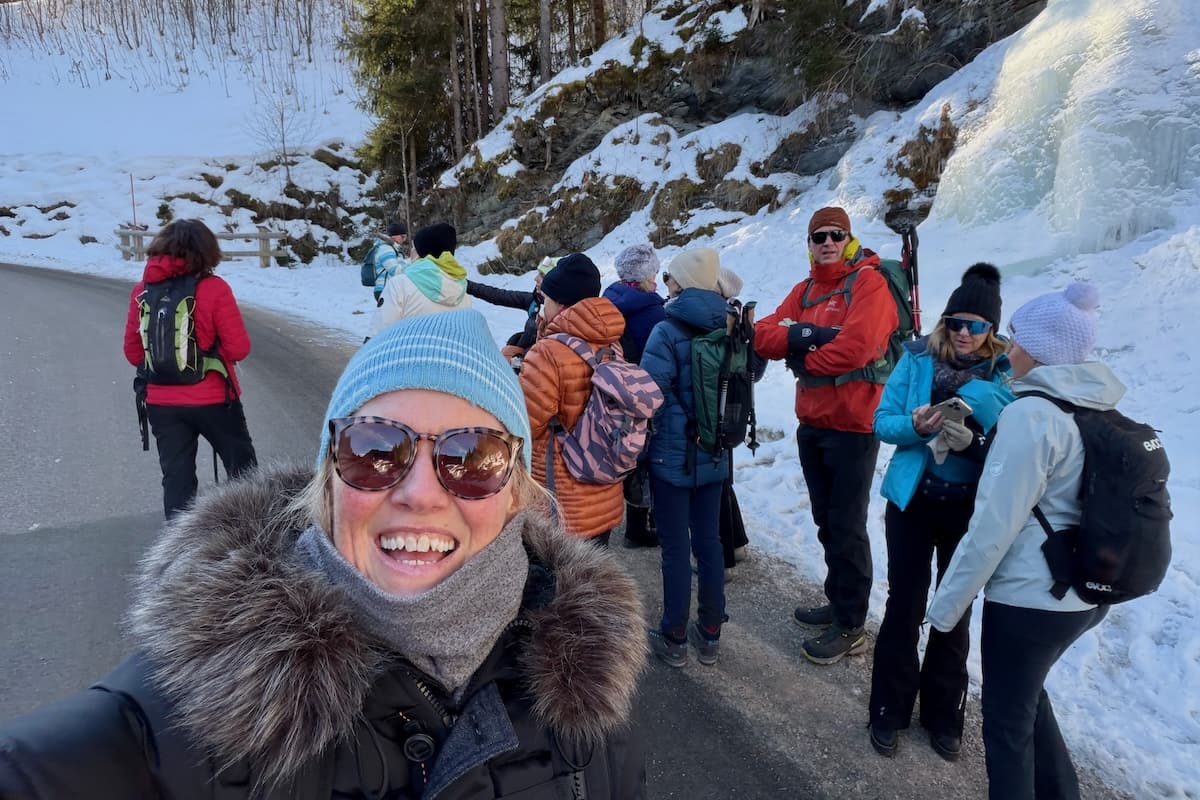
Taking a pause on the Free Guided hike in Saalbach-Hinterglemm, Austria
What to Wear Winter Hiking in the Alps
By Gillian Boyd Published 25 March 2026
This is my account of what to wear winter hiking in the Alps.
As the only non-skier of my group, I like to spend some time winter hiking while the others ski and snowboard together. Usually, I have to find the hiking trails by myself but in Saalbach-Hinterglemm, Austria the tourist board saalbach.com provides Free Guided Hikes from Monday to Friday. I loved this because it was so easy to just follow the guide (like a passenger princess) but also, I got to meet fellow solo hikers and we became friends meeting again on the other hikes.
Each of the guided winter hikes included a stop for about an hour at a hut where you could get a drink and a hot lunch and go to the toilet. And have a good chat with your fellow hikers.
What to Wear
We went during the first week of February and the day time temperatures were around -1C but with wind chill it felt -5C according to snowforecast.com. We have been on other ski holidays at that time of year in the Alps when the temperatures have dropped to -25C and windchill of -35C.
Clothes
I wore sports thermal leggings, salopettes, sports thermal top, long-sleeved cotton t-shirt, thin sports fleece, snood, hat, gloves and a big padded coat. At some points I wore everything and at others I was down to just the base layer on my upper body. The weather can change quickly in the mountains so you need to be able to change quickly too.
The most important thing is to wear layers as your temperature varies throughout the hike. The base layer next to your skin should be a sports layer so the wicking takes the sweat away from your skin. I wear sports thermals. An exercise top would work too but it would not be as warm. Wearing a snood or scarf can at least trick your body in to feeling warmer as your temperature receptor is at the base of your neck.
Pro Tip – Bring an additional layer so you can change into a dry top if you get wet. The ascent takes the most physical effort and so you can get sweaty on the way up. You don’t want to be in wet clothes in cold temperatures on the way down.
Rucksack
Bring a day rucksack to put your clothes in as you remove layers. Ideally it should have a chest strap. Don’t forget suncream (OK I’m a redhead, but in the mountains you get easily sunburnt in the middle of winter), sunglasses and a bottle of water.
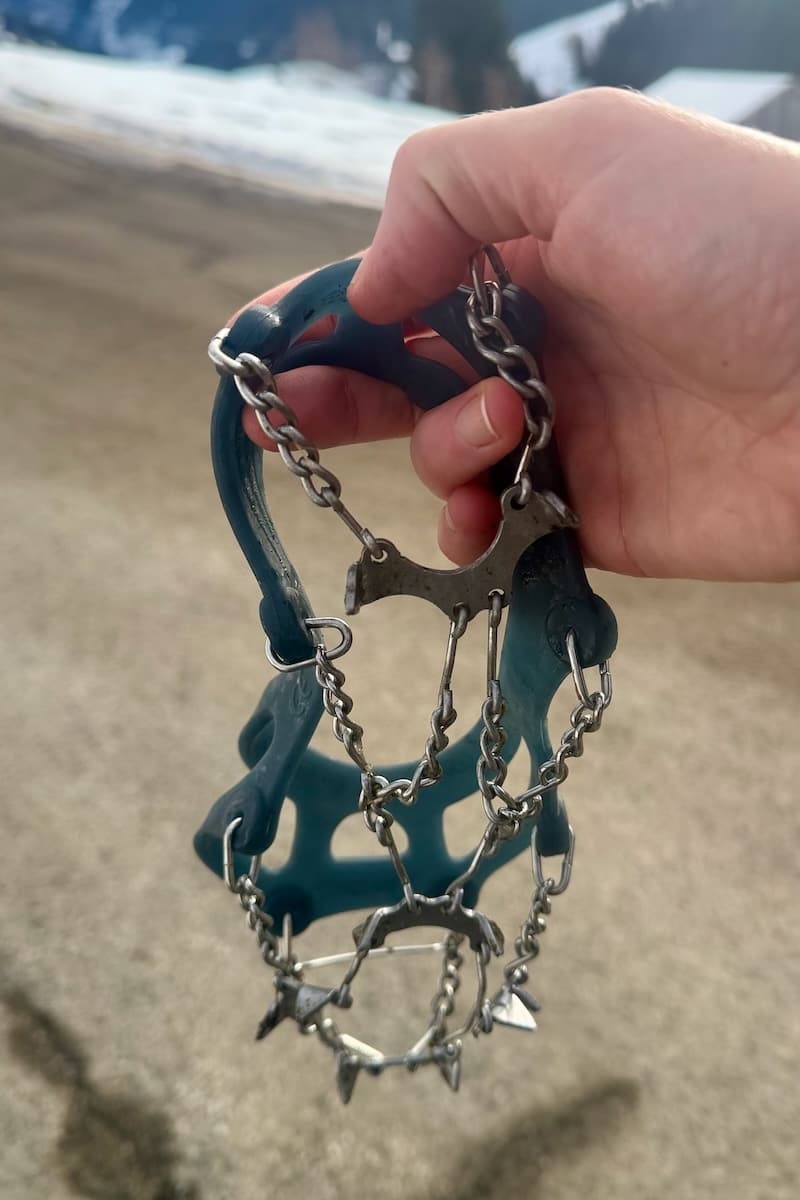
I put borrowed crampons over my hiking boots and felt secure walking on ice
Footwear
I wore standard hiking boots with ankle support and sprayed the boots with water repellent. Inside I wore a pair of socks and a pair of hiking socks on top. My feet stayed dry and warm.
Other hikers mainly wore hiking boots. A couple had crampons they put over their boots when it was a bit icy. One lady had fur lined boots with a switch in the heel that she flipped to release short spikes. I was very impressed but also felt under prepared. It turned out fine though because the guide took us on a less icy route back and my hiking boots were good.
Hiking Poles
About a quarter of the group used hiking poles. I have tried hiking poles on previous hikes but didn’t get on with them. For me it was like having four feet as I had to look for places to put each foot and each pole. I found it mentally tiring and slowed me down considerably.
Bring Cash
Whilst most mountain restaurants take card, some are cash only, so be prepared. Luckily, one of my new friends in the group kindly paid for my lunch for me on the one day I forgot to bring cash. If I had been on my own, I’m not sure what would have happened as I only discovered it was a cash restaurant when I went to pay the bill.
Bring a Snack
Bring a snack in case the hut is closed. I always travel with a bag of nuts and dried fruit as they are so versatile and don’t go off easily. My friend told me how the previous year the hut was closed and she was ravenous. The guided hikes in Saalbach-Hinterglemm last from around 10 am – 2 or 3 pm but the time can vary due to weather conditions and the pace of the group.
Final Thoughts
Although there is a saying ‘A bad workman blames his tools’ having the right equipment to do the job properly does make a difference. The right kit to go winter hiking in the Alps is simple – good footwear, suncream and plenty of layers.
Never miss an Adventure!