
2 Week Itinerary in South Korea: A Complete Guide
By Gillian Boyd Published 25 March 2026
This post is your complete 2 week itinerary for independent travel in South Korea, covering top things to do in Seoul, Sokcho, Jeju, Busan and Gyeongju.
South Korea had been on my list for years, and two weeks turned out to be just enough time to scratch the surface of this extraordinary country. From the layered history of Seoul’s palaces and ancient villages, to a dramatic mountain hike in Sokcho, and the wild coastal scenery of Jeju Island, South Korea has it all.
Put that together with the warmth of the Korean people and you have the makings of a memorable holiday. Here’s everything you need to plan your own budget trip.
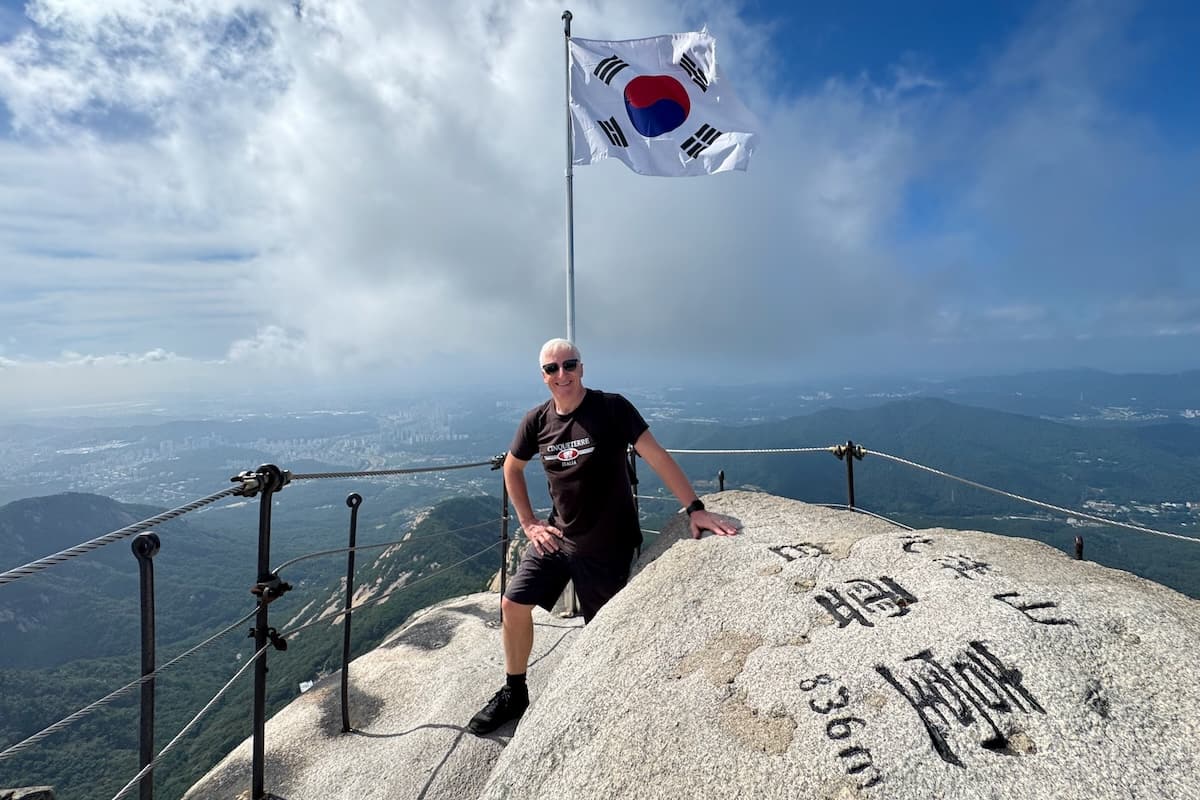
Bukhansan Peak – Seoul’s highest mountain
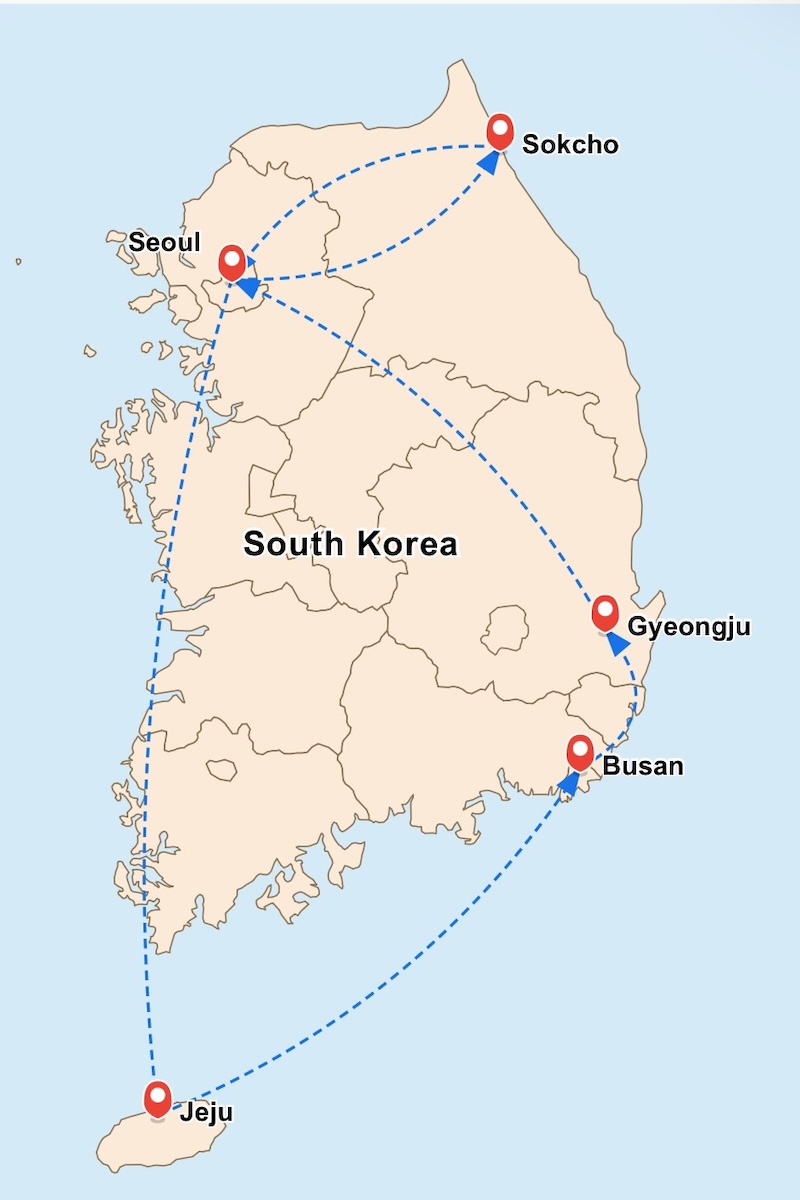
2 Week Itinerary Route
2 Week Itinerary in South Korea
Seoul 4-5 days
Sokcho 2 days
Jeju Island 3 days
Busan 2 days
Gyeongju 1 day
Transfers
Seoul to Sockcho return bus 2 hours
Seoul to Jeju island flight 1 hour 10 min
Jeju to Busan flight 1 hour
Busan to Gyeongju bus 1 hour 30 min
Gyeongju to Seoul train 2 hours
Getting There & Getting Around South Korea
We flew in September into Seoul Incheon (ICN) via Shanghai on China Eastern flight from London Gatwick, then on to Seoul. The journey takes around 13–14 hours in total including the layover. Not the most glamorous connection, but certainly budget-friendly.
On arrival at Incheon Terminal 1, you have two good options into the city: the Airport Express (AREX) takes about an hour direct to Seoul Station, or Bus 6001 drops you at Myeongdong Exit 3. From Seoul Station, the blue metro Line 4 runs two stops to Myeongdong — perfect if you’re staying in that neighbourhood as I was.
Essential: Get Your Transport Sorted on Arrival
Before you leave the airport, pick up a Tmoney card (Korea’s reloadable travel card for metro and buses) and a local SIM – (see Helpful Information on South Korea). We pre-ordered a data SIM and chargeable Tmoney travel card from Get Your Guide, collected at the LG U+ counter at Gate A, Terminal 1. Having everything sorted before you emerge from arrivals makes a real difference.
- App: Download CityMapper (switch to Seoul) and Subway Korea for metro navigation
- Tickets: Book trains in advance on KORAIL or Trip.com, the international partner of the Korean national rail operator KORAIL
Card: Tmoney works on buses, metro and taxis — top it up at any convenience store
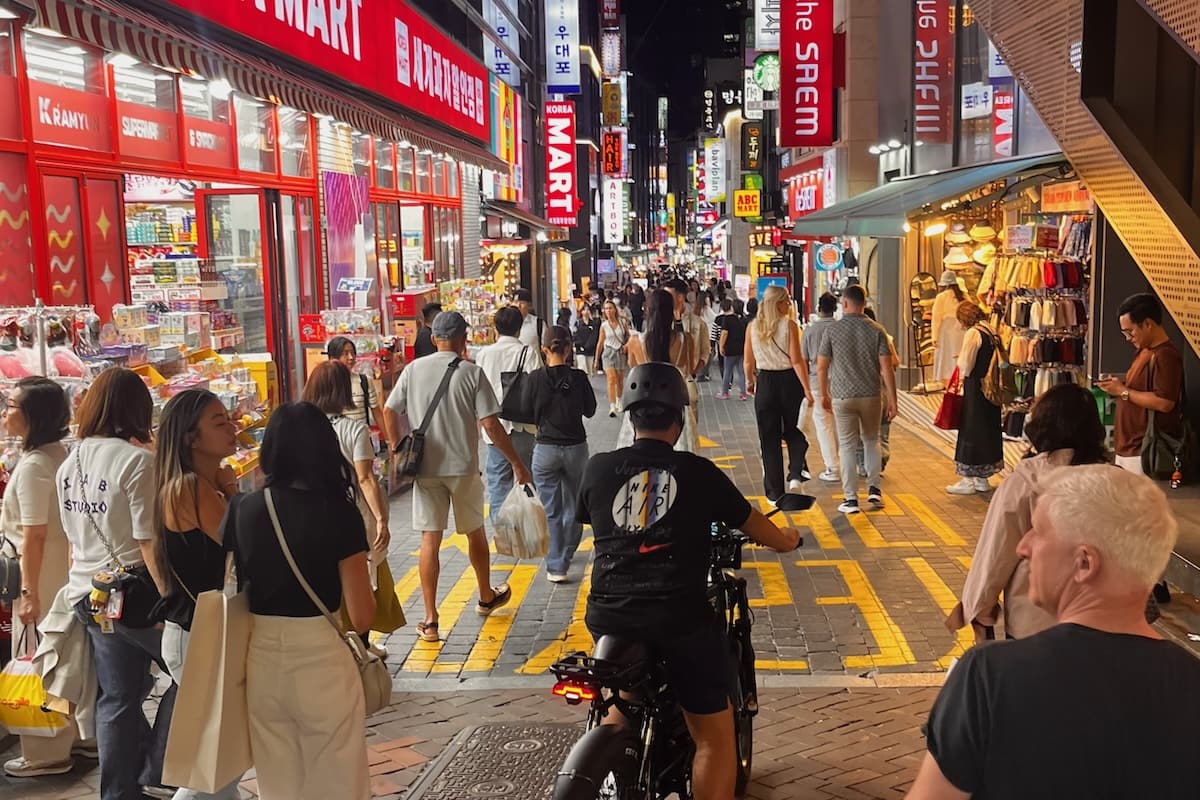
Just arrived in buzzing Myeongdong at 10:30pm
Seoul — 5 Days of History, Hiking & K-Pop
We were based at Starria Hostel in Myeongdong — a good choice with en-suite room and only a four-minute walk from Myeongdong metro station. Myeongdong is central, lively, and perfectly placed for exploring the city in every direction. It has a wide range of Korean Food options including street food, vegan and halal.
We spent most evenings here and got a buzz from watching the locals on a skincare shopping frenzy at Olive Young just before closing time. Korea is almost as famous for world renowned skincare as it is for K-Pop.
Day 1 in Seoul: Bukchon Hanok Village & the Old City Walls
Start with a 30-minute metro journey from Myeongdong (Line 4 one stop to Chungmuro, then orange Line 3 for three stops to Anguk Station). Bukchon Hanok Village is a 14th-century neighbourhood of beautifully preserved traditional Korean houses (hanok) tumbling down a hillside — allow one to two hours to explore the narrow lanes and, if you’re feeling cultured, stop for traditional tea.
From there, a 30-minute walk or short taxi brings you to Changdeokgung Palace and its famous Secret Gardens (allow two to three hours). Head to Gwangjang Market for lunch — it’s one of Seoul’s oldest traditional markets and a fantastic place to eat bindaetteok (mung bean pancakes) and bibimbap at a street stall.
Round off the afternoon with a wander through Ihwa Mural Village before joining the Naksan Park Mountain Trail (part of Seoul’s old city walls) for a gentle two-kilometre walk back towards the city.
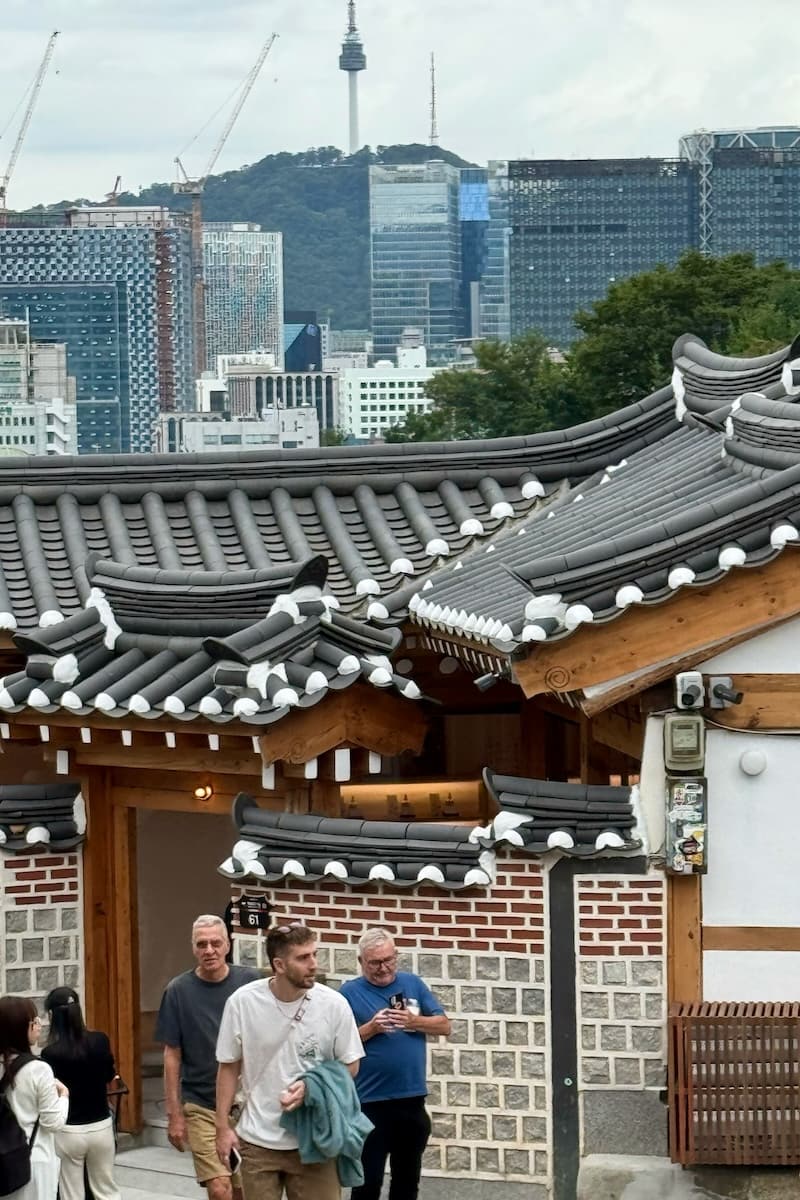
Traditional buildings in Bukchon Hanock Village, against modern Seoul skyline
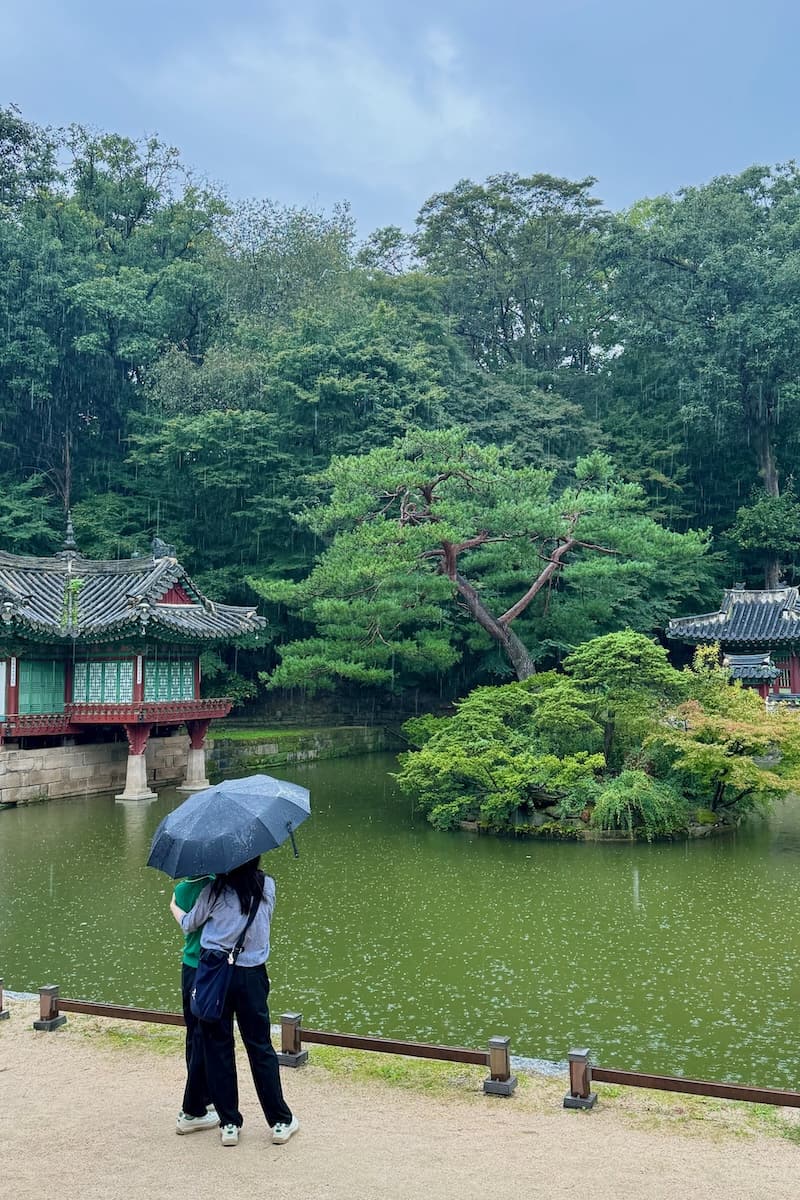
Even in the rain the Secret Garden at Changdeokgung Palace is beautiful
Day 2: Bukhansan Peak — Seoul's Highest Mountain Hike
Few cities in the world have a national park within their boundaries, but Seoul does. Hike Bukhansan Peak, following the Baegundae trail. It is roughly eight kilometres and takes about five hours round trip — and it’s a brilliant hike. Take the orange metro Line 3 to Gupabal Station (exit 1), then Bus 704 to Bukhansanseong Fortress Entrance, where you can pick up a map from the information centre and follow signs to Baegundae.
In the evening, catch the Banpo Bridge Rainbow Fountain and light show — it’s free, lasts 20 minutes, and runs every 30 minutes from 19:30 with the last show at 21:00. Best views from Bampo Hangang Park or, for something different, from underneath Jamsu Bridge. Locals often bring a picnic and spend the evening.
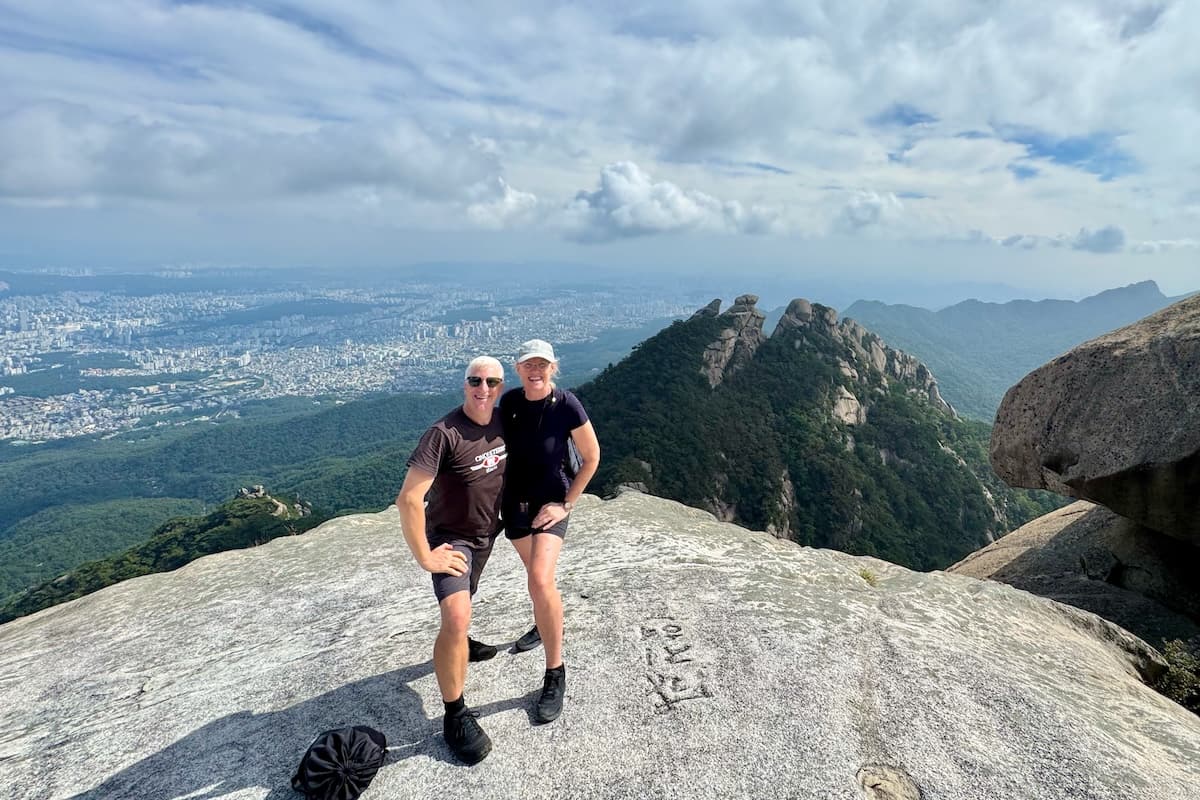
What a view of Seoul!
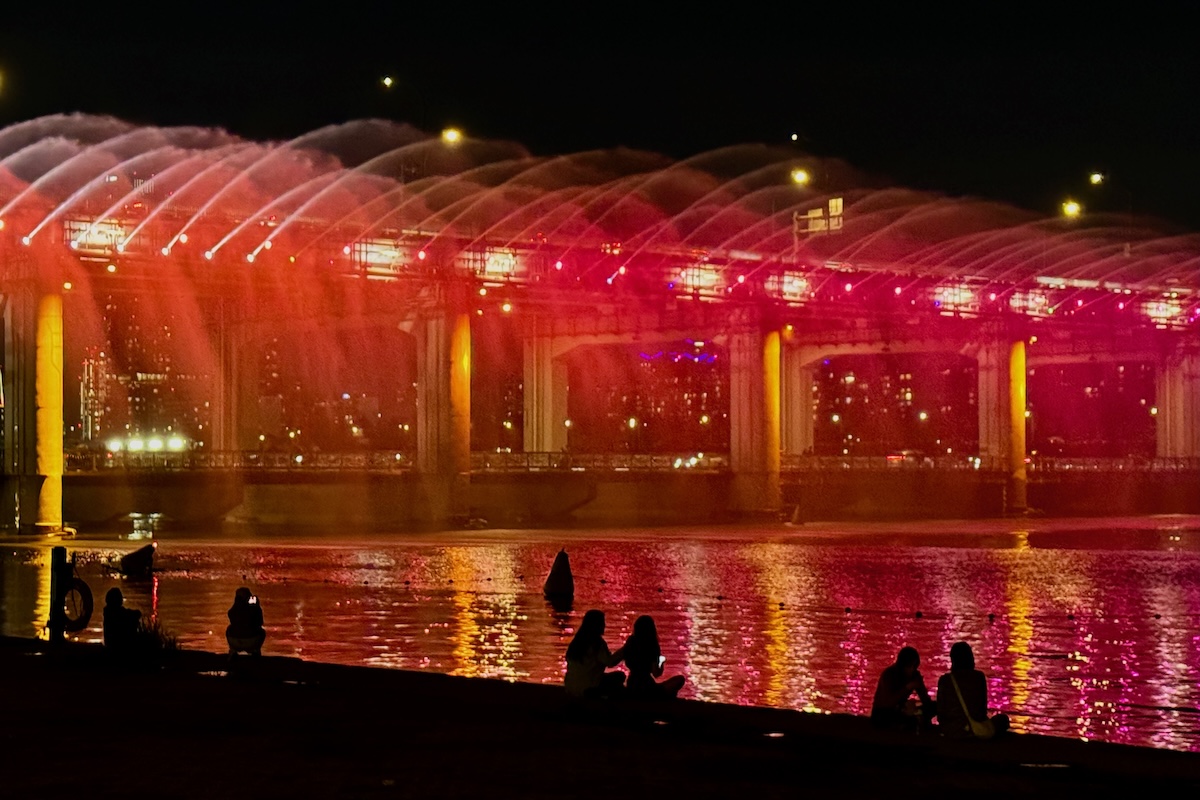
Bring a picnic to the Light Show at Bampo Bridge, just like the locals
Day 3: DMZ & North Korea Defector Experience
One of the most powerful days of the entire trip. We booked a DMZ Tour through GetYourGuide which included a visit to the Third Tunnel dug by North Korea, views across the border to Peace Village from Dora Observatory, and a stop at Dorasan Station — the last station before the border. The standout element was a meet-and-talk session with a North Korean defector, which puts the whole experience into an entirely different human context.
In the afternoon, we used pre-booked Klook tickets for the Namsan Cable Car and Seoul Tower — worth going for sunset around 18:30. Pick up tickets at the Rednow Studio near Myeongdong. Finish the evening at Myeongdong Night Market.
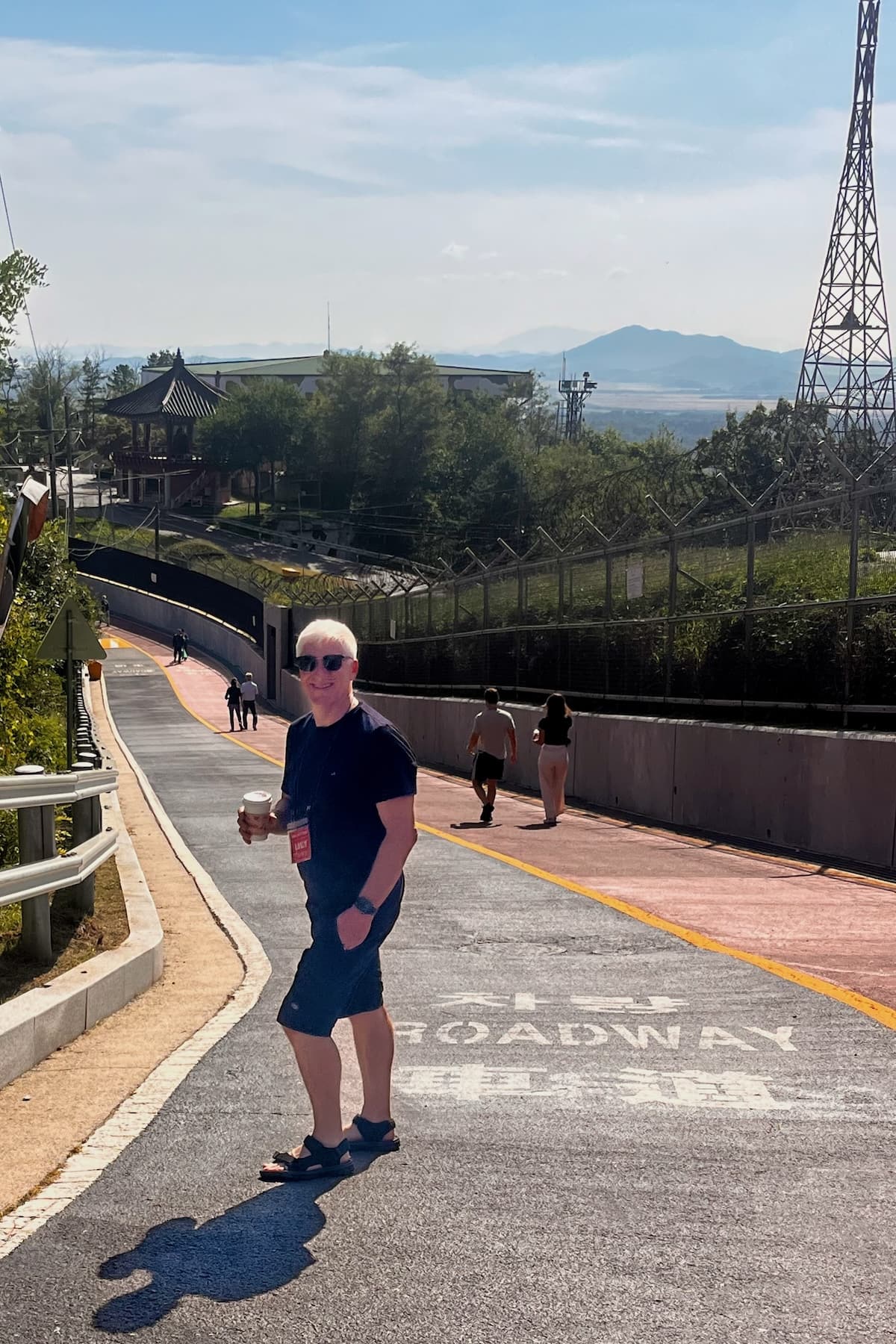
North Korea in the distance from DORA Observatory
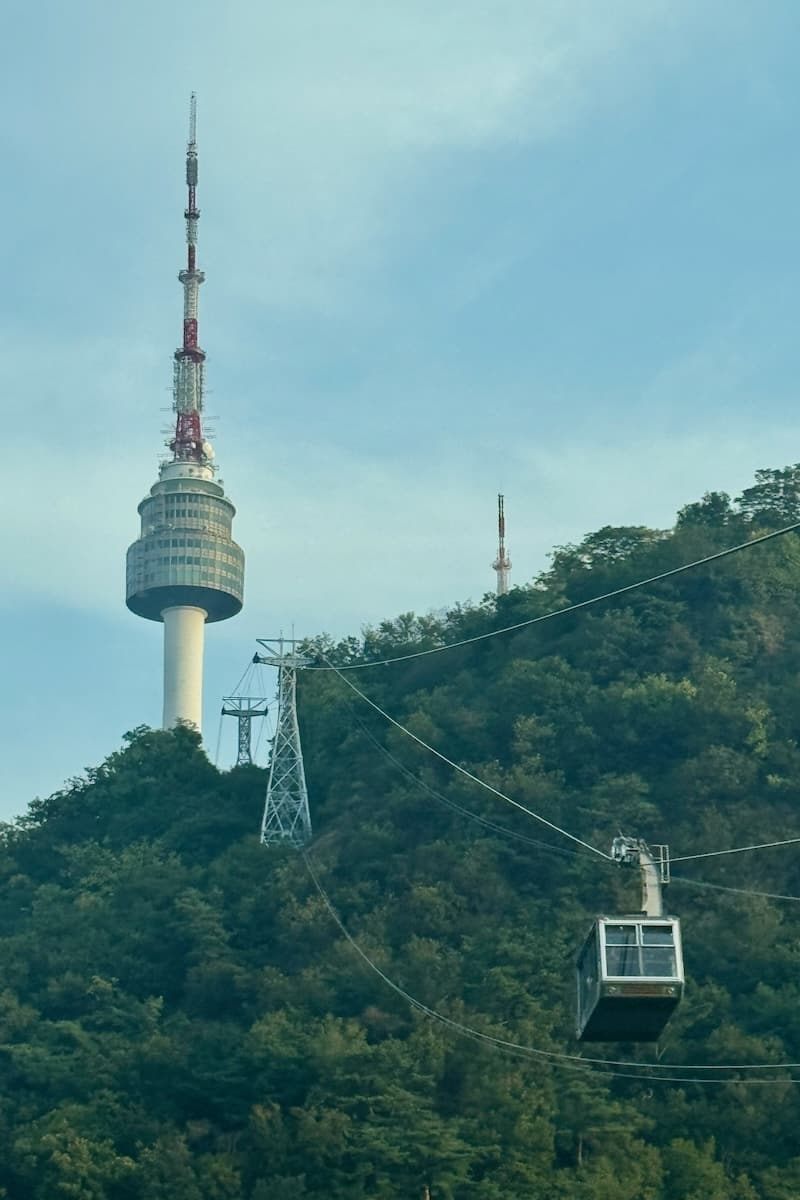
Namsan Cable Car to Seoul Tower
Day 4: K-Star Road & the Gangnam K-Pop Festival
Yes, we went to Gangnam. And we’re not sorry. The K-Star Road in Apgujeong is a one-kilometre stretch of shops and cafés decorated with the oversized ‘Gangnam doll’ mascots representing K-pop groups. Be there by 10am to walk down Apgujeong-ro before it gets busy. It’s a strange mix of huge high end luxury stores K-pop Gangnam Dolls.
From there it’s a short walk to Bongeunsa Temple Station for the meeting point of the Gangnam K-Pop Festival — a half-day of sightseeing at the Bongeusunsa Temple, the amazing Starfield Library, K-pop memorabilia shops and of course the famous Gangnam Style Statue.
The outdoor concert was from 7pm until 11pm in Yeongdongdaero and was quite unlike any other we had been to before. We hadn’t anticipated it being quite as much fun as it was. If you don’t fancy the idea of K-Pop or there are no gigs during your stay, this is no more than a half day, so could be folded in to the suggested activities for Days 1 or 5.
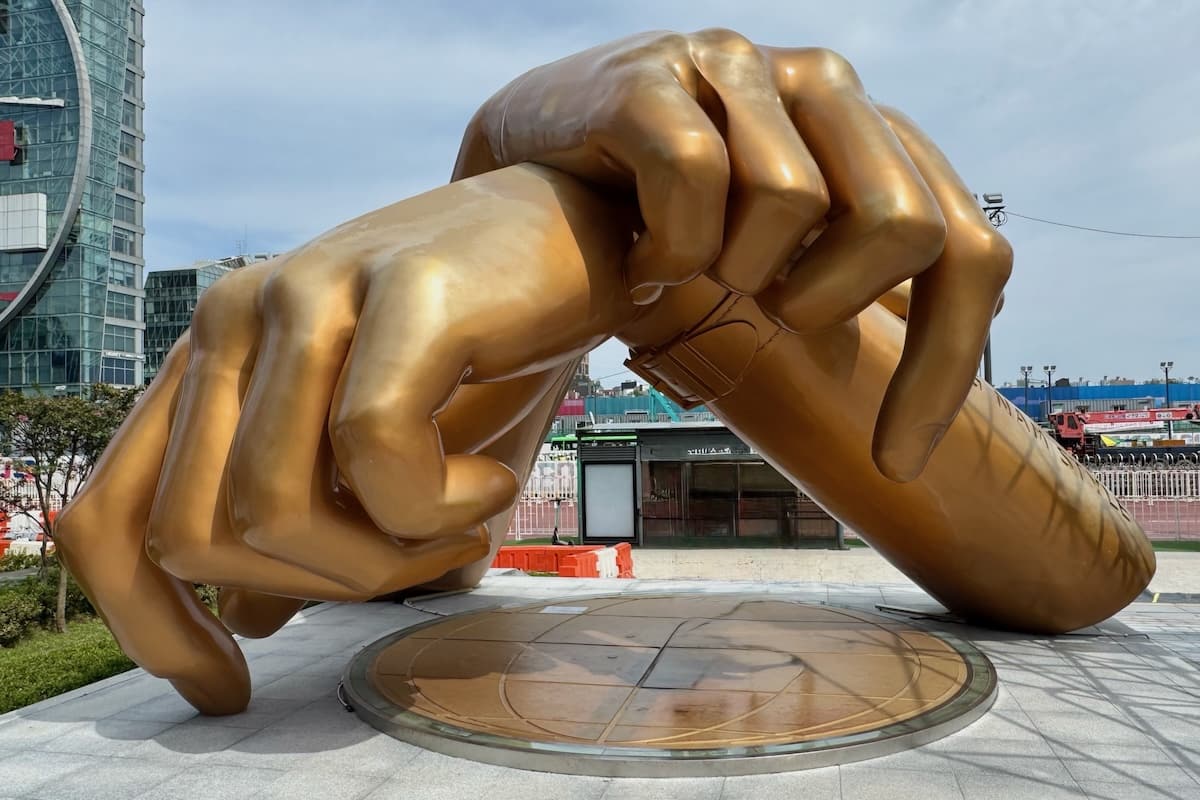
Gangnam Style Statue
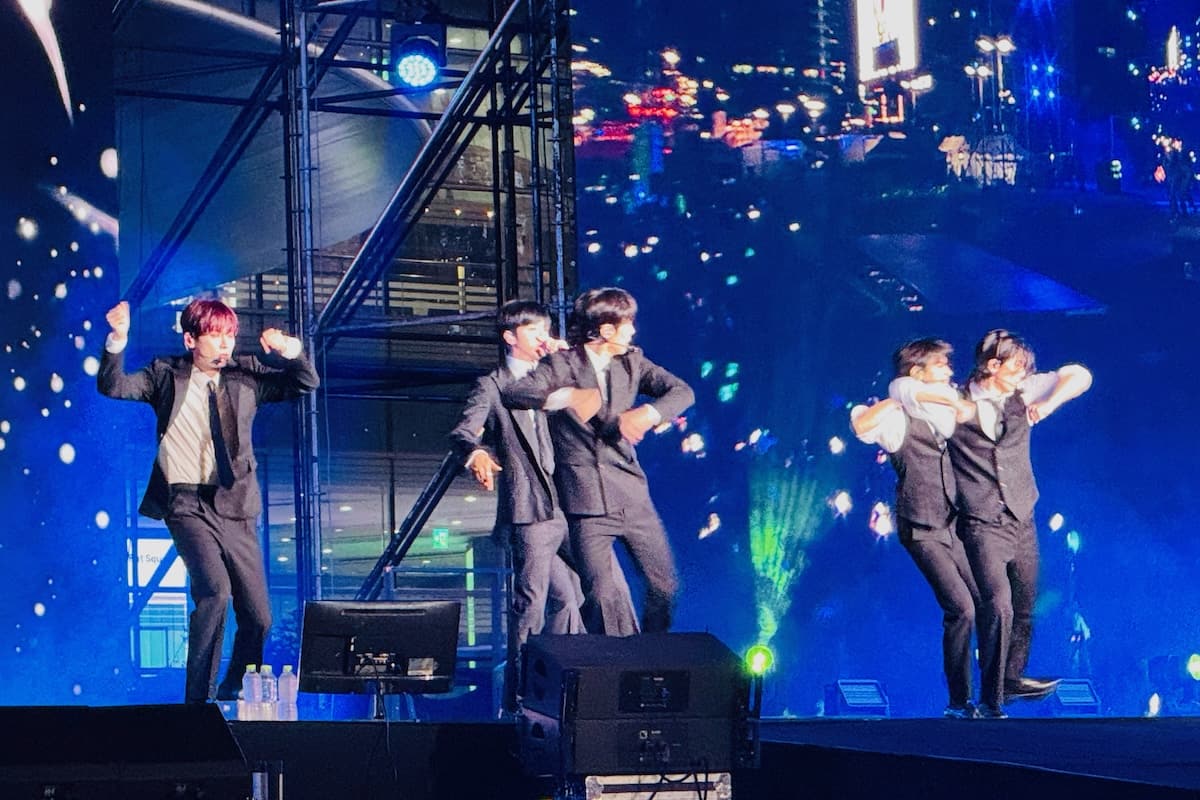
Hey Gangnam K-Pop Festival
Day 5: Palaces, the Insa-Dong Neighbourhood & Hongdae
The changing of the guard at Gwanghwamun Gate happens at 10am and 2pm — it’s a 20-minute ceremony and worth catching. The gate is the main entrance to Gyeongbokgung Palace, which is directly behind it and makes for a couple of great hours of exploration. Nearby, the National Museum of Korean Contemporary History has excellent exhibitions on modern Korean history, particularly the country’s relationship with Japan.
Spend the afternoon in Insa-Dong — Seoul’s oldest neighbourhood — where you’ll find traditional tea houses, antiques, craft shops and galleries along a pedestrian-friendly street. We ended up in the Old Shin Tea House, which is exactly what it sounds like and offered a great viewpoint if you like people watching.
Head to Hongdae in the evening for bars, restaurants, street performers and one of Seoul’s best nightlife atmospheres.
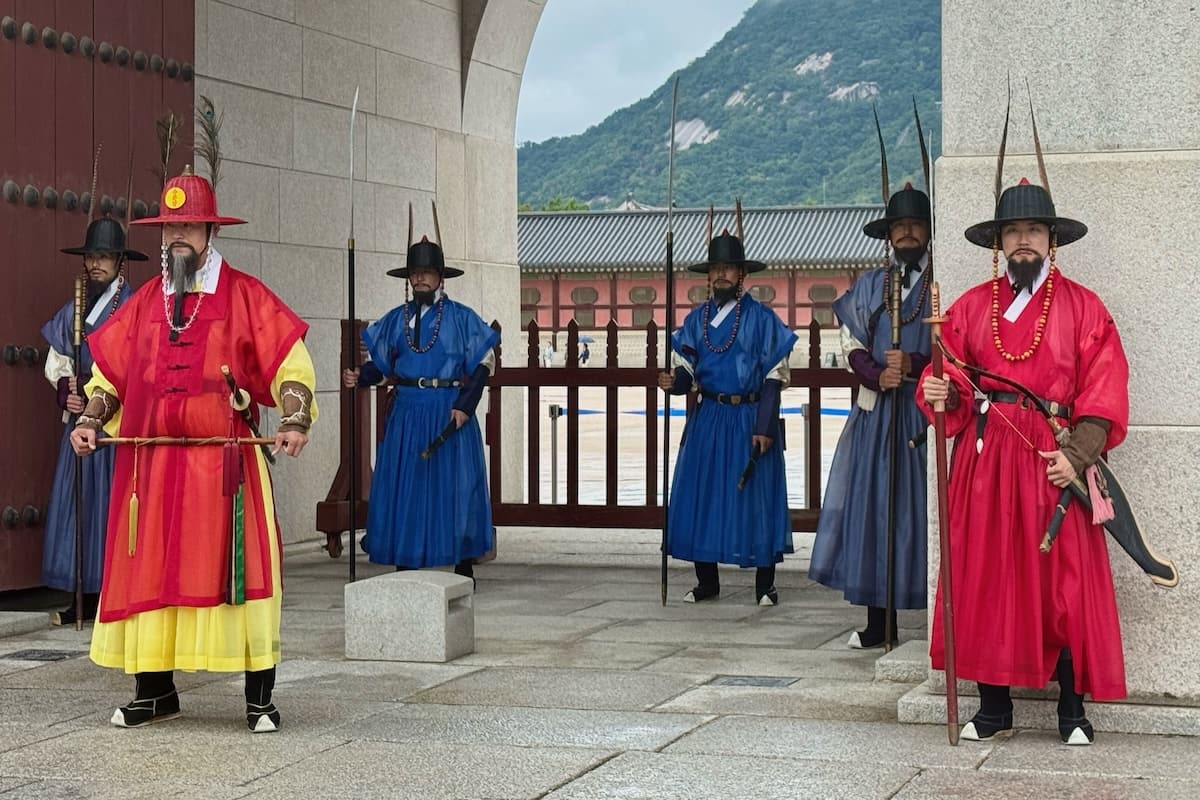
Changing of the Guard at Gyeongbokgung Palace
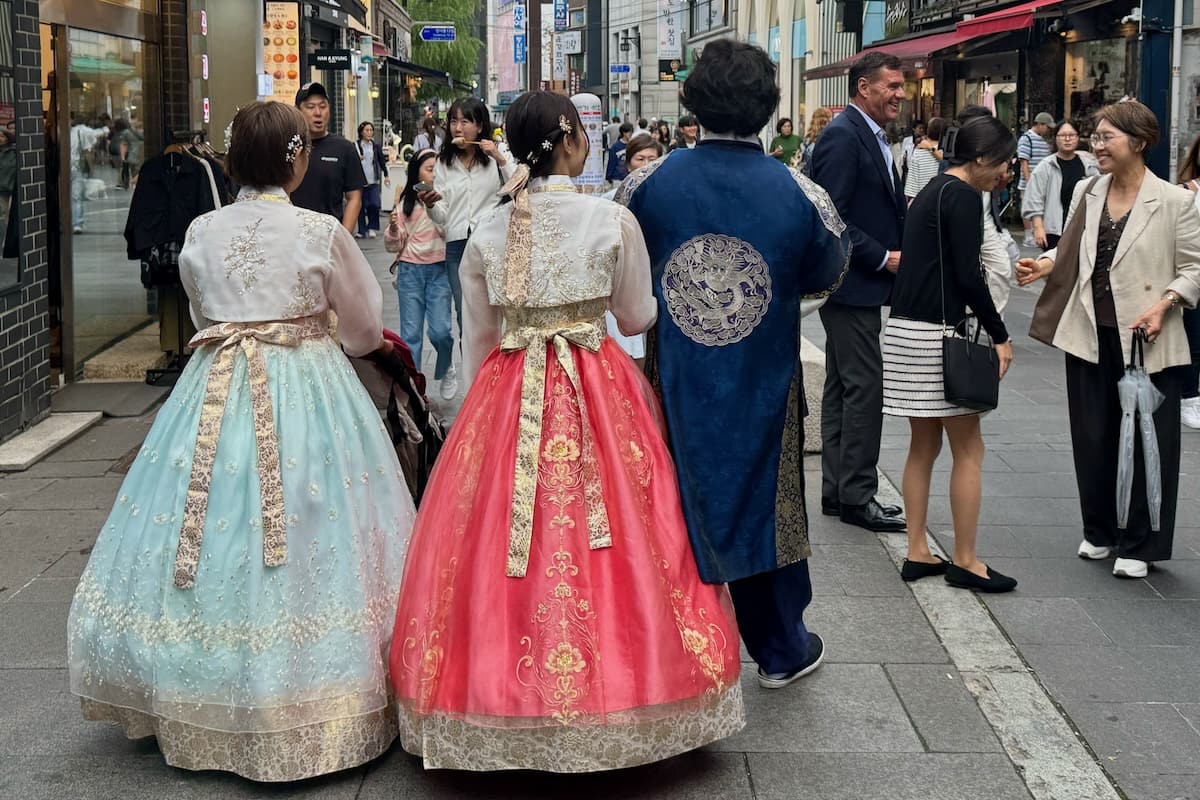
Traditional clothing and tourists in Insa Dong, Seoul’s oldest neighbourhood
Seoul Travel Tips
- Getting around: Seoul’s metro is excellent — CityMapper and Subway Korea make it simple. T-Money card works everywhere
- Budget: Accommodation: ₩170,000–₩730,000/night depending on standard. Street food from ₩2,000. Metro ₩1,250 per journey
- Book ahead: DMZ tours, Namsan cable car benefit from advance booking via GetYourGuide or Klook
- Night markets: Myeongdong Night Market is open most evenings — great for street food and cheap skincare
- Stay: Myeongdong is central and well-connected. 4 minutes from Myeongdong Station on Line 4
Sokcho — Mountain Air and the East Coast
Sokcho is a small coastal city about two hours from Seoul by bus and the gateway to Seoraksan National Park — one of South Korea’s most dramatic landscapes. We stayed at Sokcho Guesthouse which includes breakfast and en-suite rooms. The owner was incredibly helpful, making suggestion for half and full day trips in the area, making sure we got the right buses and tips for restaurants.
Getting there: take Line 4 two stops from Myeongdong to Dongdaemun History, change to green Line 2 for nine stops to Gangbyeon Station, then buy a bus ticket for the Kumgang service on the ground floor. The journey takes around two hours ten minutes.
Naksan Temple
We spent a delightful afternoon at Naksansa, a peaceful temple nestled in the forest at the coast. Wander along the Path of Dreams Coming True and don’t miss the Hermit’s Grotto on the rocky coast. Kneel down to pray and look through the glass floor to see the waves crashing up to meet you – quite the experience!
Seoraksan National Park — Ulsan Rock and the Cable Car
The main event in Sokcho is the Seoraksan hike. Take Bus 7 or 7-1 (about an hour) to the park entrance, where you’ll find Sinheungsa Temple close to the trailhead. The walk to Ulsanbawi Rock is 3.1km each way (6.2km round trip) with the final kilometre being steep stairs — but the views at the top are worth every step.
In the afternoon, visit Sinheungsa Temple at the base before taking the cable car up to the viewing platform. From there, follow the trails for about 30 minutes to Bonghwadae for outstanding views over Ulsanbawi Rock itself.
Sokcho Travel Tips
- Cost: Bus from Seoul approx. ₩20,000 one way. Cable car additional
- Timing: Allow a full day for Seoraksan — it takes longer than you expect and the cable car is busy in afternoon
- Lighthouse Beach: Worth an afternoon stroll in central Sokcho — calm and uncrowded
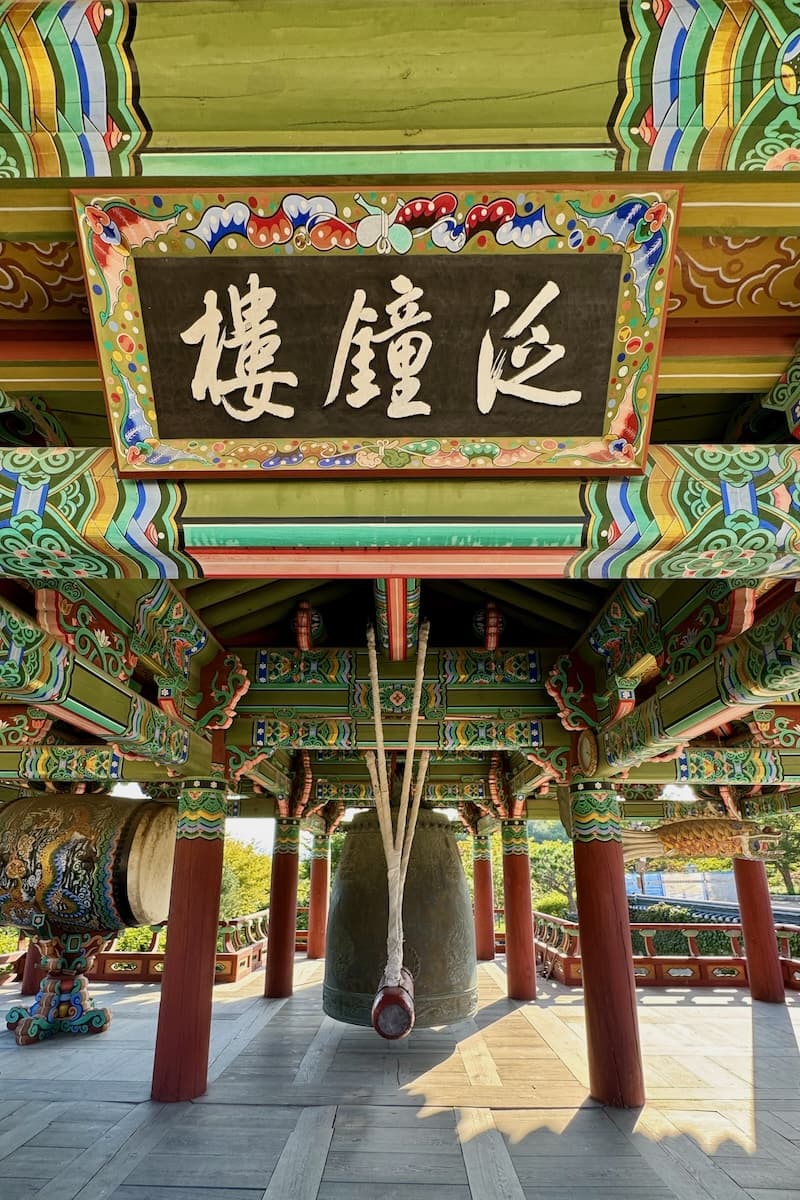
Highly decorated bell at Naksan Temple in Sokcho
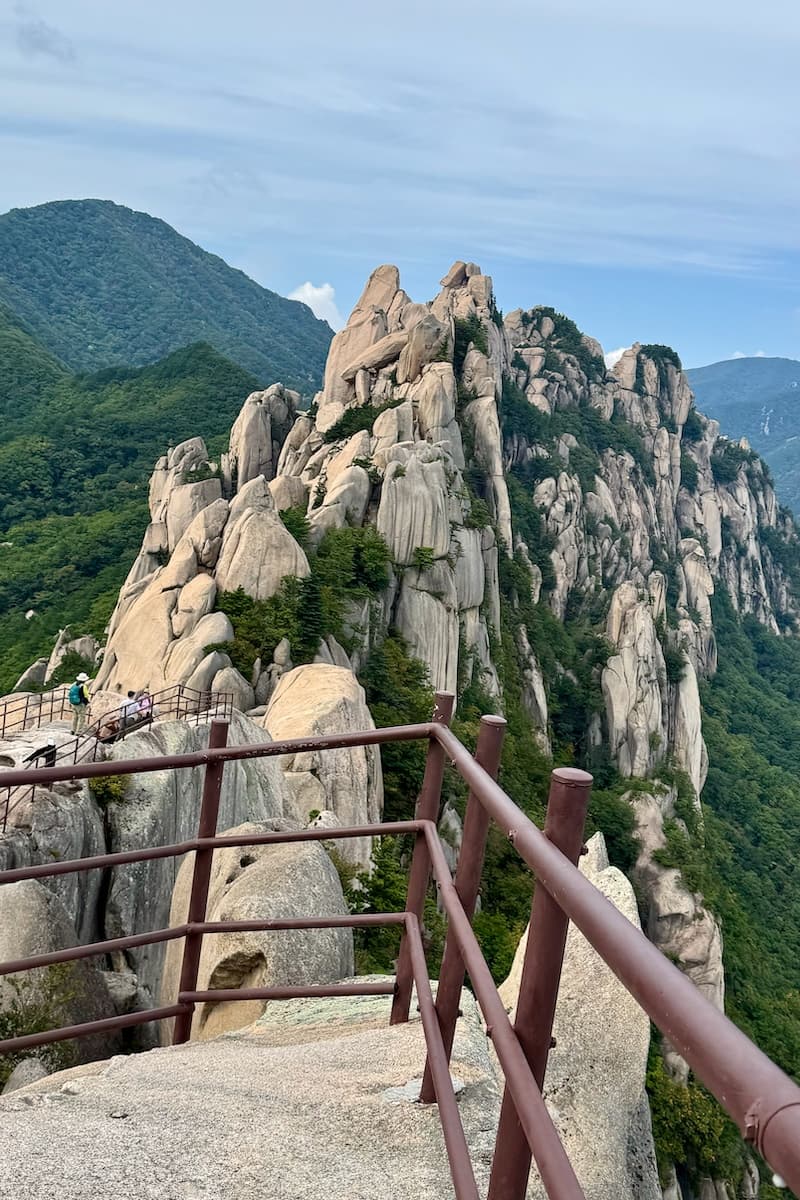
Ulsanbawi Rock – summit of Seoraksan Hike in Sokcho
Jeju Island — Volcanoes, Waterfalls and the Wild South Coast
Getting to Jeju involves a slightly convoluted journey: bus from Sokcho back to the Seoul Express Bus Terminal (2hrs 20min), then 45 minutes on Subway Line 9 to Gimpo Airport (GMP) for a one-hour Eastar Jet flight. We hired a car for three days through Yesaway (booked via Klook.com) — on Jeju, a hire car is highly recommended, but the be careful of the constantly changing speed limits and traffic cameras! The island’s sights are spread out and public transport, while it exists, will slow you down significantly. Alternatively, you can book one of the many East, West or South Coast day tours and stay in Jeju city or Seogwipo.
We stayed at Cornerstone Hotel in Seogwipo which has sea views and includes a basic breakfast and free car parking and laundry. Seogwipo is a great location for visiting the South coast’s key landmarks.
Day 1 on Jeju: The East Coast
Hire car days on Jeju are best spent looping the island in sections. The east coast packs in an extraordinary amount: Sangumburi volcanic crater, Woljeongri Beach (stunning turquoise water against black sand), and Seongsan Ilchulbong — Sunrise Peak — a UNESCO World Heritage volcanic cone that takes about an hour to climb and offers genuinely spectacular views.
Near Seongsan, catch a haenyeo diving performance at 2pm — these are the island’s legendary women free divers, some of whom are in their 70s and 80s, and watching them work is quietly extraordinary. Read the novel ‘The Island of Sea Women’ by Lisa See about these amazing women. Finish with Jeongbang Waterfall, which falls directly into the sea – something we’d not seen before.
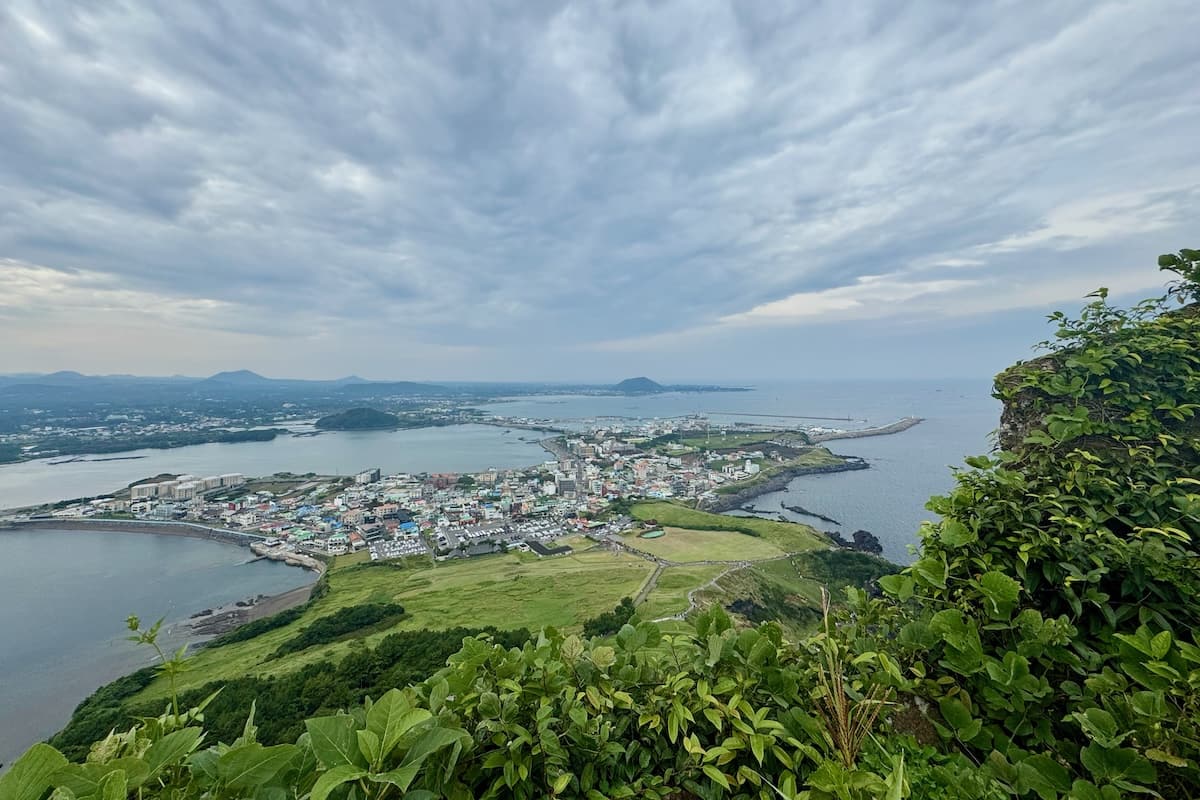
View from Sunrise Rock
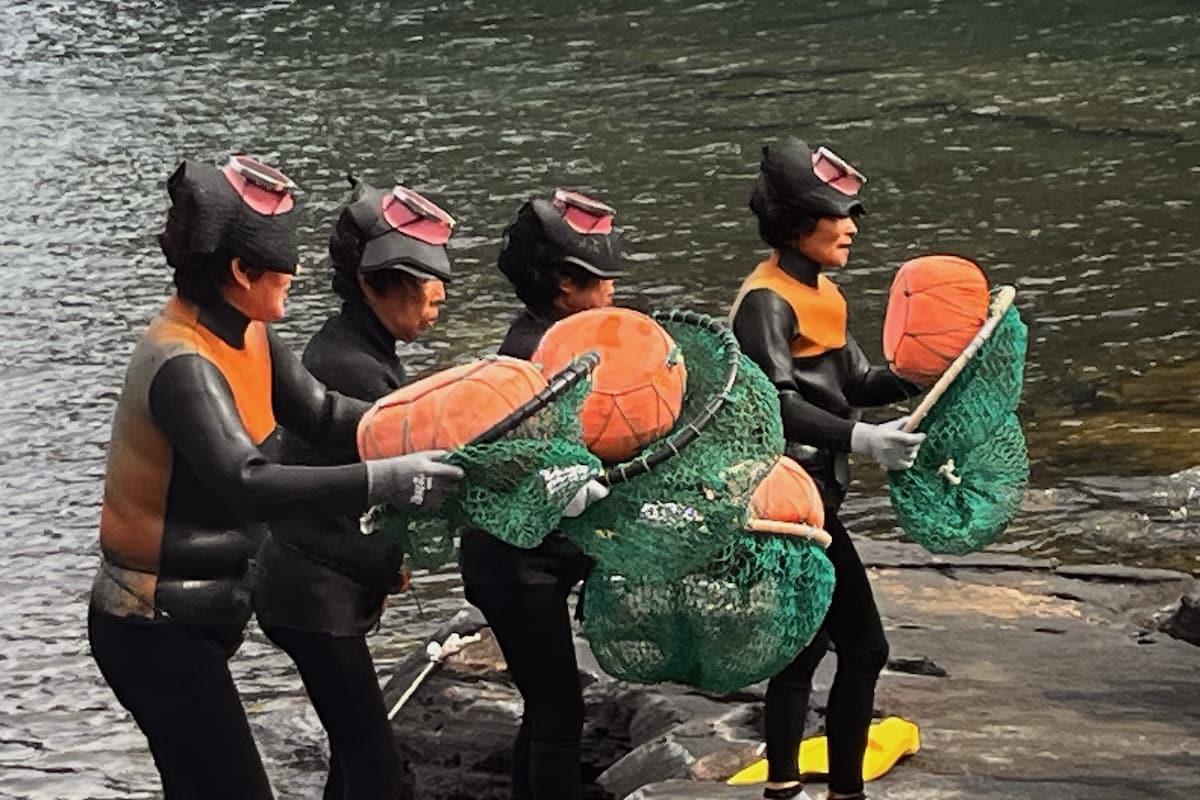
Haenyeo women performing
Day 2 on Jeju: West Coast Cafes and Jeju Craft Beer
If the weather isn’t playing ball, then indulge in some superb coffee and cakes on Aewul Cafe Street or The Jeju Beer Brewery does excellent island-brewed craft beer worth a stop. If you book ahead you might be able to have a tour of the brewery. Nearby you can marvel at the contrasting fine white sand and black volcanic rocks on Hyeopjae Beach. Or visit one of the twenty quirky museums we saw signs for on the island.
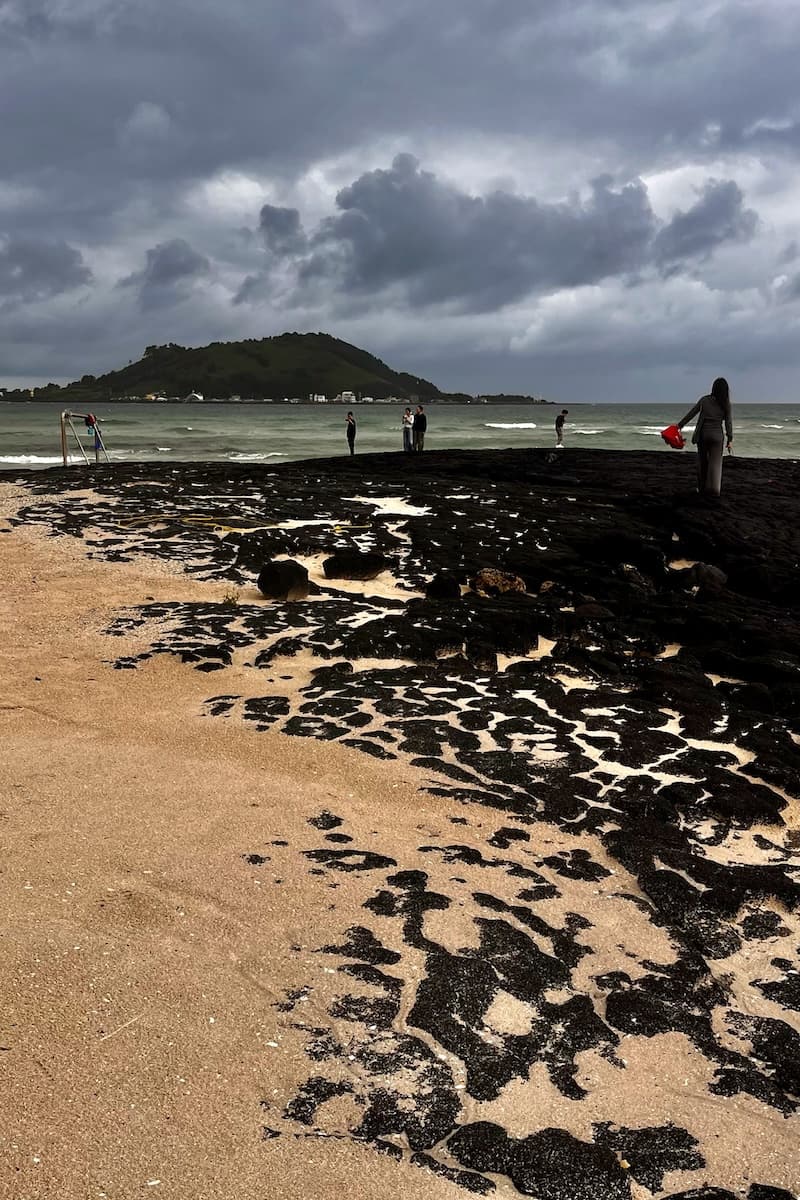
Dramatic sky at Hyeopjae Beach
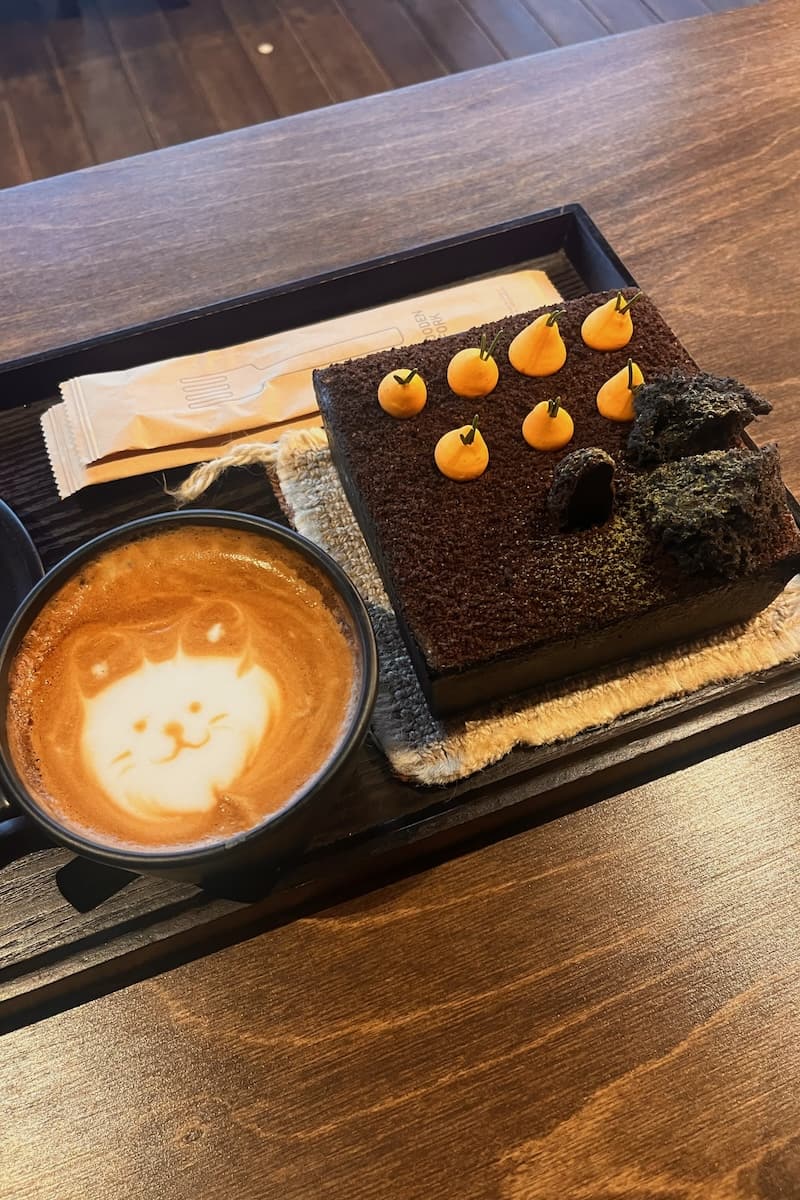
Coffee and carrot cake on Aewal Cafe Street
Day 3 on Jeju: Waterfalls and the West Coast
The final Jeju day is for the southwest: Cheonjeyeon and Cheonjiyeon Waterfalls are both within easy reach of Seogwipo, followed by Daepo Jusangjeolli Cliff — a remarkable formation of basalt columns rising from the sea, similar to the Giant’s Causeway in Northern Ireland. A short stop at Yongmeori Seashore (Dragon Head Coast) is worth it for the twisted volcanic rock formations along the shoreline.
On the way to the airport, take the ‘Mysterious Road’ (also known as the Dokkaebi Road) where your car appears to roll slowly uphill — an optical illusion, but a fun one. Right next to it is Jeju Loveland, which is exactly what it sounds like and entirely optional.
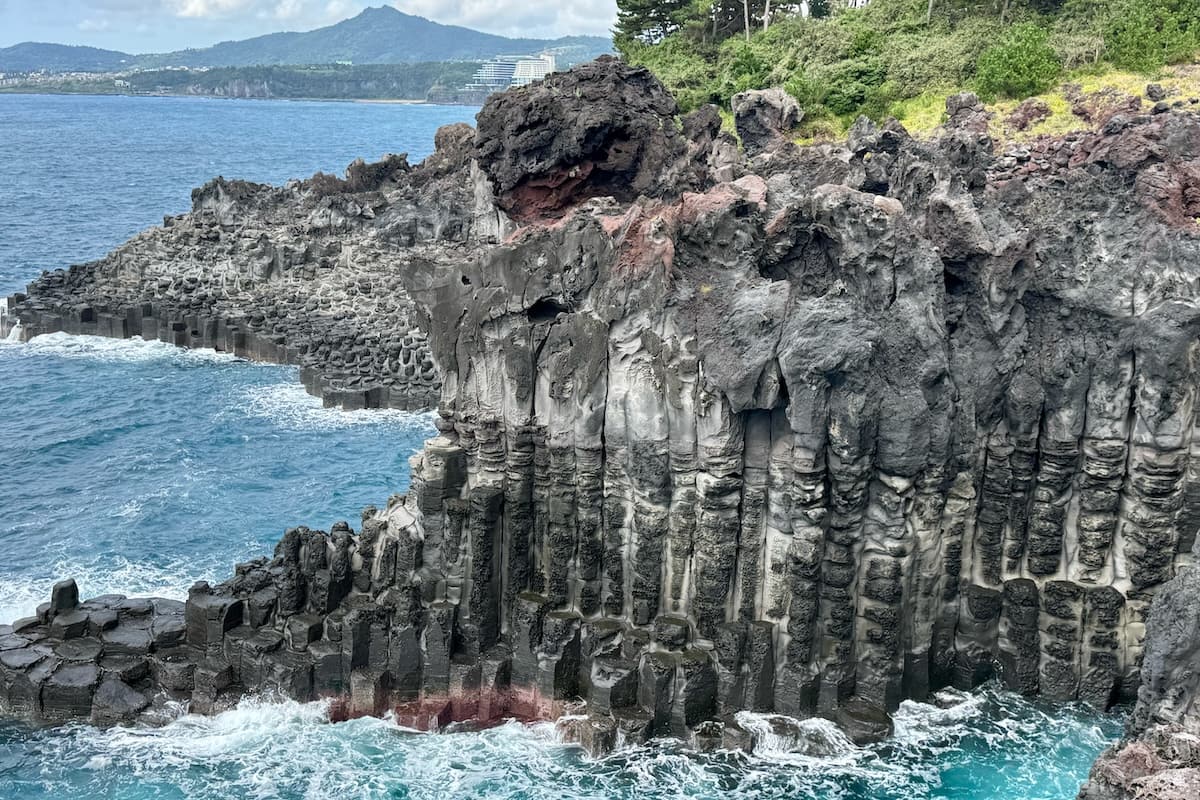
Brooding basalt polygon rocks of Deep Jusangjeolli Cliff
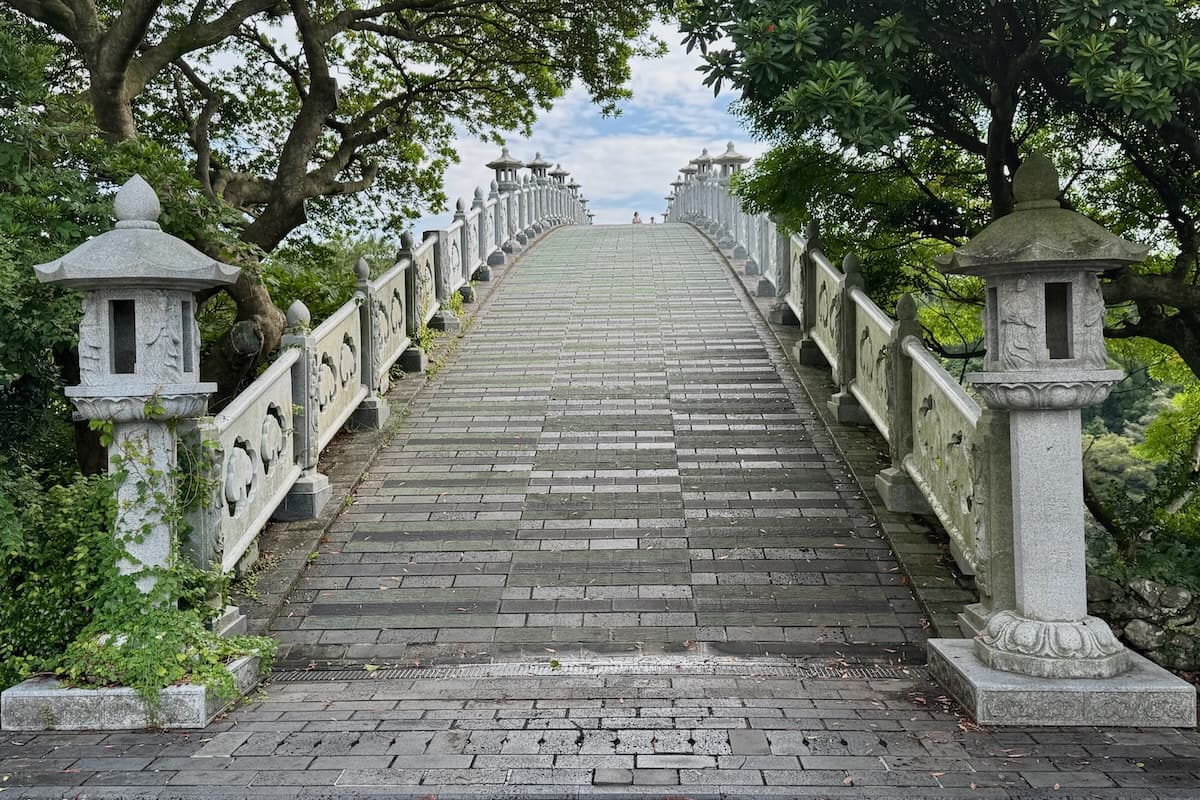
The bridge at Cheonjeyeon Waterfalls
Jeju Travel Tips
- Hire car: Useful on Jeju. Book in advance via Klook — we used Yesaway and had no issues. SUV recommended for comfort on longer drives
- Naver app: put sound notifications on for speed limit changes. We found it was the most accurate map on Jeju island
- Cost: Car hire from approx. ₩50,000/day. Seongsan entrance ₩2,000. Haenyeo performance is free
- Stay: Seogwipo in the south is well-placed for the waterfalls and cliffs. Jeju City in the north suits the aquarium and west coast
- Weather: Jeju can be windy and wet — check forecasts before planning outdoor days – there are over 20 quirky museums if weather is poor
Busan — Korea's Second City, First in Personality
We flew from Jeju to Busan Gimhae International Airport (PUS) on JinAir (about an hour) and took a taxi to Haeundae — the beachside district where we’d recommend any first-time visitor to Busan stays. We stayed at Haeundae The Van Hotel on Haeundaehaegyeon-ro, which had a great location and no breakfast (there’s plenty nearby). But you do get free coffee made by Eddie, the robot.
On arrival, head straight to Gwangalli Beach for the Gwangalli M Drone Light Show at 9pm. It runs for about 10 minutes over Gwangandaegyo Bridge is completely free and impressive, so we’ve been told. Our plane was delayed so sadly we missed it.
Day 1 in Busan: Fish Markets, Street Art & the Best Views in the City
Start at Jagalchi Market for a fresh fish breakfast — the market opens early and the fish restaurants upstairs serve whatever came in that morning. From there, walk to Bosu Book Street off Daechong-ro, a quirky strip of second-hand bookshops with good views of the tower from the top of the 168 steps.
For the best views in Busan, head to Yu Chi-hwan Postbox Observatory on Mangyang-ro (don’t bother with Busan Tower — this is better). Before going up, stop at Cafe Avant Garde for coffee and a view over Gamcheon Culture Village, the extraordinary hillside neighbourhood of multicoloured houses often called the ‘Machu Picchu of Busan.’ Spend the afternoon exploring it on the Basic Route B (pick up the map from the Tourist Information Centre, the route takes about 1 hour 20 minutes).
For dinner, I’d strongly recommend Dim Tao restaurant — book early as it closes at 8pm.
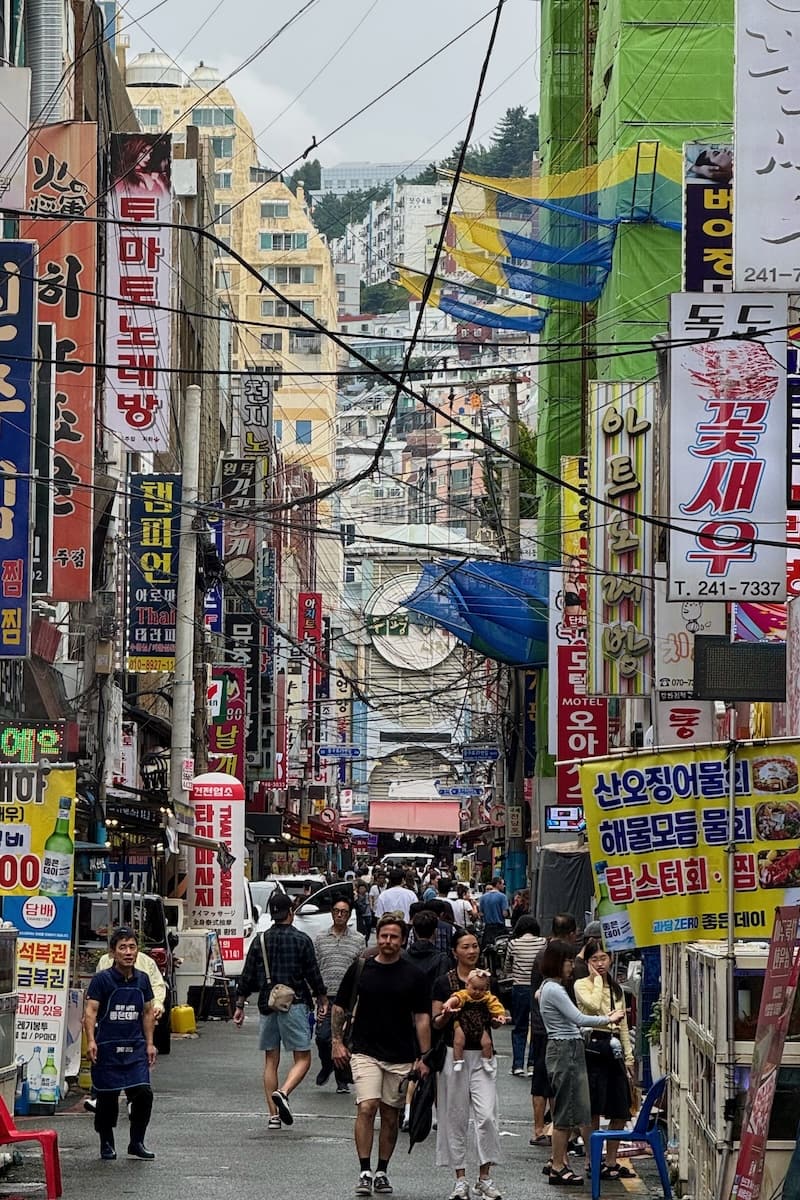
Busy street near Jagalchi Fish Market in Busan
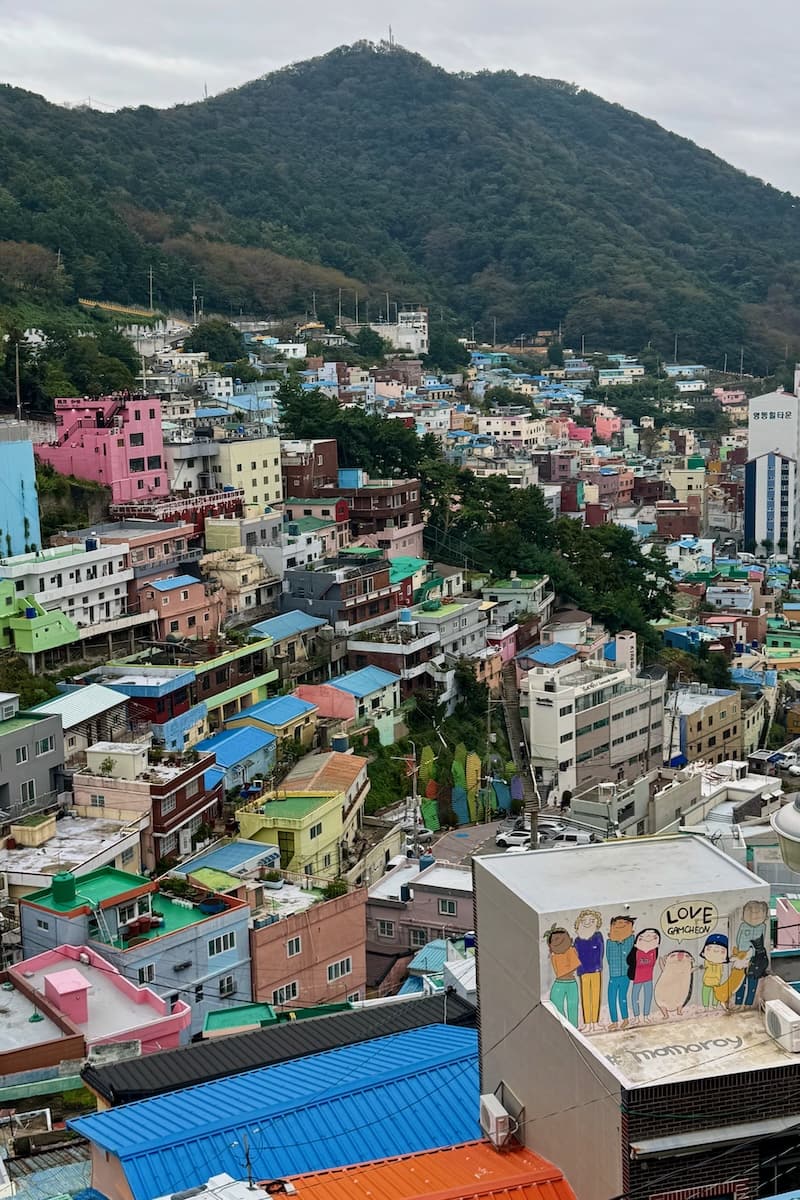
Gamcheon Cultural Village full of art
Day 2 in Busan: Coastal Temple Walk & Haeundae Beach
Allow 15 minutes by Uber or taxi to Haedong Yonggungsa Temple, a rare coastal Buddhist temple built directly on the cliffs above the East Sea. It is known as Korea’s most beautiful temple and has the crowds to match. Follow the Osiria coastal walk to get there — it’s a stunning approach through rocks and ocean. From the temple, a short walk through a bamboo forest brings you to Haedong Zen Centre for a quieter, more contemplative visit.
The afternoon is for Haeundae Beach — one of Korea’s most famous beaches and genuinely lovely. Dongbaekseom Park at the eastern end makes for a good walk, particularly at night as it felt very safe and was beautifully lit. Alternatively stay on the beach and listen to the buskers and watch the fire shows.
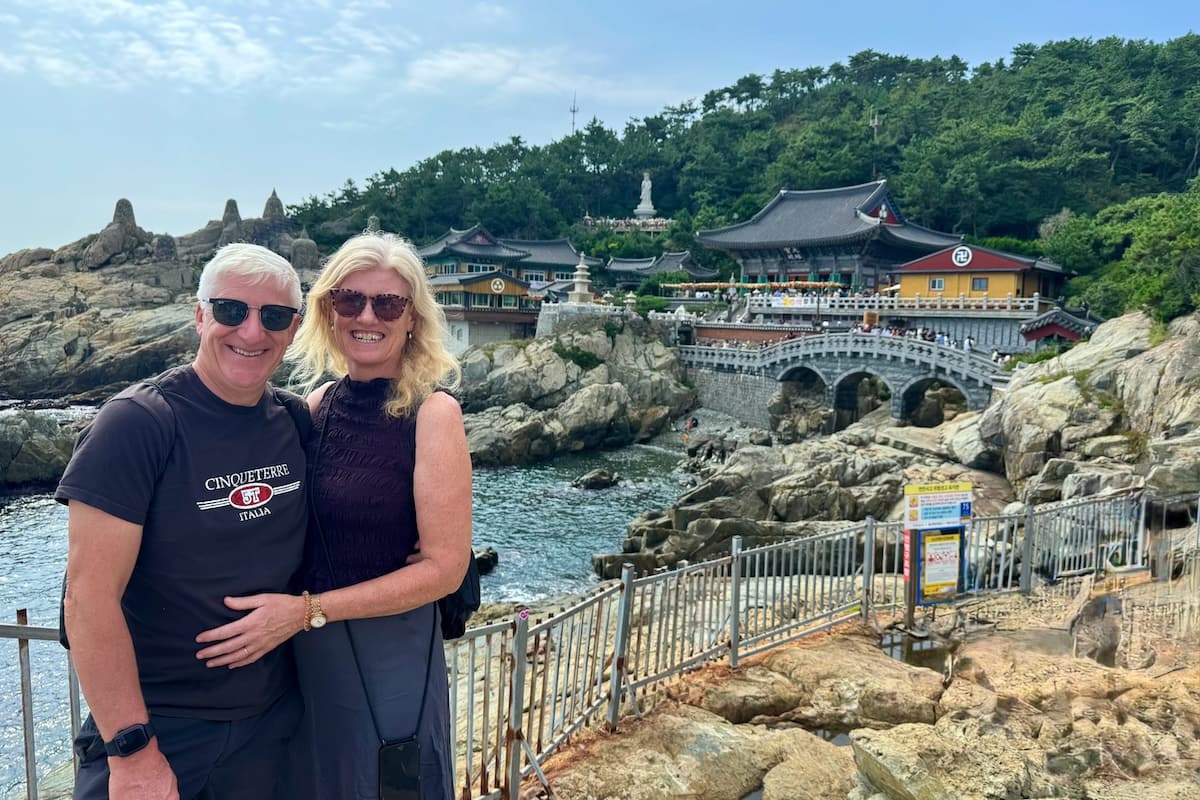
Haedong Yonggungsa Temple
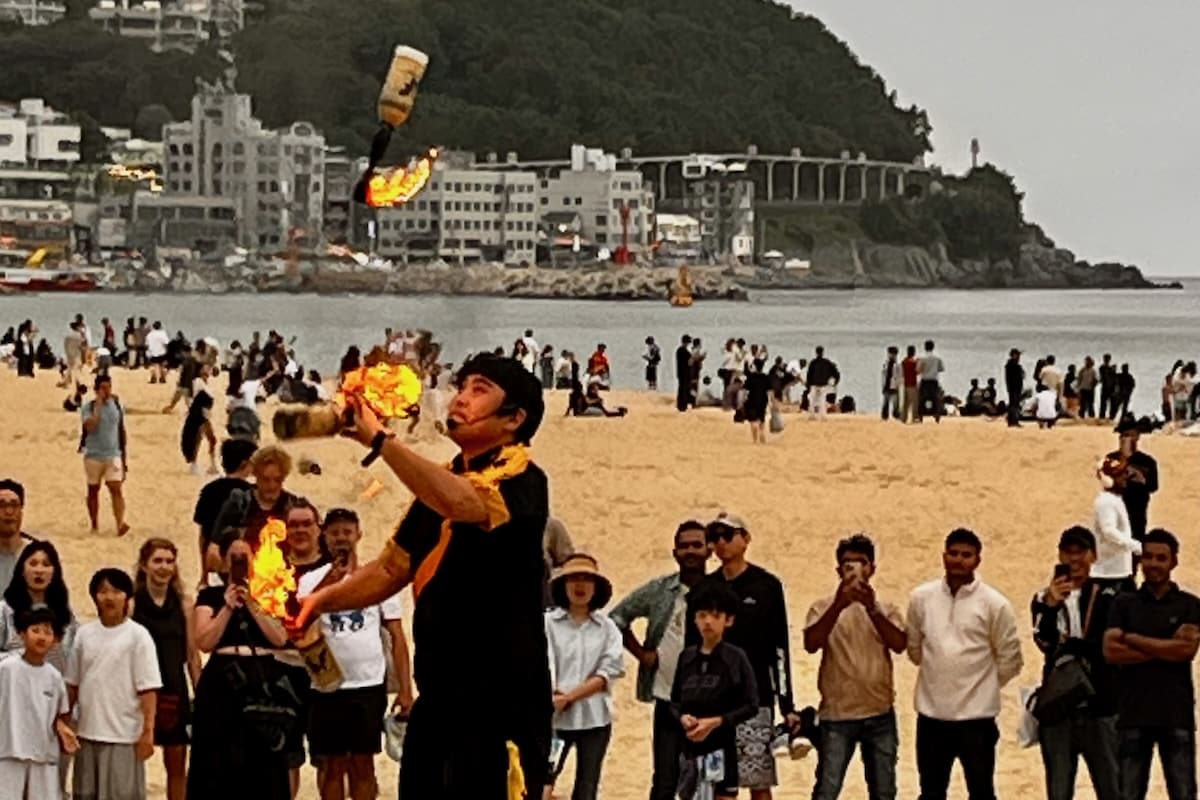
Haeundae Beach
Busan Travel Tips
- Getting around: Busan has a good metro system — Haeundae station is on Line 2. Taxis are cheap for cross-city trips
- Budget: Accommodation from ₩187,500/night at The Van Hotel. Gyeongju bus return approx. ₩15,000
- Food: Try milmyeon (cold wheat noodles) — a Busan speciality. Jagalchi Market breakfast is a must
- Beaches: Haeundae is the famous one, but Gwangalli is quieter and has the best bridge views
- Book ahead: Haedong Temple is popular — go early morning to beat the crowds
Gyeongju - Ancient City
Gyeongju was the capital of the Silla Kingdom for nearly a thousand years, and it shows. Take a 1hr 30min bus from Haeundae Intercity Bus Terminal to Gyeongju, then a 40-minute bus to Bulguksa Temple — a UNESCO site of extraordinary beauty with stone pagodas, lantern-lined paths and a quiet gravity that the more-visited temples elsewhere in Korea can’t quite match.
Back in Gyeongju town, spend the afternoon at the Daereungwon burial mound complex — a series of enormous grass-covered tombs from the Silla dynasty, where the excavated Cheonmachong and the free interactive Geumgwanchong exhibitions are genuinely fascinating. Nearby is Cheomseongdae, the oldest observatory in the Far East, still standing after nearly 1,400 years.
In the evening, the illuminated Donggung Palace and surrounding Wolji Pond are magical — the reflections of the lanterns in the water are one of those travel moments you don’t forget. Best stay overnight as its a rush to get to get back to Busan that night and there are direct trains running to Seoul.
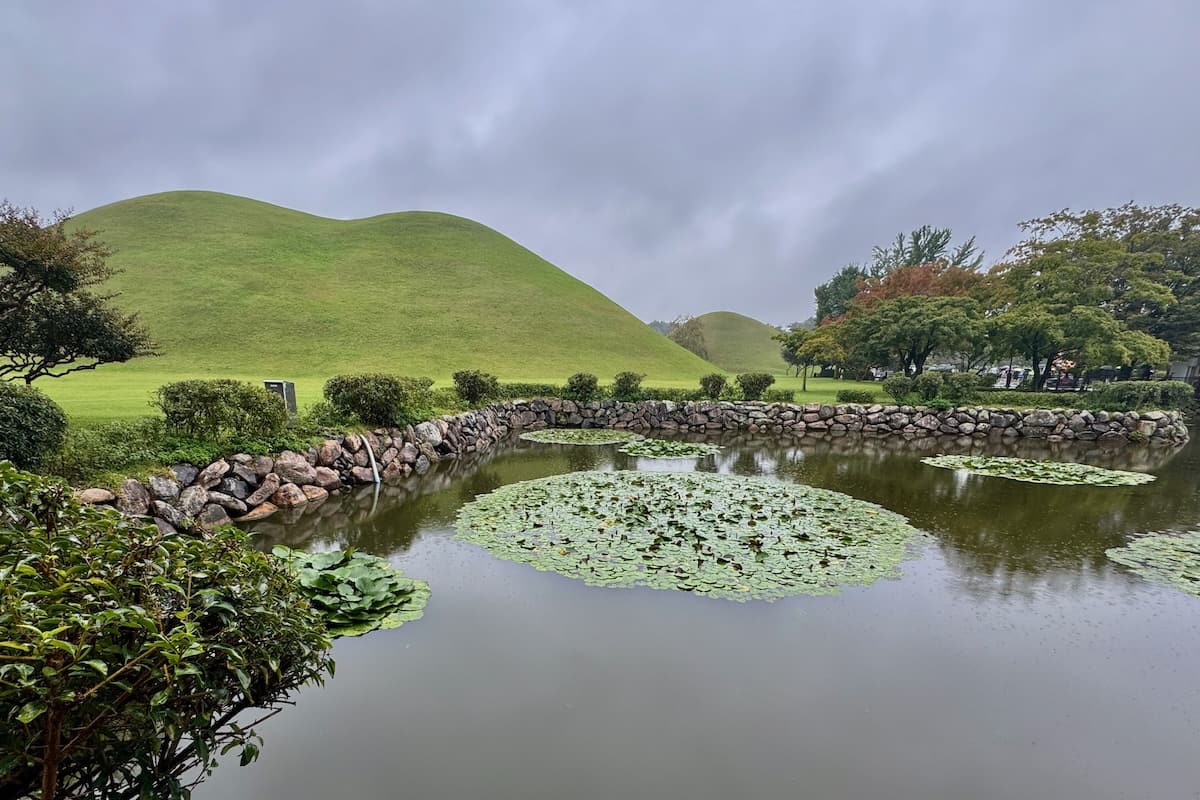
Wandering around the Silla Burial Mounds was very peaceful
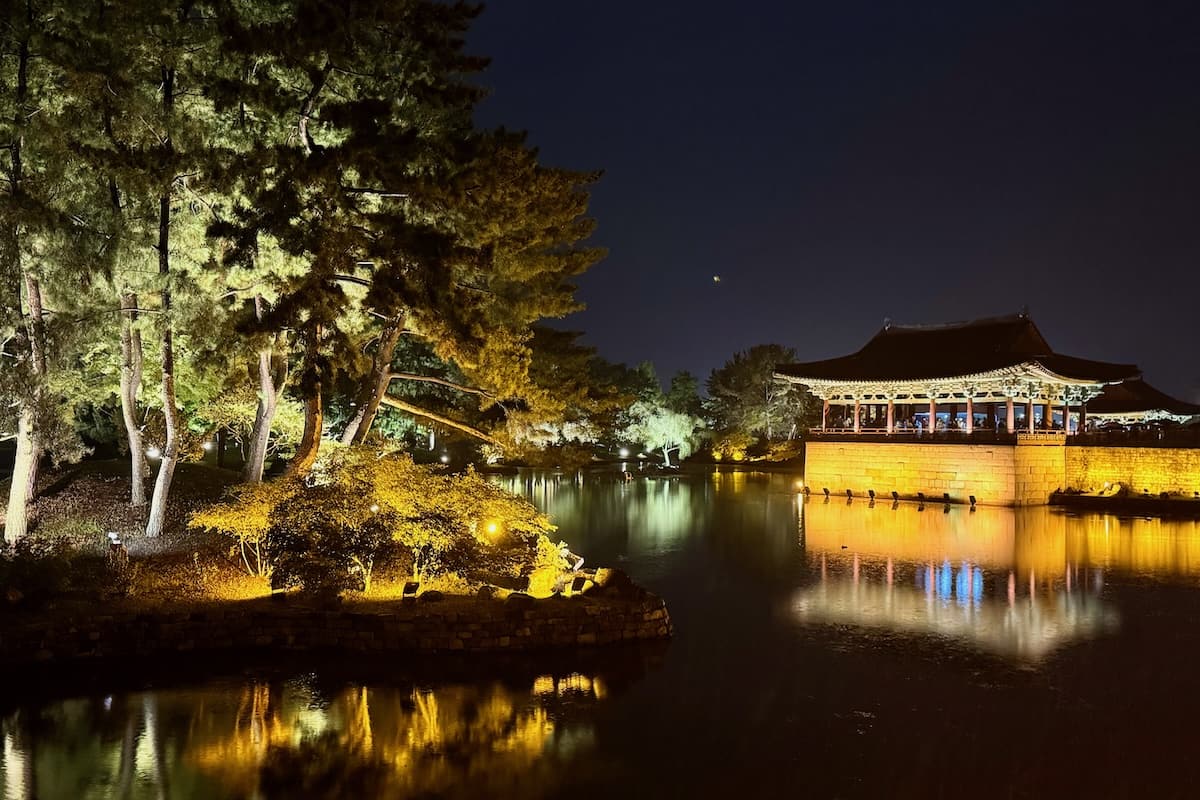
Magical Donggung Palce and Wolji Pond illuminated at night
Final Thoughts on Two Weeks in South Korea
South Korea rewards the traveller who goes beyond Seoul — and while the capital could genuinely absorb full week on its own, the combination of Seoul, Sokcho, Jeju and Busan gave us a real sense of the country’s range: urban energy, mountain wilderness, volcanic drama and coastal soul all in a compact, superbly connected country.
The transport infrastructure makes it genuinely easy to move around, the Korean Food is outstanding at every price point, don’t miss out on the Korean BBQ. The balance of ancient and hyper-modern feels completely natural rather than forced. Come with comfortable shoes, a T-Money card and an appetite. If that’s not enough, you will feel so welcomed by the local people, even in the capital city where they will go out of there way to help you. The genuine warmth of the Koreans was what really stood out for us in our 2 week stay.
Never miss an Adventure!