
Free Walking Tour in Oaxaca
By Gillian Boyd Published 11 April 2026
On this Free Walking Tour explore murals, the indigenous and Hispanic history, visit the food market and taste grasshoppers.
We like to do a Free Walking Tours when we arrive in a new place, as they are an excellent way of quickly getting your bearings and understanding the culture of a place.
The tour guides can answer your questions and give recommendations on restaurants, bars, live music, tours, where to get the colectivos etc. Walks typically take around 2 – 2.5 hours and finish at a different place.
Give a Tip
They call it a free walking tour but that’s a misnomer as you are expected to tip. It is just that you choose how much you want to give. US$10 per person was suggested. The amount we gave varied depending on how many people were on it and the quality of the tour
We booked the Free Walking Tour through our hostel Casa Angel.
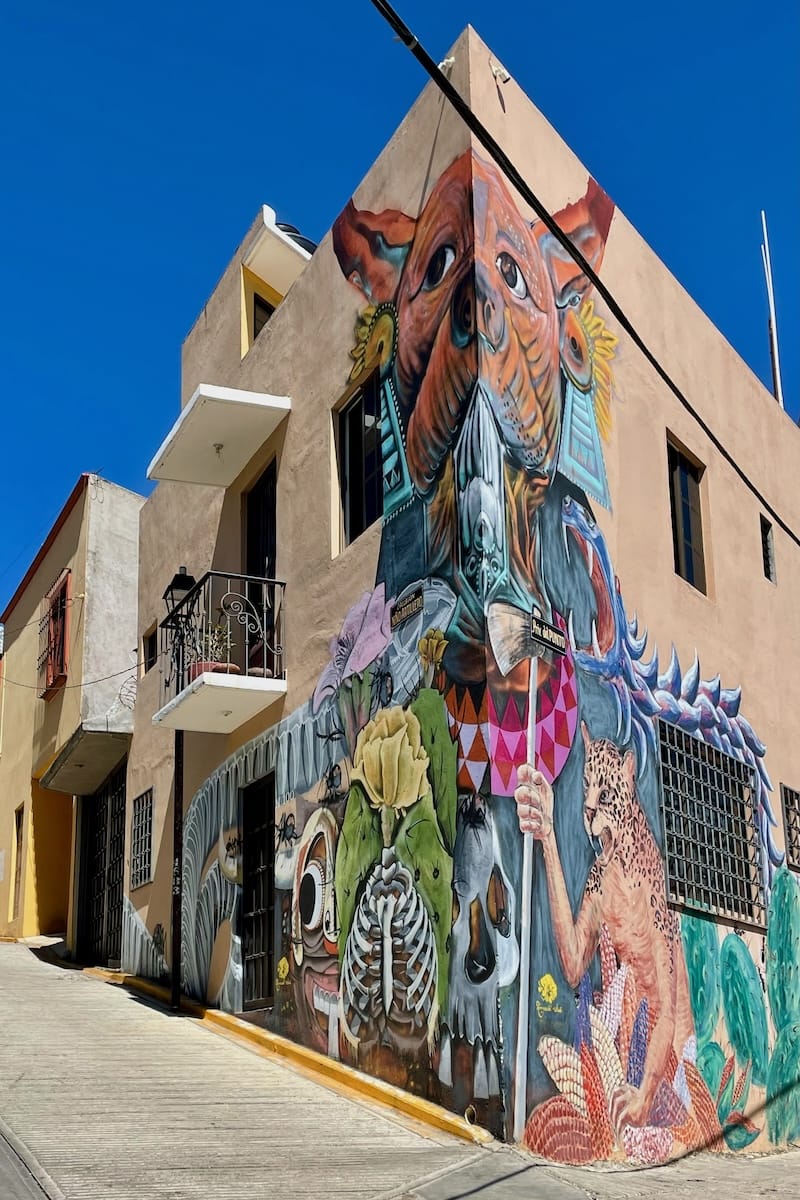
Mural on corner of building in Oaxaca, Mexico
Murals
Oaxaca de Juáraz, to give it its full name, is the capital of the state of Oaxaca (pronounced Wah-hack-ah).
Our guide, Juan, slowly led us up the steep streets towards the Auditorio Guelaguetza. He took his time because it was steep and Oaxaca is at an altitude of 1555m.
On the way we paused to catch our breath and admire the dog mural painted on the corner of the building. Literally on the corner of the building – half on each wall. Oaxaca is full of street art. Much of it is illegal and just like other places in Mexico, it voices the revolutionary freedom movement in the city.
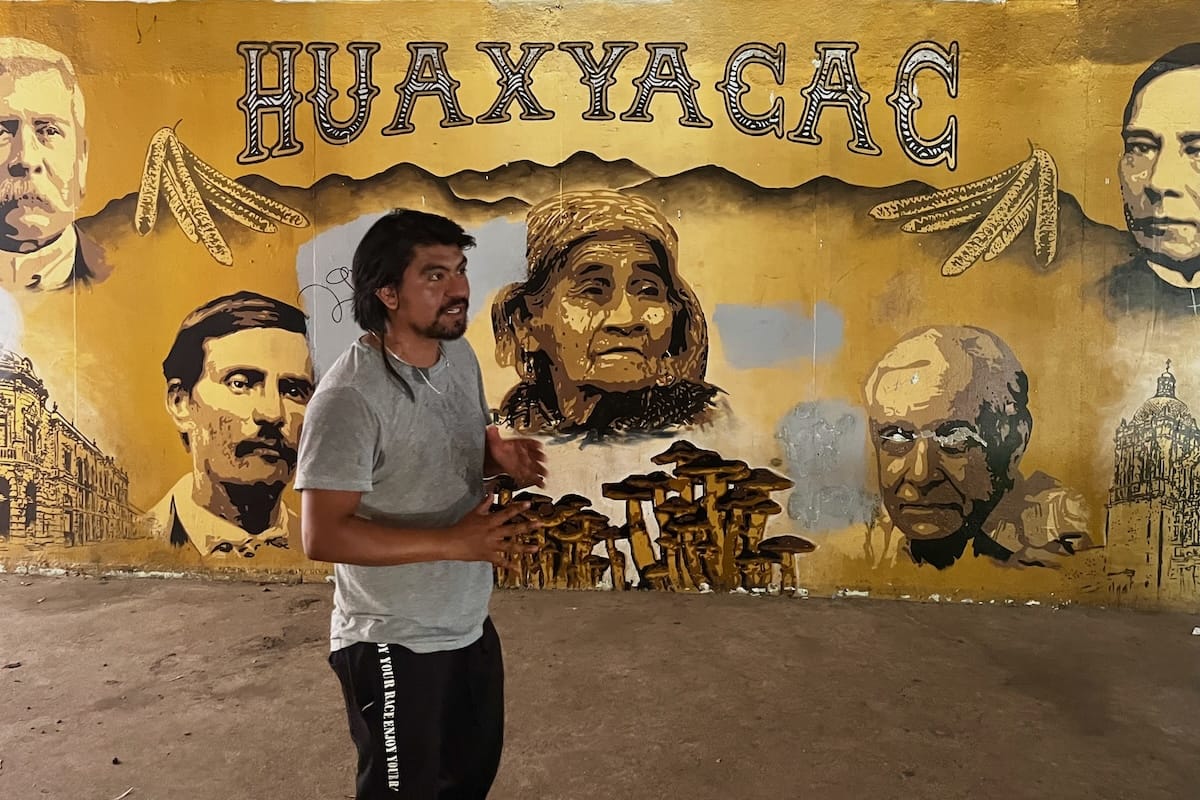
Who’s who in the history of Oaxaca
Shaman María Saban
At Azucenas, Juan showed us two murals depicting significant figures in the history of Huāxyaca (the pre-Hispanic name of Oaxaca. These included María Sabina, a shaman (healer) and poet who lived in Huautla de Jiménez.
Ancient Healing Ceremonies
She performed ancient healing, sacred mushroom ceremonies based on psilocybin mushrooms. It is rumoured she was visited by music legends such as Bob Dylan, John Lennon and Mick Jagger who came to trip out on magic mushrooms in the 1970’s.
Psilocybin mushrooms are used by the indigenous to cure diseases of both the body and the mind. The sacred ceremonies called Velas, are considered a path to knowing God.
Traitor, Now Honoured
In her lifetime, María Sabina was labelled a traitor and driven out of her village for sharing these secrets, but now posthumously, she is honoured.
Benito Juárez
At the top of the hill, we surveyed the city of Oaxaca all around us. As it was a clear sunny day we could see for miles.
The statue of President Benito Juárez helpfully pointed to Monte Albán, the pre-Hispanic archaeological site in the distance and although it was highly recommended, we did not manage to get there. We had been to a larger pre-Hispanic site near Mexico City only days earlier. See Experiencing the Underworld on a Teotihuacán Tour. While it is tempting to rush and see everything, sometimes it is better to save something to appreciate fully later and give you a reason to return.
First Indigenous President
Benito Juárez was featured on the mural we saw earlier. He was the first indigenous president of Mexico and is considered to be Mexico’s preeminent Mexican president. Born of Zapotec indigenous descent, in a small village near Oaxaca, he became a prominent lawyer and is commemorated all over Mexico in statues, street names and Markets.
The Mercado Benito Juárez in Oaxaca, (see what I mean) specialises in crafts and artisanal products. It’s also where I bought my gorgeous handwoven palm fedora.
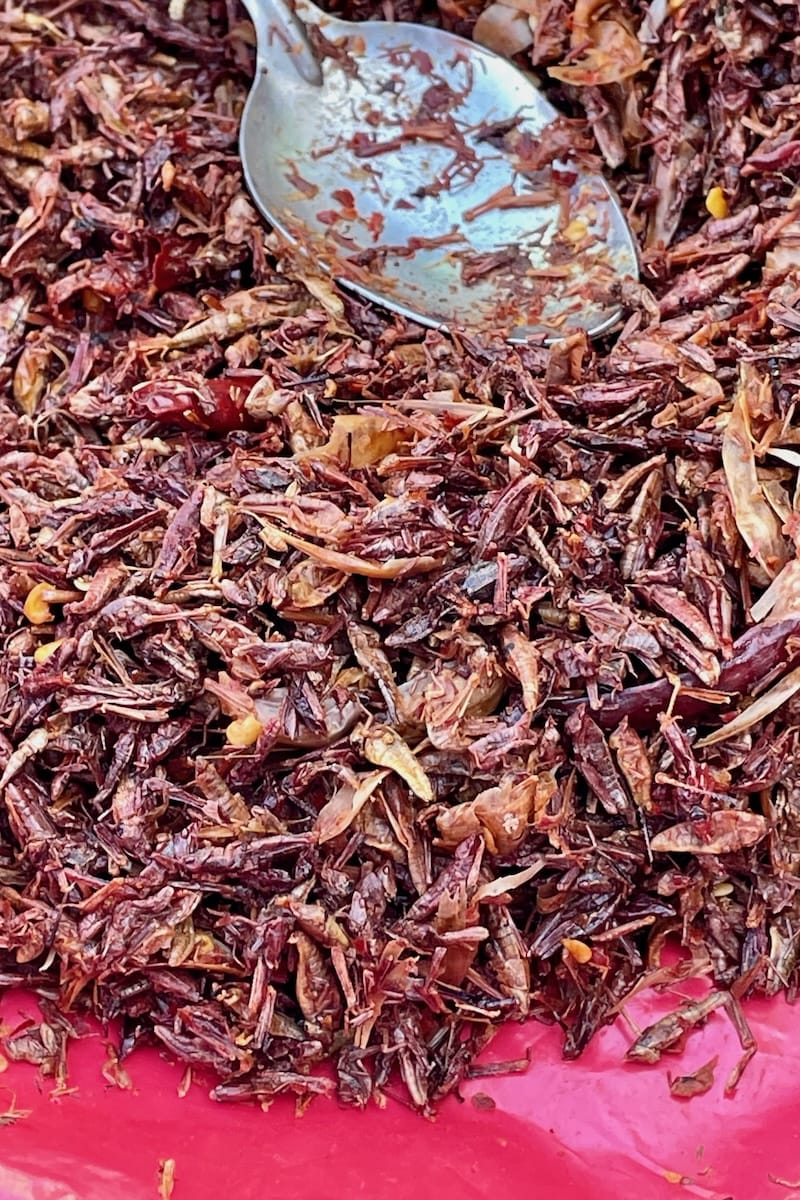
Chapulines grasshopper for sale at the market in Oaxaca Mexico
Eat Grasshoppers
Oaxaca is full of bustling markets thanks to its rich culture in arts and textiles. On our free walking tour, we visited the Mercado 20 de Noviembre famous for food stalls and grilled meats. Juan showed us around the market explaining the various foods around us. We tasted chapulines (grasshopper) which is often seasoned with chilli and lime and served in tacos.
Careful
Graham who has always been adventurous with food, ate a whole one but my bravery only reached as far as eating a few crumbs. This turned out to be a good thing, as I later discovered the insects are related to shellfish and most people who are allergic to shellfish are also allergic to eating insects. This is important as I am intolerant to shellfish.
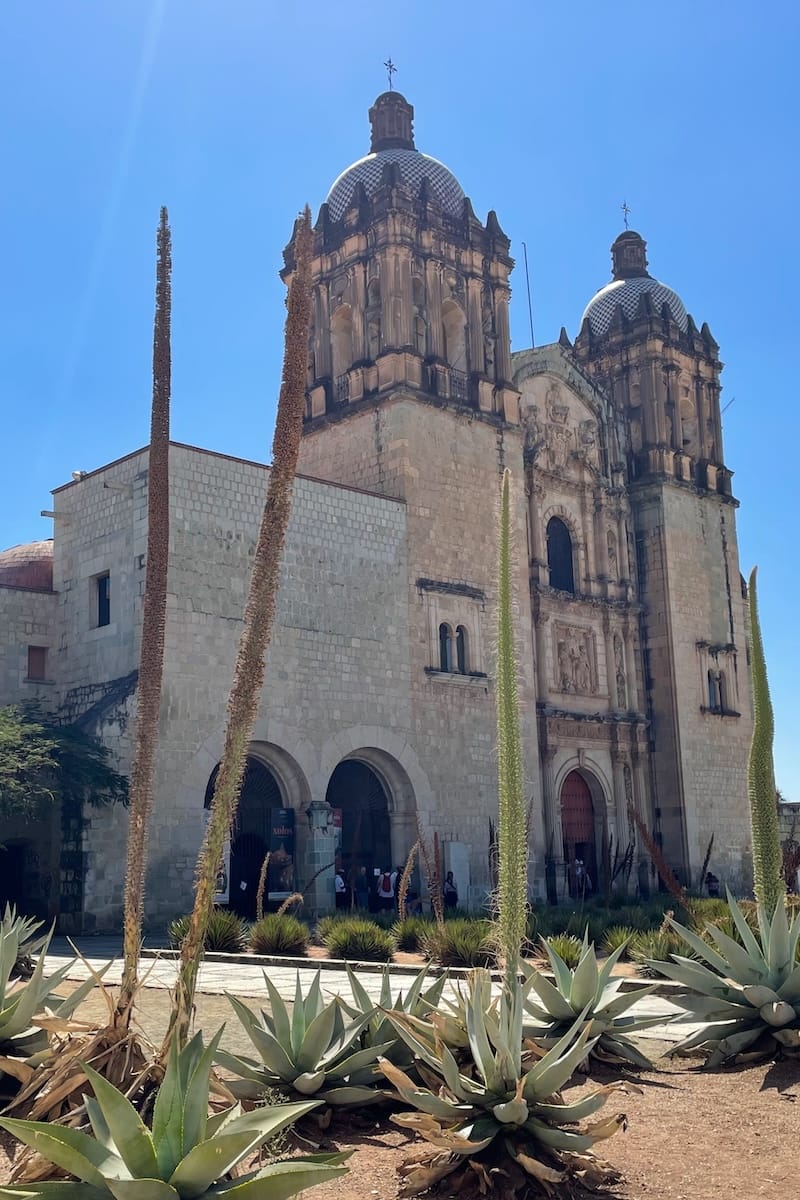
Templo De Santo Domingo de Guzmán in Oaxaca, Mexico
Templo de Santo Domingo de Guzmán
The Templo de Santo Domingo de Guzmán is one of the most visited attractions in Oaxaca and is considered one of the most beautiful churches in Mexico. It’s not hard to see why.
The present church was built in the New Spanish Baroque style as a symbol of the power and wealth of the Spanish colonial authorities.
Gold Interior
Gasp at the abundant opulent gold leaf and marble interior which contrasts with the relatively plain exterior.
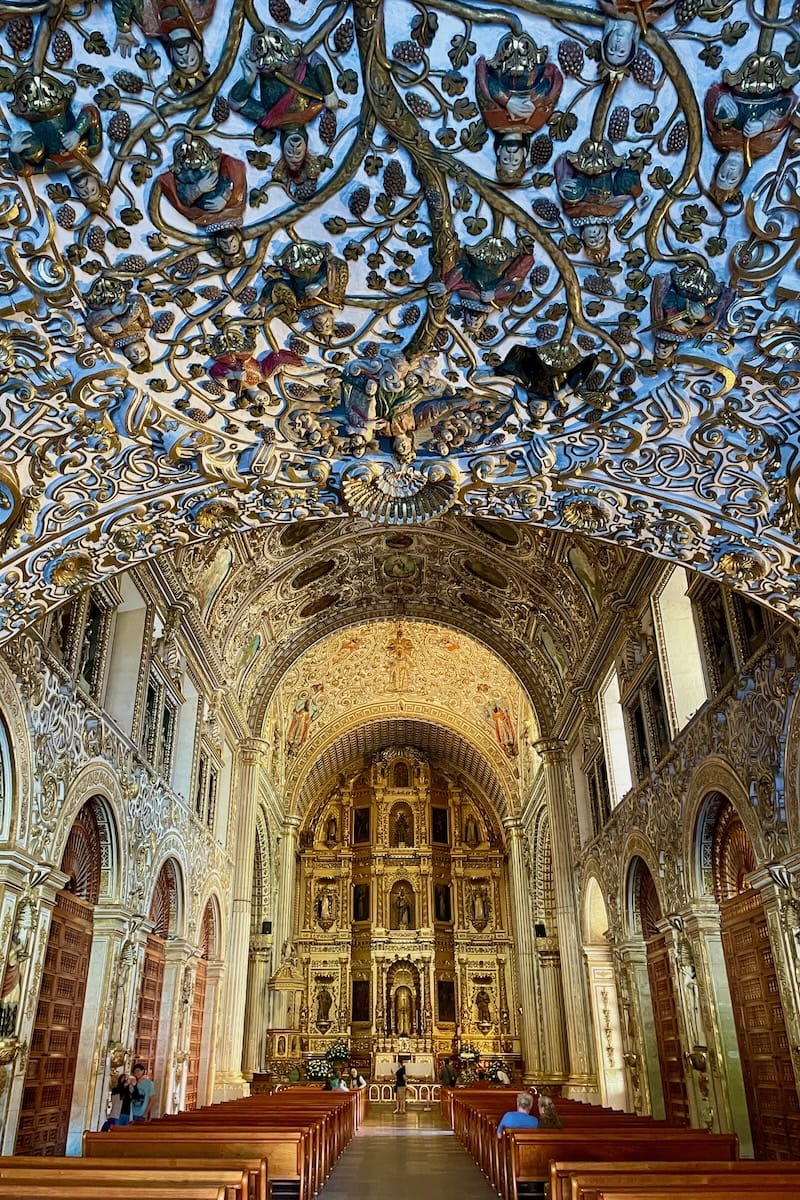
Opulent interior of Templo de Santo Domingo de Guzmán in Oaxaca, Mexico
Existing Site
As usual, the church was built on the site of an existing temple that was destroyed during the Spanish conquest of the region. That’s one way of showing who is in charge!
The original temple was dedicated to Cosijoeza, a Zapotec ruler and shaman who fought against the Aztecs in the fifteenth century. Upon his death, he became a god, ascended to heaven and protects the Zapotec people, or so the legend goes.
Nearby
The Church is next to the Museum of Cultures of Oaxaca, which overlooks the botanical garden. Nearby, the golden theme continued outside as nearby there were many life-sized golden statutes of women in crinoline dresses in the square. Half were gold, half were black.
Final Thoughts
Oaxaca is a thriving creative centre where art permeates and influences everything including jewellery, textiles, crafts, food, and music. It embraces its indigenous and hispanic past leading to a celebration of different styles.
The city is colourful with beautifully painted murals and decorations at every turn, although the bold uplifting colours can belie dark themes. Near the market we saw billboards listing the names of the missing and there have been protests demanding more action into the investigations of the (mostly female) missing persons. In other towns we saw similar billboards, graffiti and art work.
Just like a lot of mural art world wide, there are strong political themes to street art in Mexico and it is possible to learn a lot about both the past and the present. This walking tour gave me a taste of the street art and left me hungry for more. There are walking tours dedicated to street art so I’ll be booking one of those next time I’m in Oaxaca as there is still so much more to explore.
Never miss an Adventure!