
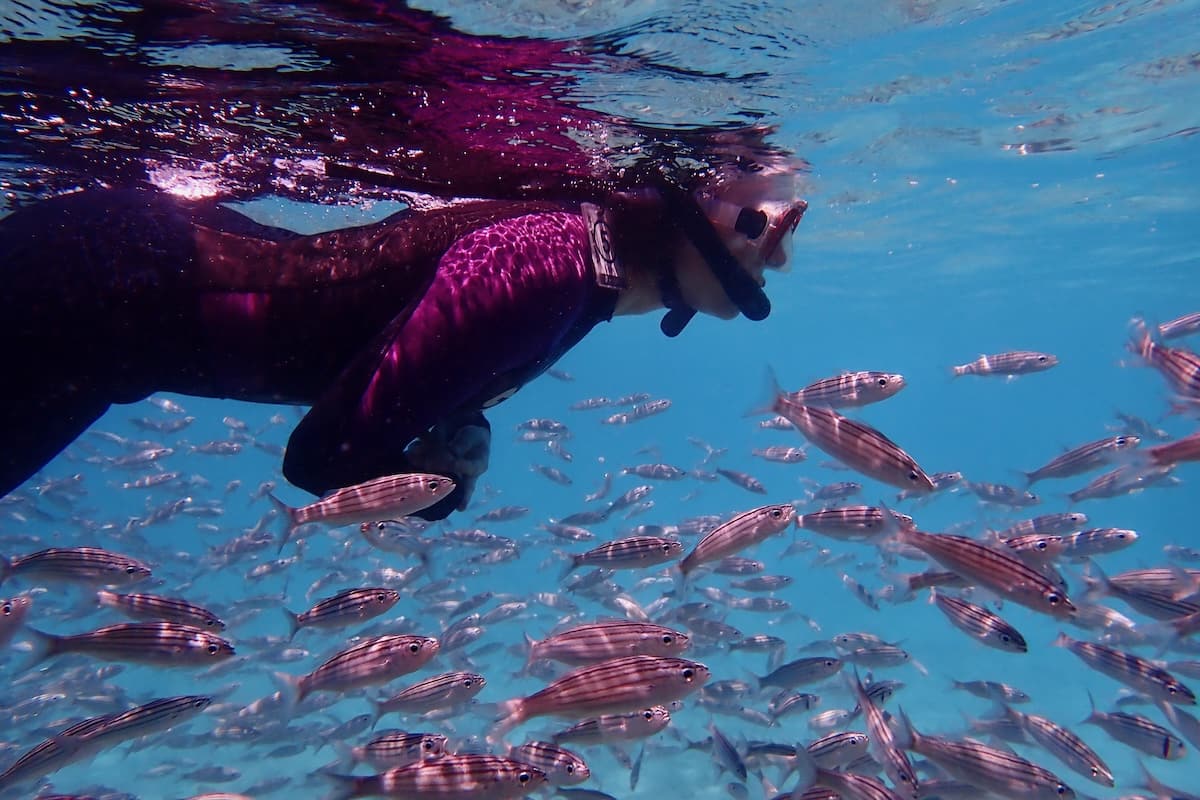
Snorkelling in the Galapagos
To Snorkel or to Scuba Dive, that is the Question
By Gillian Boyd Published 25 March 2026
Trying to decide between snorkelling and scuba diving? This blog will help explain the differences and benefits of both, including how long you are underwater.
What is Snorkelling?
Snorkelling is cheap, needs little equipment or experience and you don’t even have to be able to swim!
Snorkelling is swimming with a breathing tube called a snorkel. It feels similar to wearing a mouth guard that you might use playing hockey or rugby. It is often accompanied with a mask that completely covers the eyes and nose. Most of the time is spent floating on the surface of the water with the face fully submerged.
Non-Swimmer
Non-swimmers can wear a life jacket and still enjoy the experience as there is little swimming involved, though it will be a more relaxing experience if you are able to swim.
How Far Can You See Snorkelling?
How far you can see, depends on the visibility of the water and this is the same for scuba divers. If the water is very clear you will be able to see further and that is why snorkelling is popular in areas where there is good marine life AND crystal-clear water.
Sometimes snorkelers will free dive by holding a deep breath and diving deeper to get a closer look at something. The deeper you dive, the more colours fade. But you often get closer to the marine life and see creatures that don’t exist near the surface.
What is Scuba Diving and How is it Different to Snorkelling ?
Scuba diving is different to snorkelling as you carry your air underwater with you, in a tank on your back. Scuba is an acronym for Self-Contained Underwater Breathing Apparatus meaning you have the ability to breathe underwater without being attached to the surface. Although the tank is heavy on land, it doesn’t feel heavy when submerged in the water. Generally if you are comfortable snorkelling with a traditional non-full face snorkel, then you will easily adapt to scuba.
Scuba diving is expensive and needs specialist equipment and training, but you can limit the cost by carefully choosing your location. For example, Koh Tao in Thailand is considered budget friendly whilst still offering superb diving. The ability to swim is mandatory as you need to pass a swimming test to get your certification.
How Long Underwater?
A recreational scuba diver will generally spend around 45 minutes to 1 hour under water. The bottom time, depends how much air you consume which is determined by depth, how much you move and how much you breathe. As you become more experienced this time can increase. A well-planned dive will try and follow the current round so you drift rather than having to swim.
Basically, the more relaxed you are and gentler your movements, the longer your air lasts. Graham found his air never lasted as long when he was taking photos underwater as it caused him to make more adjustments to his movement. While diving, I like to think of my mediation breathing to help me breathe calm, long and slow.
Certification
The entry level certification, PADI Open Water, permits you to dive to a maximum depth of 18m (60 feet) and the Advanced Open water to 30m (100 feet). Other companies like SSI offer similar courses and you can do Open Water with one and Advanced with another. We did that because SSI was cheaper.
There are more than 20 specialist courses available such as Wreck Diver, Night Diver, Rescue Diver and even Digital Underwater Photographer. As a consequence, it is possible to explore a wider range of marine life and environments than snorkelling.
Is Snorkelling or Scuba Diving Better?
Generally, people want to know how much more they will see. Is it worth the additional time and expense to train to scuba dive? Will you see more?
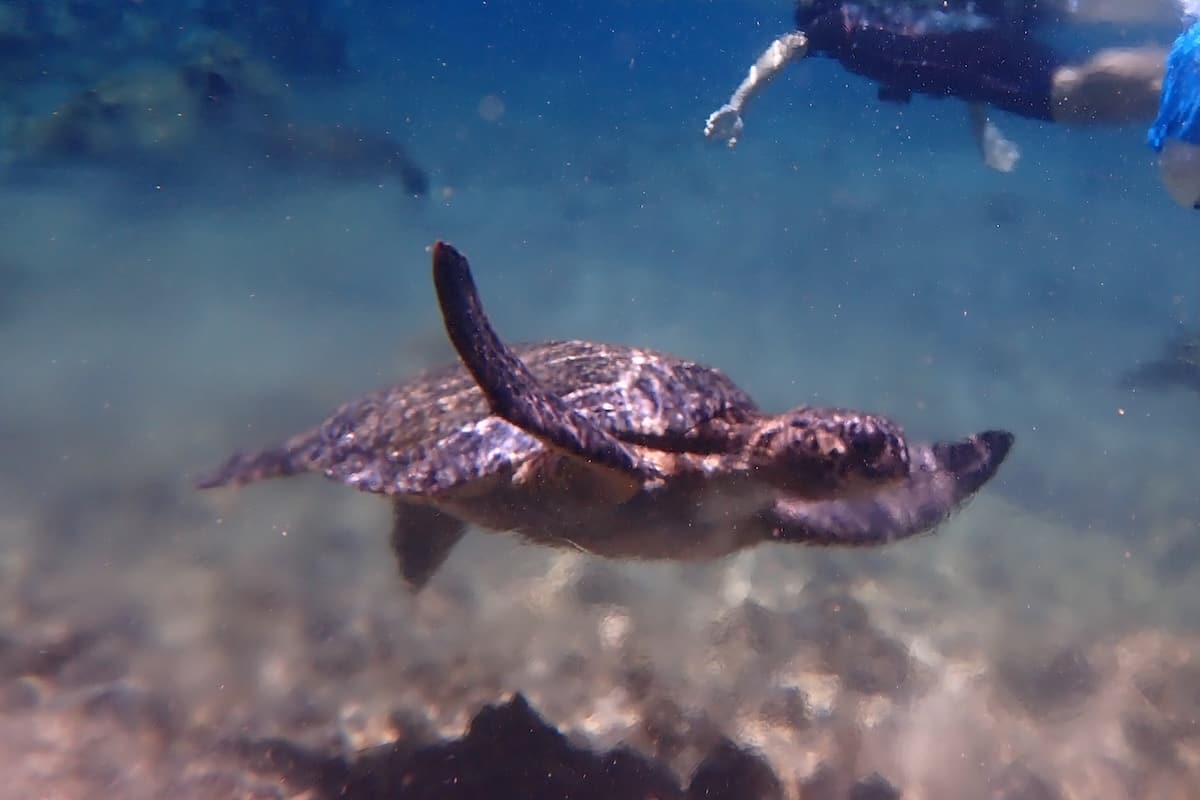
Snorkelling in the Galapagos
What We Saw Snorkelling
While snorkelling we have had some amazing wildlife experiences including swimming with squid and octopus on the reef directly outside our hotel in Barbados. We have seen many turtles in different locations and were circled by 15 black tipped reef sharks in Koh Tao Thailand.
In Belize we snorkelled the famous Shark Ray Alley in the Hol Chan Marine Reserve and saw nurse sharks and barracuda. In the Sea of Cortez in Mexico, we snorkelled within touching distance of 8m long whale sharks which was such a tranquil and humbling experience.
Pro Tip – Remember to wear a rash vest to protect from the sun as suncream damages the marine environment.
What We Saw Diving
Scuba diving in Zanzibar, we saw lion fish, dolphins, scorpion fish, pufferfish and the wonderfully named sweet lips.
On a night dive in the Philippines the eyes of shrimp sparkle red, like tinsel, the electric or disco clam flashes electricity in neon, while the white bioluminescence fluoresces like erratic sparklers. While in Barbados, the burgundy coral wafted in the current like the feather headdress of a Las Vegas showgirl. Getting within one metre of thresher sharks is exhilarating.
We have swum around shipwrecks, collapsed piers and artificial reefs, made of concrete cube frames and even old tyres. We have seen bleached coral as well as thriving coral so colourful and bizarre it looks unreal. We have been muck diving in the Philippines where you can see creatures such as frog fish that look like aliens.
In Mexico we dived in cenotes, limestone sink holes rather like big caves where sometimes the ceiling has partially collapsed. The limestone has holes and the sunlight pierces through like lasers which is spectacular to see. There are also surprises like a live crocodile on the bank at Casa Cenote, or bats flying at Dos Ojos, Tulum, Mexico.
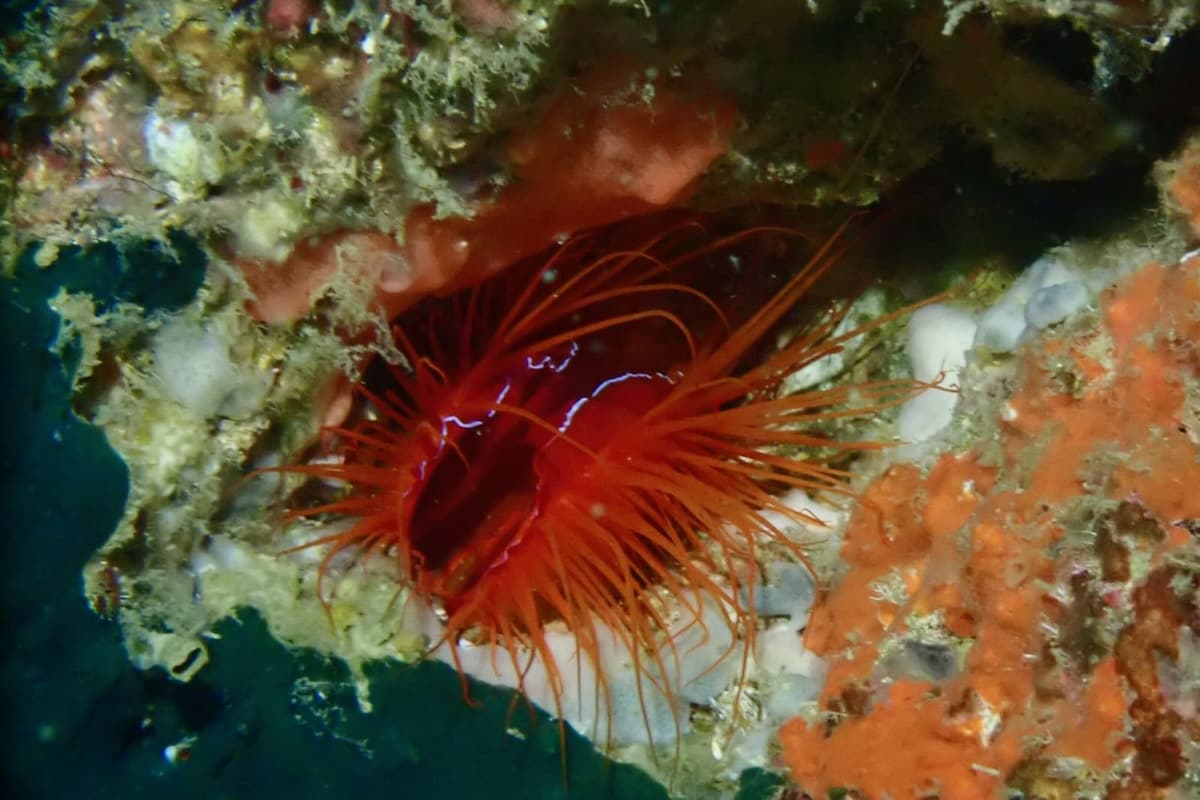
Thanks to John Cowey for photo of electric red clam flashing electricity in the Philippines
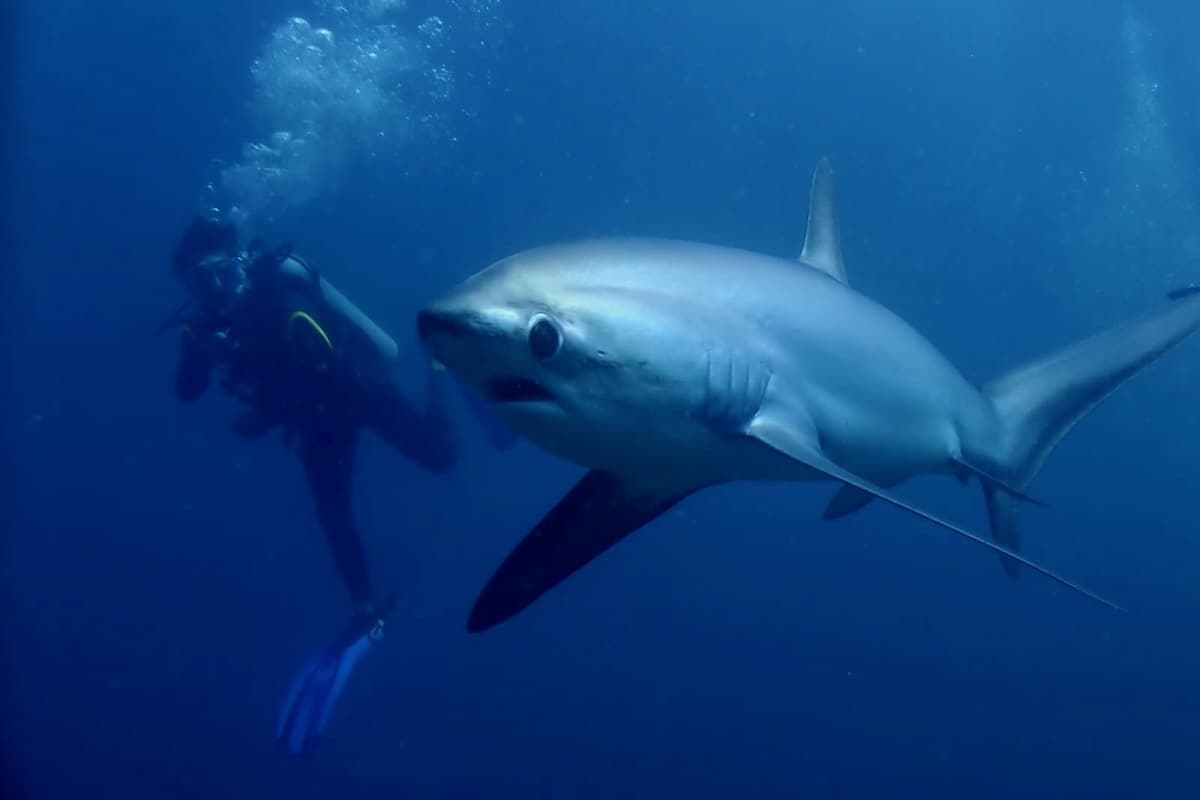
Thanks to John Cowey for photo of thresher shark. What an amazing dive!
Final Thoughts
You can dive in all the places that you can snorkel but you cannot snorkel in all the places you can dive. Even where you can do both, such as the sardine run in Moalboal, the view from below when diving offers an enhanced experience.
With scuba diving you can explore further in a wider range of environments, such as caves, wrecks and cenotes. You can also see and experience creatures that are only visible from below, like getting close and personal with thresher sharks. Almost three quarters of the world is covered in water so there is much to discover both during the day and at night.
The ocean is an exciting place and I will continue to snorkel, but scuba diving will take me to even more unusual places and that is why I think it is worth the additional expense and time to train and become certified.
Never miss an Adventure!
You May Also Like to Read…
Top 12 Practical Tips for Scuba Diving