
Top 12 Practical Tips for Scuba Diving
By Gillian Boyd Published 25 March 2026
If you have never been scuba diving before or are new to it, this blog has my top 12 practical tips to enhance your experience.
We learnt to scuba dive for the first time as a family. Our children were teenagers at the time and it was a great shared experience for us all at a time when families often drift apart from each other.
We bonded over learning new skills together and seeing wondrous marine life like manta rays and white tipped reef sharks. If you have never tried scuba diving before then here are my top twelve tips.
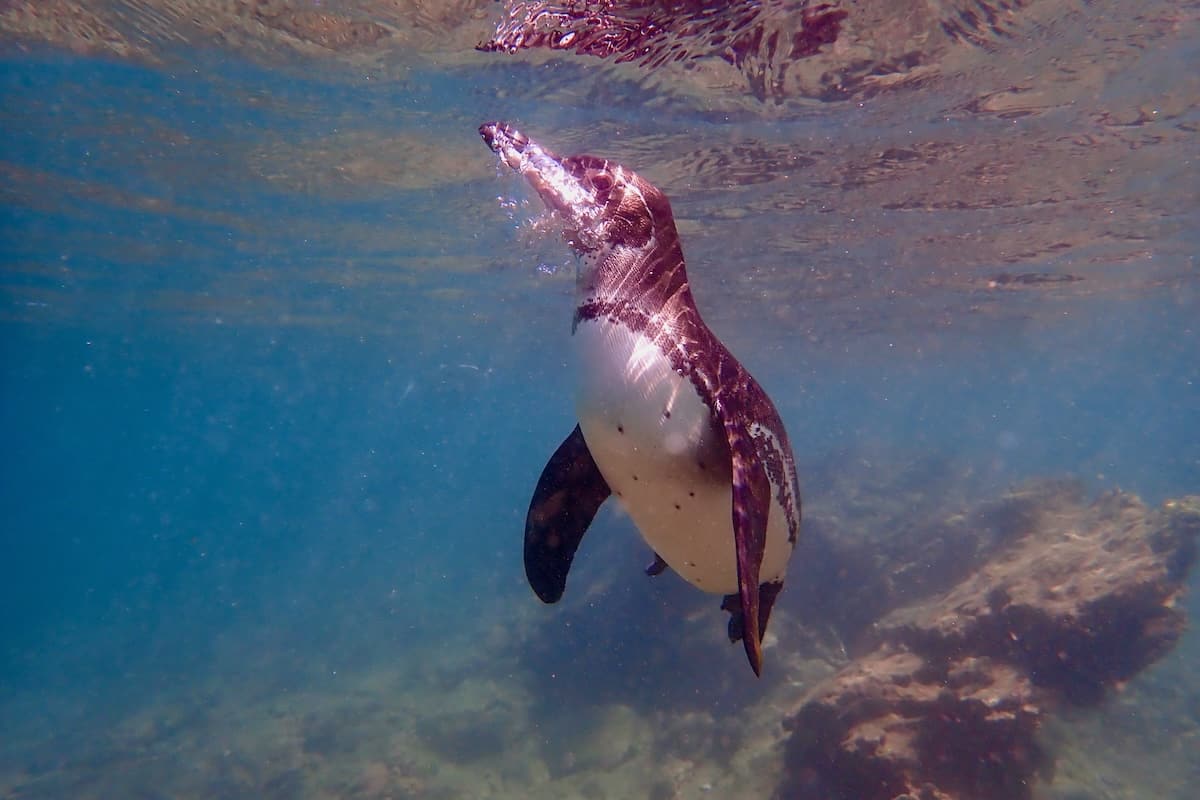
You might get to see a penguin swimming!
Top 12 Practical Tips for Scuba Diving
1. Snorkel First
Snorkelling gives you a glimpse into the world of diving as you wear an eye mask and put your full face in the water. By snorkelling you get used to having something in your mouth while you breathe. It is also a low-cost way of seeing if you will like scuba diving.
2. Rent the Equipment
The dive school can supply everything you need including wetsuits, fins (flippers) and masks. Many experienced divers rent everything because of travel weight allowances and differing water temperatures requiring different wet suits. We like to keep our backpacks light at under 12kg but still pack our masks, snorkels and dive boots. The latter are very useful for any water-based activity such as visiting the beach or clambering over rocks to a waterfall.
3. Avoid Cream
Avoid all sunscreen or even moisturiser on your face as it can end up in your eyes and sting. It also damages the marine environment.
4. Bring a Sunhat and Sunglasses
Since you have avoided sunscreen bring a big sun hat and sunglasses for sun protection on the boat. There isn’t always enough shade when you want it and the sun will reflect off the water.
5. Buy a Hair Guard for your Mask Strap
Masks have a silicone strap to grip the back of the head and hold them firmly in place. It does the job so well that it is common to pull out a few hairs each time you take the mask on and off. A hair guard avoids this as the neoprene guard covers the silicone strap and enables smooth removal. There are many designs available for men, women and children and it helps you identify your own mask easily on the boat when equipment can get muddled up with the other divers.
Additionally, hair caught in the mask will break the seal and water will enter. The little wispy bits around your forehead are particularly prone to getting in the way. Hair bands or braiding can help but it is worth checking for hair in the mask as part of your buddy checks.
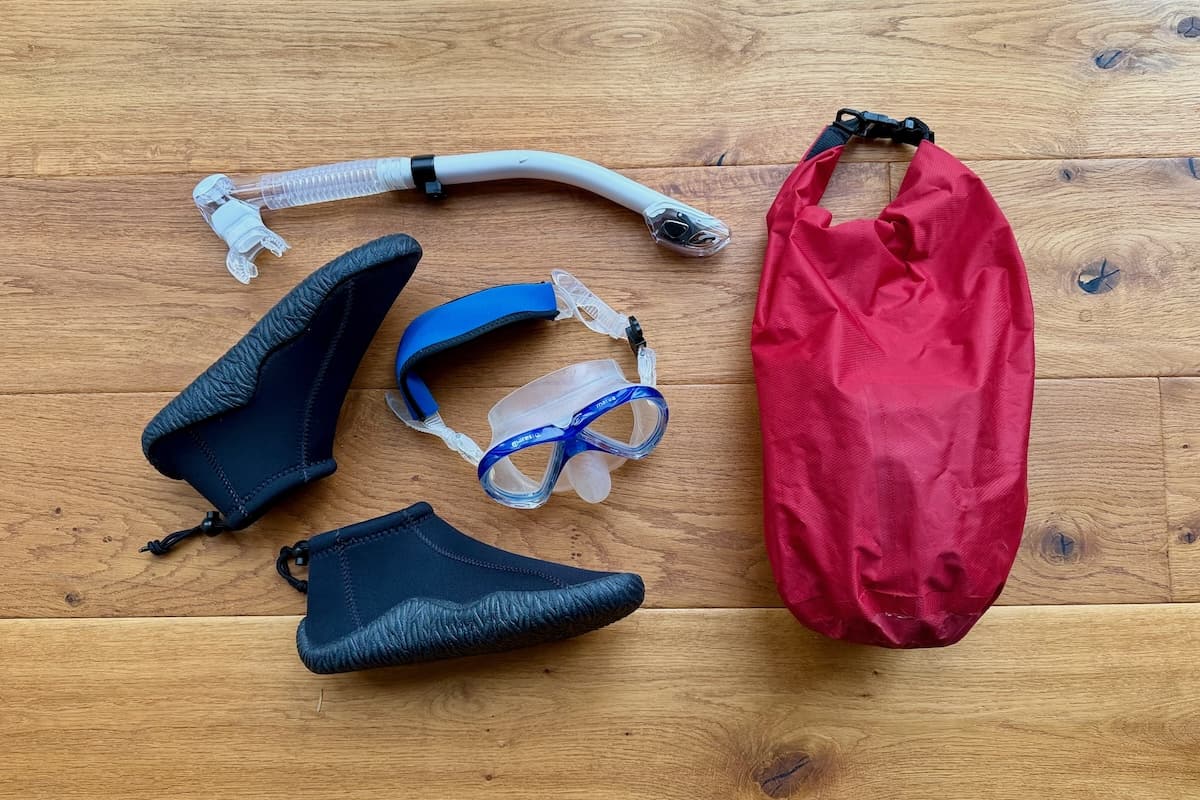
The scuba diving equipment we bring in our backpacks – we rent the rest
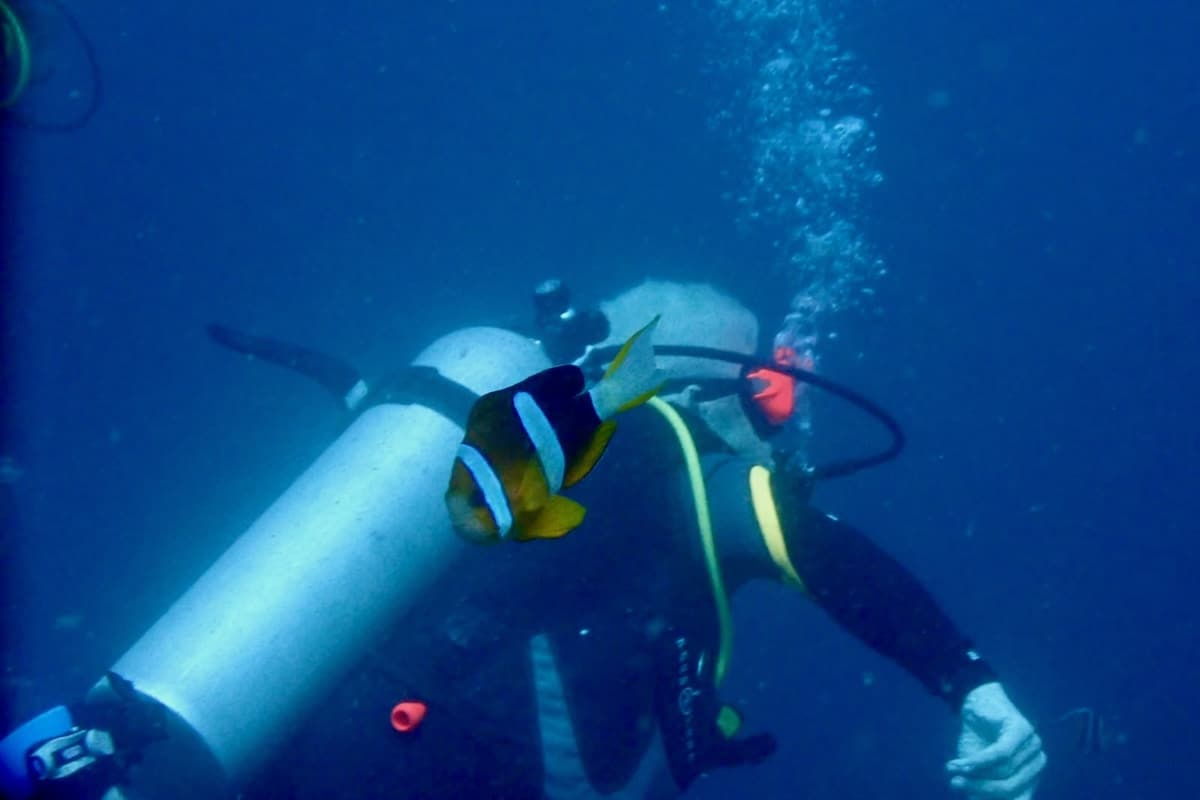
Graham scuba diving in the Philippines
6. Rinse in clean water ASAP
Salt water is damaging to the equipment and us, especially hair, so rinse in clean (non-salty) water as soon as possible.
7. Bring a jumper or fleece
Even in tropical countries it can feel cold on the boat especially if it is windy between dives when you are wearing wet suits. It can be a hassle to put wet suits on so many people will just take their arms out and dry their chest, leaving the bottom half of the wet suit still on. A sports jumper like a running top or fleece is useful to keep warm for the hour between dives.
8. Use a Dry Bag
Getting wet is all part of the scuba diving experience. You can be sitting on the boat enjoying the view and then get soaked by a wave. That’s okay, but you don’t want your phone and clothes to get wet too. Not all boats have dry places for your belongings, so you may wish to purchase a dry bag. They come in many sizes and can be also be useful for hiking, camping, canoeing and other activities. We have a dry bag with backpack straps and use it as a day rucksack in tropical countries.
9. Can I wear my glasses with a mask?
No. It is unlikely that your glasses would fit comfortably under the mask. Also as part of the skills training, you need to remove your mask and the salt water may damage your glasses. If you wear contact lenses, simply close your eyes while you perform the mask removal and replacement task. It is all done by touch anyway.
It is possible to buy prescription masks, but they cost more and will need replaced when your prescription changes. Most people wear disposable contact lenses instead. This is still possible if you wear varifocal glasses, as Gillian does. Diving is the only reason she ever wears contact lenses. She wears daily disposable varifocal lenses which do a good job for diving but she dislikes putting them in. She is a glasses gal at heart.
10. Avoid dehydration
Dehydration can have serious consequences increasing your risk of decompression sickness, muscle cramps and fatigue. Believe me, cramp when scuba diving is not fun! Make sure you drink plenty of water before you dive. Also using the regulator to breathe under water causes the mouth to feel dry so it is normal to want something to drink between dives. This is one of the reasons scuba divers drink little alcohol the night before a dive. Alcohol also impairs judgement and severely increases the risk of decompression sickness and nitrogen narcosis, so it really should be avoided.
11. Flying and Massages
What do flying and massages have in common? Well, according to PADI and DAN (Divers Alert Network), they should both be avoided for 12-24 hours after scuba diving. For a single dive it’s 12 hours and for multiple dives it can be up to 24 hours. If you are just having a light Swedish massage rather than sports massage, there is no definitive recommendation, but most dive schools have told us to wait at least 4 hours after a dive to avoid any confusion with other symptoms. It’s a minimum of 12 hours for a deep tissue massage.
12. Eating and Diving
Diving uses more calories than you would expect, especially if it is cold or you are moving against the current, so dive boats typically offer fruit and sweet snacks like biscuits or cakes between dives. It is best to have a light meal before diving as you will need your energy. It’s trying to find that balance between eating but not eating too much. We typically have a croissant that we bought the night before or we share one breakfast meal between the two of us. Remember many dives leave at 7am so you are up early.
Final Thoughts
Like many things in life, some simple practical preparation and organisation before you scuba dive can make the experience run smoothly and feel so much better. You don’t want anything to spoil your underwater magical experience. Never miss an adventure!
You May Also Like to Read…
To Snorkel or to Scuba Dive, That is the Question